

Abu Serga Church – A Timeless Sanctuary in the Heart of Coptic Cairo
Deep within the winding alleys of Coptic Cairo (Old Cairo) stands Abu Serga Church, an ancient Christian treasure that whispers the stories of faith, resilience, and divine refuge. Officially known as the Church of Saints Sergius and Bacchus, this sacred monument dates back to the 4th century AD and remains one of Egypt’s most cherished religious landmarks. Travelers who walk through its timeworn doors immediately feel the weight of centuries and the spirit of devotion embedded in every stone. Abu Serga isn’t merely a church—it’s a living chronicle of Egypt’s Coptic Christian heritage and a testimony to the journey of the Holy Family.
For devotees, history lovers, and architectural admirers, visiting Abu Serga Church offers an intimate glimpse into ancient Christianity’s endurance during Egypt’s transformation through Roman, Byzantine, and Islamic eras. Along with nearby historical gems like the Babylon Fortress Cairo and the Hanging Church, Abu Serga forms part of a spiritual triangle that draws travelers from around the world seeking both cultural enlightenment and spiritual reflection. Its significance extends beyond religion—it’s a cornerstone of Egypt’s enduring cultural mosaic.
The Historical Legacy of Abu Serga Church
The Church of Abu Serga carries monumental importance as one of the oldest Christian churches in Egypt. Historical accounts suggest it was built in the late 4th or early 5th century AD on the site where the Holy Family is believed to have taken refuge during their flight into Egypt. This event transforms the church into not only an architectural marvel but also a living symbol of divine providence. Walking through its modest corridors, one senses an aura of peace punctuated by candlelight flickering against centuries-old wooden beams, evoking the essence of faith intertwined with Egypt’s layered past.
Its sanctity was so profound that throughout centuries, multiple patriarchs of the Coptic Church were elected and inaugurated within Abu Serga’s sacred walls. The church stands as a testament to Egypt’s dual heritage—a place where ancient Egyptian civilization meets early Christianity. While many historic structures faded with time, Abu Serga continues to hold its head high, representing the unbroken continuity of Coptic worship in the heart of Islamic Cairo, standing resilient beside spiritual landmarks like the Coptic Museum and Ben Ezra Synagogue.
The Journey of the Holy Family to Egypt
Abu Serga Church’s sanctity is rooted in one of Christianity’s most cherished stories—the Journey of the Holy Family in Egypt. Tradition holds that the Virgin Mary, Joseph, and the infant Jesus sought shelter in a crypt beneath the church during their escape from King Herod. This subterranean chapel, accessible today through narrow stone steps, embodies a profound sense of awe. The air feels dense with history, and visitors can only imagine the quiet prayers whispered here millennia ago. It’s believed that the Holy Family remained in this very spot for several weeks before resuming their journey along the Nile Delta.
This sacred narrative transforms Abu Serga Church from a mere architectural relic into a pilgrimage destination for Coptic Christians and other believers worldwide. Each year, the church hosts special commemorations, allowing worshippers to connect with a story that still beats at the spiritual heart of Egypt. Combined with excursions like Egypt Day Tours, a visit to Abu Serga provides travelers with a deeper appreciation of Egypt’s multifaceted faith traditions that coexist in harmony.
Architectural Mastery and Symbolic Design
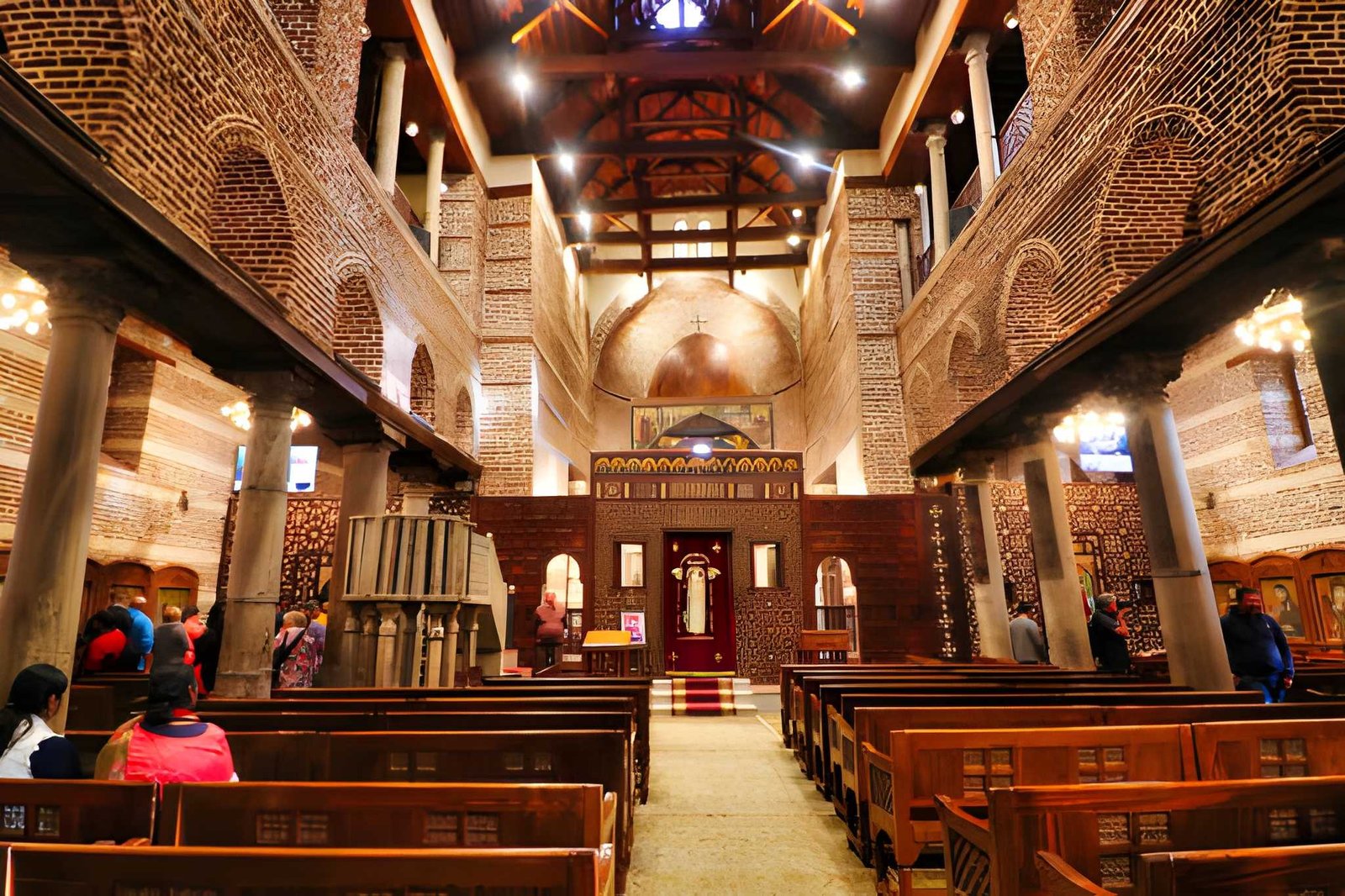
The architecture of Abu Serga Church is a stunning example of Coptic ingenuity blended with Roman basilica design. The timbered roof supported by semicircular arches imparts a rare sense of balance and harmony. Its nave, flanked by two aisles, reflects meticulous craftsmanship that has endured through centuries of restoration. The marble pulpit, carved screens, and intricate woodwork highlight the artistry synonymous with early Coptic churches. Within its crypt lies the most sacred chamber—where the Holy Family supposedly rested, surrounded by stones darkened with sacred time.
Each section of Abu Serga Church has symbolic meaning. The sanctuary represents divine light; the nave signifies the journey of faith; and the crypt, humility and protection. The iconostasis—adorned with images of saints and biblical scenes—reminds visitors that this church isn’t merely about history, but about living faith. Unlike the grand facades of cathedrals in Europe, Abu Serga captivates with its humble spirituality and deep-rooted connection to Egypt’s spiritual soul.
Cultural Significance and Pilgrimage Value
Beyond its theological depth, Abu Serga stands as a cultural bridge linking Egypt’s multi-religious identity. Locals and international travelers view it as a space of shared reverence. Pilgrims often recount feeling an inexplicable sense of calm as they step into the crypt—a space where silence speaks louder than words. This enduring spiritual resonance continues to draw religious tourists from every corner of the world, making it a crucial stop on heritage journeys alongside landmarks like the Islamic Cairo district and The Egyptian Museum.
The Egyptian Ministry of Tourism has invested heavily in preserving Abu Serga Church, ensuring that its historical fabric remains intact while accommodating modern visitors. Heritage tours such as the Egypt Luxury Tour and Best Egypt Travel Packages often spotlight the church as part of their cultural itineraries, highlighting its timeless role in Egypt’s sacred geography.
Preservation Efforts and Modern Reverence
Recent restoration projects have revitalized Abu Serga Church’s structure, preserving its ancient wood ceilings, intricate icons, and stone crypt while enhancing visitor access. Archaeologists and conservators collaborated closely with the Coptic Orthodox Church to ensure every inch was handled with respect and accuracy. The result is a balance between spiritual sanctity and sustainable tourism. The church grounds now include interpretive plaques, guided tours, and small exhibits that illustrate the depth of Coptic history. Devotees still gather here for services, keeping alive a ritual continuity that dates back over 1,600 years.
In many ways, Abu Serga mirrors Egypt’s spirit—resilient, layered, and eternally sacred. Alongside historic counterparts such as the Karnak Temple and Pyramids of Giza, this ancient church contributes to Egypt’s unparalleled diversity of religious monuments.
Abu Serga Church: A Spiritual Beacon for Faith Travelers
Modern travelers seeking deeper cultural meaning often include Abu Serga Church in itineraries curated by expert agencies like Travme Tours. These experiences go beyond sightseeing—they immerse visitors in the living narrative of Egypt’s faith traditions. Standing in Abu Serga’s crypt, framed by candlelight and faint hymns, travelers rediscover humanity’s shared spiritual roots. It’s a space where ancient stories meet modern reverence, turning history into heartfelt inspiration.
Even in an era of skyscrapers and digital noise, Abu Serga Church continues to whisper softly, reminding us that faith survives the ages. The church’s timeless aura offers a serenity that travelers rarely find elsewhere. Whether one seeks historical insight, architectural wonder, or spiritual renewal, Abu Serga delivers all in one mesmerizing experience. And when paired with The Grand Egyptian Museum or a serene cruise like the Luxury Dahabiya Nile Cruise, it forms a vivid narrative of Egypt’s living soul.
Frequently Asked Questions about Abu Serga Church
Where is Abu Serga Church located?
Abu Serga Church is nestled within the heart of Coptic Cairo (Old Cairo), a historic district in southern Cairo known for its concentration of early Christian monuments. It lies close to the Babylon Fortress and near the Hanging Church, making it an ideal stop on any cultural walking tour exploring Egypt’s ancient faith roots.
Why is Abu Serga Church important to Christianity?
Its importance stems from its connection to the Holy Family’s journey. The crypt beneath the church is believed to be the resting place of the Virgin Mary, Baby Jesus, and Joseph during their flight into Egypt. This makes Abu Serga one of Christianity’s most sacred sites outside the Holy Land, symbolizing refuge and divine protection.
When was Abu Serga Church built?
Historical evidence dates its construction to the late 4th century AD, making it one of Egypt’s oldest standing churches. Through restorations, invasions, and natural decay, it continues to reflect early Coptic architectural excellence and centuries of unchanged devotion.
Can visitors enter the Holy Crypt?
Yes, visitors can access the crypt beneath Abu Serga Church. This ancient chamber is preserved in its original form, offering an intimate, almost ethereal experience. It’s advisable to visit with knowledgeable guides available through tours like Egypt Day Tours for deeper context.
What’s the best time to visit Abu Serga Church?
The best time to explore Abu Serga Church is during Egypt’s cooler months, from October to April. Morning visits allow for quiet contemplation before crowds gather. For travelers planning extended explorations, combining cultural icons with river journeys such as the Best Nile River Cruises creates a balanced blend of heritage and leisure.
Final Thoughts
Abu Serga Church triumphs as one of Egypt’s most spiritually evocative destinations—a timeless remnant of a journey that shaped faith across continents. Its modest beauty and historical gravity remind visitors that Egypt isn’t only a land of pharaohs and pyramids but also a profound cradle of early Christianity. Every candle flicker, every hymn echo, tells of a nation where divinity once sought shelter and where, even today, humanity still finds it.

Comment (0)