

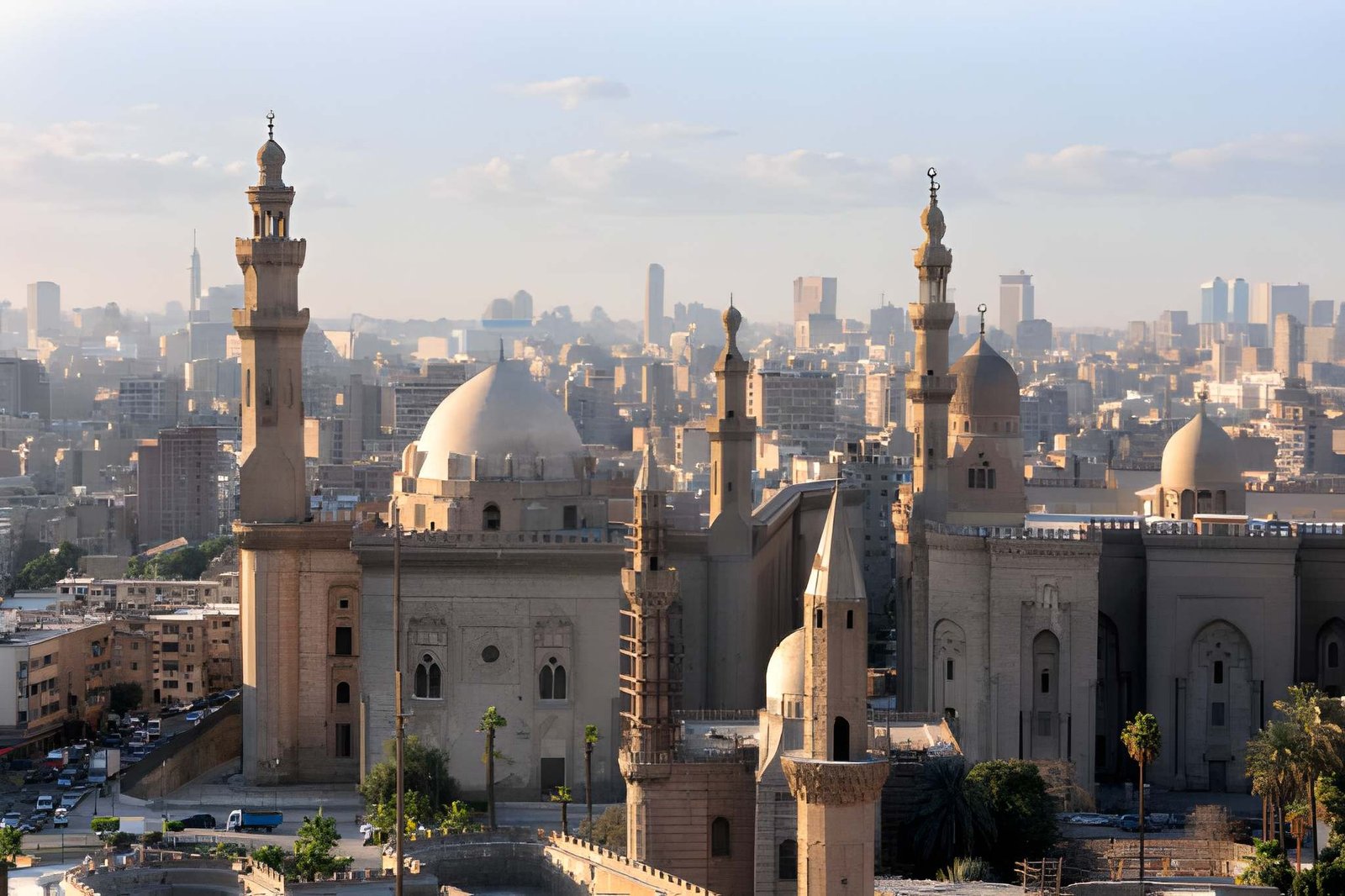
Al Rifai Mosque: Cairo’s Timeless Monument of Islamic Elegance and Royal Legacy
Few landmarks in Islamic Cairo embody grandeur, spirituality, and history quite like the Al Rifai Mosque. Nestled opposite the majestic Sultan Hassan Mosque, this architectural gem embodies Egypt’s late 19th-century fusion between tradition and modernity. Every marble column, gilded archway, and intricate dome whispers tales of Cairo’s royal dynasties and cultural evolution. The mosque, commissioned by Khoshiar Hanim in the late 19th century, serves not only as a sanctuary for worship but also as a royal mausoleum for several rulers of Egypt, including members of the Muhammad Ali family and the last Shah of Iran.
Visiting Al Rifai Mosque feels like stepping into both a sacred space and a time capsule. Its mesmerizing geometry, golden inscriptions, and serene prayer halls beckon travelers seeking more than sightseeing—a spiritual connection with Egypt’s illustrious Islamic past. The sunlight filtering through its towering minarets paints the marble courtyards in kaleidoscopic hues, making every moment there unforgettable. With every call to prayer echoing through its cavernous halls, one senses the weight of centuries of devotion and artistry converging in one awe-inspiring site. For history lovers, architects, and spiritual wanderers alike, Al Rifai Mosque isn’t just a monument—it’s a living piece of Cairo’s soul.
Just a heartbeat away from the Citadel of Salah El-Din and the historic Islamic Cairo district, this mosque remains one of the most captivating destinations in the Egyptian capital. Whether you’re weaving through its marble corridors or admiring the intricate mashrabiya carvings, you’ll find that Al Rifai Mosque holds stories best discovered in silence beneath its ancient domes. For those planning authentic Egypt Day Tours or immersive Cairo explorations, this sacred sanctuary deserves a top place on your itinerary.
History and Foundation of Al Rifai Mosque: A Dream Etched in Stone
The Al Rifai Mosque traces its roots back to the mid-19th century, a time when Egypt was balancing Ottoman influence with burgeoning modern reforms. Designed initially by architect Hussein Fahmi Pasha, the mosque’s construction began in 1869 under the patronage of Khoshiar Hanim, the mother of Khedive Ismail. Her vision was clear—to build a structure worthy of housing the tomb of sheikh Ali Al-Rifai, a revered Sufi saint, while simultaneously establishing a grand mausoleum for Egypt’s royal lineage. Sadly, the project paused after her death and resumed decades later under Khedive Abbas II, who commissioned Hungarian architect Max Herz Bey to complete it in 1912.
This 43-year construction journey encapsulates a critical period in Egyptian history, when Cairo was transforming into a cosmopolitan capital under the Khedives. The mosque became a statement of pride, blending Mamluk-inspired architecture with European techniques of symmetry and engineering precision. This hybrid style reflects the modernization of Egypt while preserving its deep Islamic roots—a narrative echoed through Cairo’s most iconic landmarks, from the Al Azhar Mosque to the Mosque of Ibn Tulun.
Architecture and Design: Where Grace Meets Grandeur
One glance at the Al Rifai Mosque and you’ll be captivated by its monumental proportions. The mosque occupies nearly 6,500 square meters, standing as a mirror image to its older neighbor, the Sultan Hassan Mosque. But while the latter exudes medieval might, Al Rifai dances with elegance. The façades are adorned with polished alabaster and fine marble imported from Italy, while the doors—crafted with gilded bronze—reflect Ottoman opulence mixed with Mamluk aesthetics.
Inside, the prayer hall stretches beneath a massive dome, with golden arabesques weaving across the ceilings. Geometric symmetry dominates the design, while Quranic verses and floral patterns create an interplay between spirituality and craftsmanship. The acoustics of the main hall amplify the Imam’s voice, echoing like a celestial chant that envelops every visitor in serenity.
Every archway opens into history—one corner dedicated to the resting place of royal figures, another to the Sufi heritage that inspired its name. The tombs of Khoshiar Hanim, King Fuad I, and King Farouk I rest alongside the Shah of Iran, Mohammed Reza Pahlavi, bridging dynasties through faith and architecture. With such merging of cultural elements, Al Rifai Mosque is often hailed as one of the most stunning landmarks featured in Best Cairo Travel Guide collections.
The Mosque’s Religious and Cultural Significance
Al Rifai Mosque isn’t merely a masterpiece of stone and marble—it’s a spiritual beacon. This mosque represents Egypt’s enduring connection to Sufism, particularly the Rifai order, one of the most widely practiced Sufi paths. Locals often gather here to seek blessings, pray for departed souls, and find a moment of peace in the midst of bustling Cairo. The atmosphere within its prayer halls feels charged with devotion, tranquility, and timeless reverence.
From a cultural perspective, the mosque acts as a living exhibition of Egypt’s Islamic artistry. Its inscriptions and calligraphy display exceptional craftsmanship from the best artisans of the 19th and 20th centuries, making it a crucial stop for architecture and history enthusiasts. For tourists exploring the spiritual heart of Cairo, Al Rifai offers a rare intimacy that echoes the sacred aura of cities like Damascus and Istanbul.
Royal Tombs: The Silent Testaments of Egypt’s Modern History
Perhaps the most intriguing feature of the Al Rifai Mosque is its royal necropolis. Under its marble floors lie the remains of Egypt’s modern monarchs, linking historical transitions from Ottoman suzerainty to independence and monarchy. The tomb of King Fuad I, father of King Farouk I, occupies a gilded niche surrounded by fine mosaics. King Farouk’s tomb itself, brought from Italy following his death in exile, remains one of Cairo’s deeply emotional relics of Egypt’s royal past.
Another corner shelters the tomb of Reza Shah Pahlavi, the last ruler of Iran, reflecting how Egypt welcomed royalty from beyond its borders. His presence here turned the mosque into an unspoken symbol of international reverence and Islamic unity. Standing before these tombs, one feels both the fleeting nature of power and the permanence of faith—a message deeply interwoven into the identity of Islamic Cairo itself.
Exploring Al Rifai Mosque in Context: A Jewel of Islamic Cairo
Located at the heart of the historic quarter, Al Rifai Mosque forms a breathtaking architectural dialogue with neighboring landmarks. Its façade directly faces the Sultan Hassan Mosque, creating one of Cairo’s most photographed panoramas. Together, they compose a skyline that represents centuries of Islamic artistry and dynastic legacy. Just a short distance away, travelers can explore the bustling lanes of El Moez Street, a treasure trove of medieval mosques, schools, and palaces.
For a broader historical immersion, combining a mosque visit with the nearby Egyptian Museum and the Al Azhar Park offers the perfect journey through Egyptian heritage—bridging ancient, Islamic, and modern periods in one scenic experience. Whether you’re a casual tourist or an academic researcher, few places in Cairo offer such layered and sensory exploration.
Architectural Symbolism and Artistic Harmony
Al Rifai Mosque stands as the architectural equivalent of a symphony—each element, from its carved marble panels to its ornate domes, contributes to a balanced composition of faith and aesthetics. The alternating use of light and shade creates a rhythm within its interiors, while the Arabic calligraphy flowing across its walls infuses divine verses into physical form. Every structure tells a story: the tall minarets signify a spiritual connection with heaven, while the vast courtyard symbolizes inclusiveness and communion.
The mosque’s intricate detailing continues to inspire modern architects studying Islamic design worldwide. It’s often featured in educational programs on conservation and heritage preservation, standing as a model for harmonious restoration techniques used in Cairo’s grand religious edifices. For anyone fascinated by Egypt’s artistic depth, Al Rifai remains an unmatched example of late Islamic architecture in North Africa.
Practical Travel Guide: Best Time and Tips for Visiting Al Rifai Mosque
The Al Rifai Mosque welcomes visitors daily, generally from early morning until late afternoon. The best time to visit is during the morning when sunlight bathes the interiors, highlighting every curve of its marble surfaces. Modest attire is required—women should cover their hair, and everyone must remove shoes upon entry. Photography is permitted but always respect worshippers during prayers.
Pairing a visit with a tour of nearby landmarks such as the Alabaster Mosque or signing up for an Egypt Luxury Tour ensures a deep-dive experience into Cairo’s multi-layered spiritual topography. Travelers can also enhance their journey through a river escape on the Best Nile River Cruises, blending city exploration with the soothing rhythm of the Nile.
Why Al Rifai Mosque Matters in the Story of Egypt
Al Rifai Mosque embodies more than architectural grandeur—it represents Egypt’s spirit of continuity. While Pharaonic tombs like the Valley of the Kings celebrate immortality through stone, Al Rifai celebrates immortality through faith and design. The mosque bridges epochs, blending the vision of modern rulers with the devotion of ancient saints. Every visitor who crosses its threshold leaves not just with photographs, but with a piece of living history etched in memory.
FAQs About Al Rifai Mosque
Where is Al Rifai Mosque located?
Al Rifai Mosque stands proudly in Midan al-Qala, Cairo, opposite the Sultan Hassan Mosque, near the Citadel of Salah El-Din. It’s part of the historic Islamic Cairo district—making it easily accessible by taxi or organized Top Day Trips from Cairo.
When was the Al Rifai Mosque built?
Construction began in 1869 and was completed in 1912. The mosque’s timeline reflects a fascinating era of Egyptian modernization under the guidance of Khoshiar Hanim and later Khedive Abbas II.
What makes Al Rifai Mosque special?
Its unique blend of Mamluk and Ottoman architecture, coupled with its role as a royal mausoleum, makes it one of Egypt’s most iconic religious and cultural landmarks. It’s a vital stop for those exploring Famous Egypt Destinations.
Who is buried inside the mosque?
The mosque houses the tombs of Khoshiar Hanim, King Fuad I, King Farouk I, and Iran’s Shah Mohammed Reza Pahlavi, among others. Their interment reflects Egypt’s historical ties with other royal dynasties.
Can tourists visit the Al Rifai Mosque?
Yes, tourists are welcome daily. Visitors can join guided cultural tours such as Cultural Tours Egypt that include the mosque, offering rich historical commentary and access to hidden architectural insights.

Comment (0)