

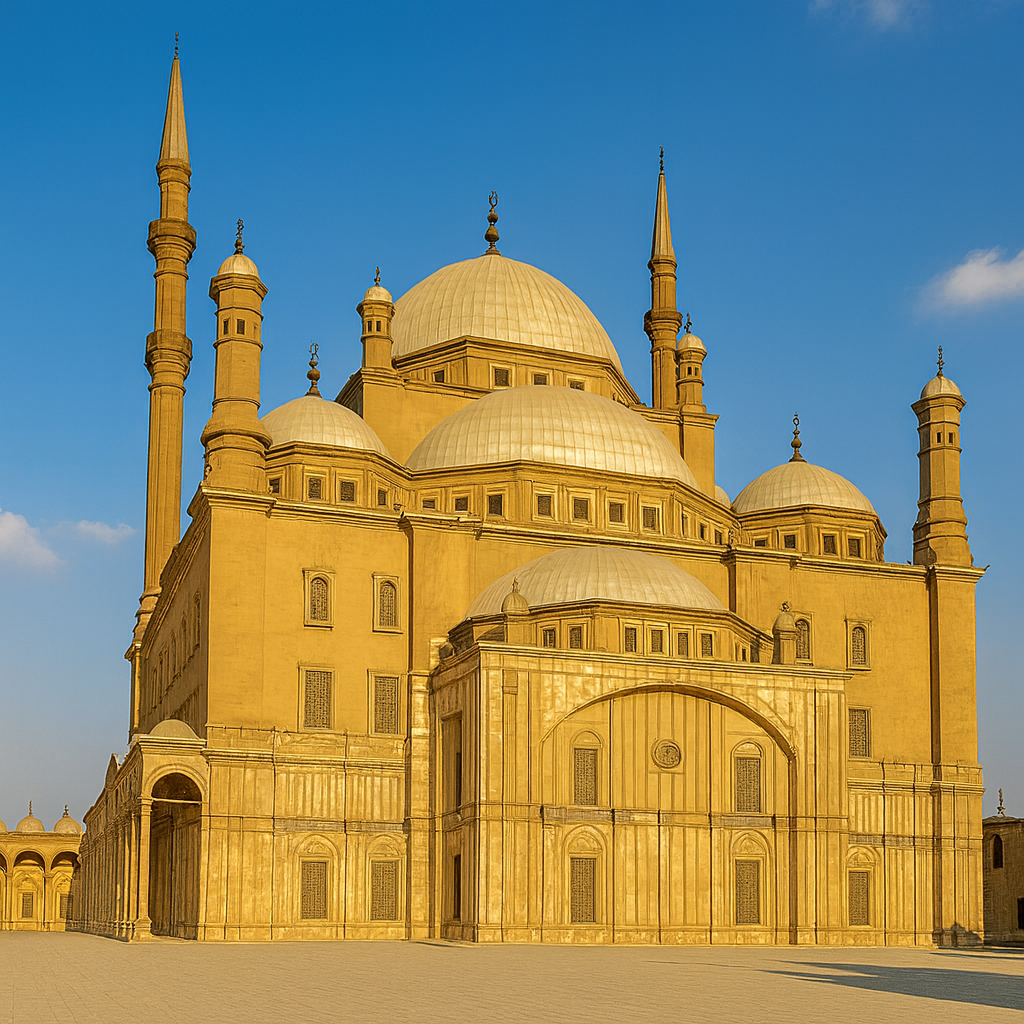
Discover the Alabaster Mosque: A Timeless Icon of Cairo’s Skyline
Standing gracefully atop the Citadel of Salah El-Din, the Alabaster Mosque, also known as the Mosque of Muhammad Ali, is one of Cairo’s most iconic landmarks. Its shimmering domes and towering minarets dominate the city’s skyline, symbolizing Egypt’s rich Islamic heritage and Ottoman architectural brilliance. Whether you’re a history lover, an architecture enthusiast, or a traveler seeking cultural immersion, the Alabaster Mosque promises an unforgettable experience steeped in history and beauty.
Attention: The Story Behind the Alabaster Mosque
Commissioned by Muhammad Ali Pasha between 1830 and 1848, the Alabaster Mosque was built in memory of his son, Tusun Pasha. The mosque was constructed within the impressive Salah El-Din Citadel, a fortress that had defended Cairo for centuries. Clad in alabaster stone, the mosque’s shining walls and grand design make it one of the most remarkable Islamic structures in Egypt. Its design was inspired by the famous Blue Mosque in Istanbul, reflecting the strong Ottoman influence of the era.
Visitors entering the mosque are often captivated by its vast courtyard, majestic domes, and intricately decorated interiors. The central dome rises impressively above a spacious prayer hall illuminated by natural light streaming through ornate stained-glass windows. Every corner of this mosque evokes a sense of serenity and grandeur, making it one of the must-see sites in Cairo.
Interest: Architecture and Symbolism of the Alabaster Mosque
The Alabaster Mosque’s design is a masterpiece of Ottoman architecture fused with Egyptian artistry. The use of alabaster stone—sourced from quarries near Beni Suef—gives the structure its distinctive name and luminous appearance. The mosque’s two slender minarets, each 82 meters high, are visible from nearly every angle of Cairo, symbolizing faith reaching toward the heavens.
The interior is equally breathtaking. The main dome, supported by semi-domes, is adorned with golden calligraphy and intricate arabesque patterns. A grand chandelier, imported from France, illuminates the prayer hall, adding a touch of European elegance to the Islamic setting. The marble mihrab (prayer niche) and minbar (pulpit) showcase fine carvings that highlight the mosque’s exquisite craftsmanship.
Beyond its architectural magnificence, the Alabaster Mosque serves as a resting place for Muhammad Ali Pasha himself. His alabaster tomb, encased in a beautifully carved enclosure, stands as a tribute to the man who modernized Egypt and left behind one of the city’s greatest monuments.
Desire: Why You Should Visit the Alabaster Mosque
Visiting the Alabaster Mosque is more than an architectural tour—it’s an immersive journey through Egypt’s historical and cultural evolution. From the mosque’s terrace, you can enjoy panoramic views of Cairo, the Pyramids of Giza, and the distant desert horizon. The mosque’s location within the Citadel allows you to explore other fascinating sites like the Islamic Art Museum Cairo and the Al Rifai Mosque.
Cairo’s Islamic heritage is embodied in its majestic mosques, and the Alabaster Mosque is undoubtedly one of its crown jewels. When you step inside, the peaceful ambiance contrasts beautifully with the bustling city below. Travelers seeking to understand the heart of Islamic Cairo will find this monument a perfect starting point. Pair your visit with nearby attractions like Mosque of Ibn Tulun and Al Azhar Mosque for a complete cultural experience.
For those planning a broader Egyptian adventure, the mosque’s majesty pairs perfectly with a Nile cruise itinerary. Whether you embark on the Luxury Dahabiya Nile Cruise or the 5-Star Luxury Nile Cruise, you can complement your Cairo exploration with serene voyages along Egypt’s lifeline—the Nile River.
Action: Plan Your Visit to the Alabaster Mosque
Before visiting the Alabaster Mosque, it’s helpful to understand its significance within the larger context of Cairo’s historic district. The mosque is part of the expansive Islamic Cairo area, which houses some of the world’s most beautiful medieval Islamic architecture. You can book guided tours through local experts to gain deeper insights into its history and artistic details. For an authentic experience, consider reaching out to the Best Travel Agency in Egypt for custom itineraries that include the Alabaster Mosque and nearby attractions.
When planning your trip, wear modest clothing as the mosque remains an active place of worship. Photography is allowed in designated areas, so you can capture the magnificence of its domes and interiors. To make the most of your day, combine your mosque visit with a stroll through El Moez Street or a shopping adventure at Khan El-Khalili Bazaar.
After exploring the mosque, enjoy a peaceful break at the nearby Al Azhar Park, where you can relax and take in spectacular views of Islamic Cairo’s skyline. This combination offers a perfect balance between cultural discovery and leisure, ensuring your time in Cairo is both enriching and memorable.
Explore Egypt Beyond Cairo
Egypt’s wonders stretch far beyond its capital. After visiting the Alabaster Mosque, consider exploring other destinations like the Abu Simbel Temples in Aswan or the magnificent Karnak Temple in Luxor. Travelers often combine cultural landmarks with scenic experiences, such as taking the 8 Day Cairo and Nile Cruise Tour or the 7 Days Luxury Egypt Trip.
For adventure lovers, an Egypt Adventure Tour offers opportunities to discover the country’s deserts and oases, while history enthusiasts may enjoy the 11 Days Egypt Trip that includes both ancient and modern marvels. The Alabaster Mosque serves as a gateway to understanding Egypt’s spiritual depth and architectural mastery before you journey further into the land of the pharaohs.
Final Thoughts
The Alabaster Mosque stands not only as a symbol of Egypt’s Islamic past but also as a testament to the nation’s ability to blend cultures, faiths, and artistry into a single breathtaking monument. Its gleaming alabaster façade, panoramic views, and spiritual serenity make it a must-visit for every traveler exploring Cairo. Whether you’re tracing the footsteps of history or immersing yourself in Egyptian culture, the Alabaster Mosque will undoubtedly leave an indelible mark on your journey through this timeless land.
FAQs About the Alabaster Mosque
1. Where is the Alabaster Mosque located?
The Alabaster Mosque is located inside the Citadel of Salah El-Din in Cairo, Egypt. It overlooks the city and offers spectacular panoramic views.
2. What is the best time to visit the Alabaster Mosque?
The best time to visit is during the cooler months, from October to April. For ideal weather insights, refer to this guide on When is the Best Time to Visit Egypt?.
3. Is there an entrance fee to visit the Alabaster Mosque?
Yes, there is a small entrance fee that includes access to the Citadel complex. Fees are subject to change, so it’s best to confirm with local tour operators.
4. Can non-Muslims enter the Alabaster Mosque?
Yes, non-Muslims are welcome to visit the mosque outside of prayer times. Visitors should dress modestly and respect the sacred atmosphere.
5. What other attractions are near the Alabaster Mosque?
Nearby attractions include the Hanging Church, The Egyptian Museum, and the vibrant Khan El-Khalili Bazaar, each offering unique insights into Cairo’s diverse history and culture.

Comment (0)