

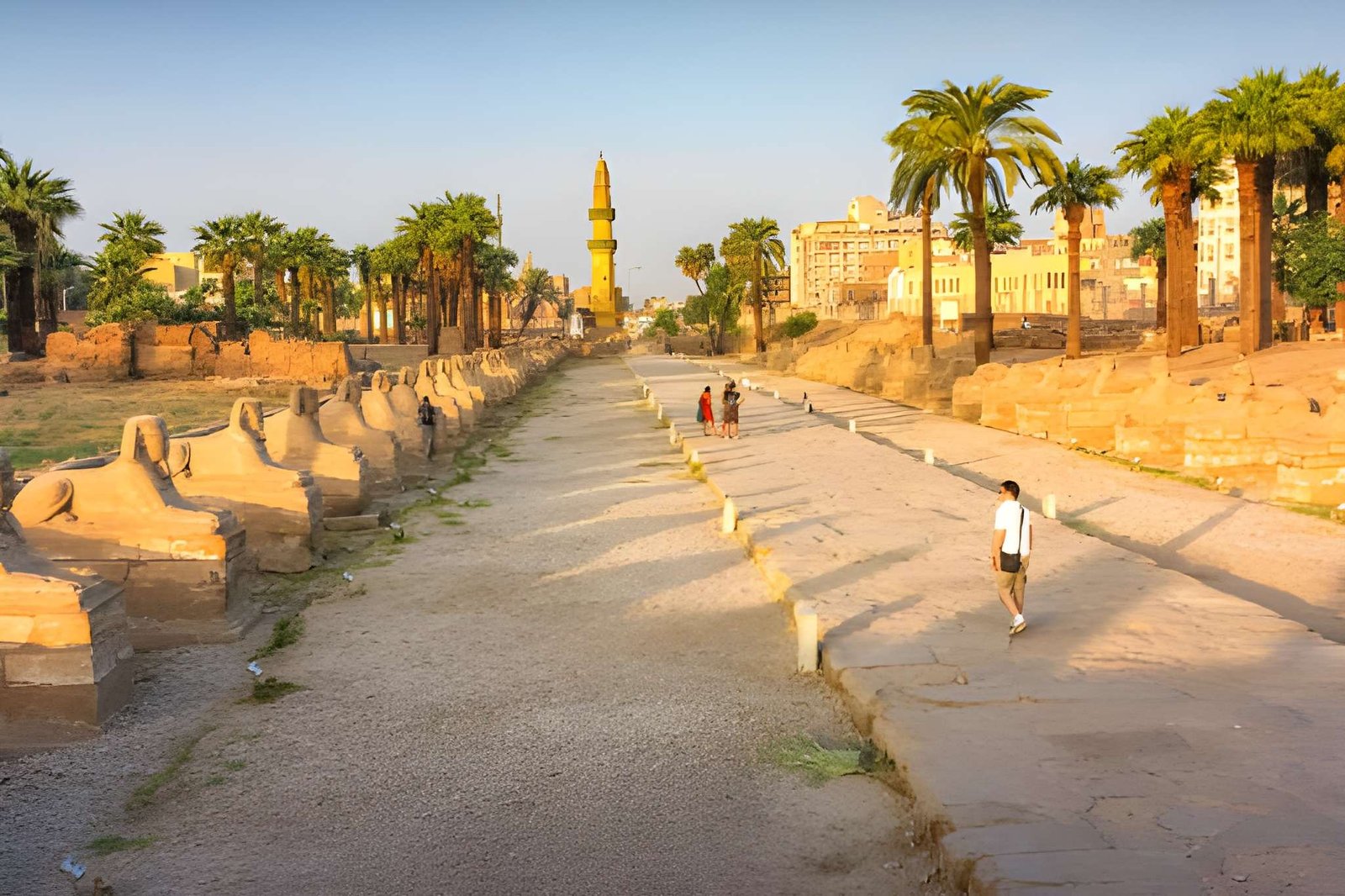
The Avenue of Sphinxes: Egypt’s Grand Ancient Processional Path Reborn
The Avenue of Sphinxes, also known as ‘Sphinx Alley’ or ‘The Path of the Gods,’ stands as one of Egypt’s most awe-inspiring archaeological marvels. Stretching for nearly 2.7 kilometers, this ancient ceremonial road once connected two of Luxor’s most important temples — the majestic Luxor Temple and the vast Karnak Temple complex. Flanked on both sides by hundreds of sphinx statues, this monumental avenue served as a sacred route for religious processions, festivals, and royal ceremonies during Egypt’s golden age.
Rediscovered and restored after decades of excavation, The Avenue of Sphinxes isn’t just a relic of the past; it’s a living testament to the enduring spirit of ancient Egyptian civilization. Once hidden beneath the sands of time, the road has now reemerged in all its grandeur, drawing historians, travelers, and culture enthusiasts from around the globe. Its reopening in 2021 marked a new chapter in Egypt’s tourism renaissance, showcasing the country’s commitment to preserving its glorious heritage for future generations. The avenue’s enchantment lies not only in its monumental scale and symmetry but also in the profound symbolism it embodies — a pathway that bridged mortals with the divine, the earthly with the celestial, and the temporal with the eternal.
Walking along this ancient boulevard today, one can almost hear the echoes of trumpets, the chants of priests, and the rhythmic steps of the sacred Opet Festival procession that once animated the stones beneath. The Avenue of Sphinxes isn’t just an archaeological site; it’s a storytelling corridor that reveals how deeply religion and art intertwined in the very heart of Thebes, the city of Amun. For those planning to uncover the wonders of this avenue, combining a visit with one of the Best Nile River Cruises or curated Egypt Day Tours can turn a simple sightseeing trip into an unforgettable historical journey.
The Historical Origins of the Avenue of Sphinxes
The origins of The Avenue of Sphinxes date back to the 18th Dynasty, though it reached its peak of magnificence during the reign of Nectanebo I of the 30th Dynasty around 380–362 BCE. This monumental project symbolized the divine connection between the temples of Amun-Ra at Karnak and Luxor. Each year, during the Opet Festival, statues of the gods Amun, Mut, and Khonsu were carried in sacred boats along this avenue amid grand celebrations. The road represented the physical and spiritual link between the two temples, allowing the divine energy of Amun to flow seamlessly through ancient Thebes.
Archaeologists have unearthed over 1,050 sphinx statues along the avenue. Interestingly, not all statues are identical; some feature the lion’s body and a human head, while others display ram-headed or falcon-headed designs, representing various deities. These mythological guardians were believed to protect the sacred route and purify the divine processions. Their aligned symmetry reflects the Egyptians’ exceptional mastery of geometry and architectural precision. Today, visitors can still witness many of these statues, restored and standing proudly under the Luxor sun, a sight that rivals the splendor of the Great Sphinx of Giza.
The Cultural and Religious Significance of Sphinx Avenue
The Avenue of Sphinxes wasn’t just a physical passage but a symbolic journey representing divine renewal and cosmic order. During the Opet Festival, the procession symbolized the rejuvenation of the pharaoh’s power and the rebirth of life through the blessings of Amun-Ra. The alignment of the road — from Karnak’s sanctuary to Luxor’s temple — mirrored the celestial journey from sunrise to sunset, embodying the eternal cycle of creation and rebirth.
The spiritual resonance of the sphinxes themselves cannot be overstated. In ancient Egyptian mythology, sphinxes symbolized wisdom, protection, and strength. Their presence along the avenue not only guarded the gods’ path but also proclaimed the might and glory of the pharaohs who commissioned their creation. As a visitor strolls down this historic path today, it’s easy to feel transported across millennia, immersed in the same divine energy that once fueled one of the world’s oldest civilizations.
Rediscovery and Restoration: Bringing the Avenue Back to Life
For centuries, the Avenue of Sphinxes lay buried beneath layers of silt, sand, and urban development. Systematic excavations began in the 1940s, led by Egyptian archaeologists determined to uncover this ancient wonder. Decades of painstaking work revealed sections of the avenue, each segment providing fresh insight into Thebes’ sacred geography. However, it wasn’t until the 21st century that the avenue’s full length was finally restored and reopened to the public.
The grand reopening in November 2021 was nothing short of spectacular — a globally televised event that drew comparisons to ancient ceremonies themselves. Illuminated by golden lights, traditional music, and elaborate cultural performances, the unveiling celebrated Egypt’s cultural renaissance. This moment showcased not just archaeology but national pride, as the world beheld the rebirth of a site that had once been the beating heart of ancient Thebes. Those who wish to experience this restored wonder often include it in their itineraries through Best Egypt Travel Packages that highlight both ancient and modern marvels.
Architectural Design and Artistic Details of The Avenue of Sphinxes
The Avenue’s layout is a masterpiece of symmetry and symbolism. Measuring nearly 2.7 kilometers long and 76 meters wide, this limestone-paved road was flanked on each side by rows of sphinx statues spaced evenly at 4-meter intervals. Each sphinx was carved from sandstone, detailed with inscriptions and hieroglyphs, and positioned to face straight ahead — a visual metaphor for vigilance and divine order.
Excavations revealed remnants of ceremonial kiosks, chapels, and stations where the sacred boats rested during processions. Inscriptions discovered along the path indicate that the avenue underwent several phases of construction under different rulers, including Amenhotep III and Nectanebo I. These findings confirm the avenue’s continuous religious and political importance over centuries. Many statues still bear traces of their original pigment, a vivid reminder that ancient Egypt wasn’t monochrome but alive with color and spiritual power. For a comprehensive understanding of the artistry and craftsmanship behind such monuments, a visit to The Egyptian Museum complements the experience perfectly.
Modern Tourism and the Avenue’s Role in Egypt’s Cultural Revival
Today, The Avenue of Sphinxes has become an essential stop on Egypt’s cultural tourism map. Visitors to Luxor City can now walk the entire stretch, tracing the footsteps of ancient priests and pharaohs. Guided night tours, enhanced by ambient lighting, offer a magical experience that reveals the intricate details of the statues and the avenue’s grandeur. The site has been integrated into Egypt’s broader tourism strategy, promoting heritage preservation and sustainable urban development.
The avenue’s revival has significantly boosted Luxor’s economy and tourism appeal. It complements nearby attractions such as the Valley of the Kings and the Temple of Hatshepsut, forming a golden triangle of ancient Egyptian magnificence. For travelers seeking deeper immersion, pairing a visit with a 5-Star Luxury Nile Cruise allows them to explore Egypt’s timeless landmarks while sailing the same river that nourished the civilization that built them.
Interesting Facts About The Avenue of Sphinxes
Several surprising discoveries have emerged from the excavations. Archaeologists found that the sphinxes were not uniform — some bore the heads of rams, representing Amun, while others featured human heads symbolizing royal guardianship. Evidence suggests that the avenue was once lined with flowering trees and illuminated by oil lamps during ceremonies. Inscriptions uncovered along the path record offerings, rituals, and decrees from pharaohs who sought divine favor from Amun-Ra.
One of the most fascinating facts is that the avenue wasn’t just used during festivals; it also played a vital role in royal coronations and funerary processions. The connection between life, death, and eternity was central to ancient Egyptian theology, and The Avenue of Sphinxes embodied that philosophy. Its rediscovery reminds the modern world that Egypt’s cultural legacy is far from static — it continues to evolve, inspire, and captivate.
Why The Avenue of Sphinxes Should Be on Every Traveler’s Bucket List
For explorers, history buffs, and photographers alike, The Avenue of Sphinxes offers a rare blend of grandeur, mystique, and authenticity. Few sites on Earth allow one to walk a path once reserved for gods and kings. The sunlight striking the sandstone statues, the rhythmic layout of sphinxes, and the palpable aura of history create an experience that words can barely capture. It’s not just sightseeing — it’s time travel.
Including The Avenue of Sphinxes in your journey through Egypt ensures a holistic understanding of ancient Thebes’ sacred landscape. Pairing your visit with destinations like the Abu Simbel Temples in Aswan or the tranquil Iris Dahabiya Nile Cruise transforms your trip into a once-in-a-lifetime adventure through Egypt’s eternal legacy.
Frequently Asked Questions About The Avenue of Sphinxes
1. Where is The Avenue of Sphinxes located?
The Avenue of Sphinxes is located in the city of Luxor, Egypt. It stretches between the Karnak Temple in the north and the Luxor Temple in the south. This sacred road runs through what was once the heart of ancient Thebes, about 670 kilometers south of Cairo.
2. How old is The Avenue of Sphinxes?
The construction of The Avenue of Sphinxes began around 1400 BCE during the 18th Dynasty and continued through the reigns of subsequent pharaohs, including Nectanebo I of the 30th Dynasty. This means the avenue is over 3,000 years old, making it one of Egypt’s most ancient ceremonial routes still visible today.
3. How many sphinx statues are along The Avenue?
Archaeologists have identified approximately 1,057 sphinx statues lining the 2.7-kilometer stretch. While many statues have suffered erosion or damage over the centuries, restoration efforts have returned hundreds to their original glory, allowing visitors to experience the avenue’s monumental symmetry.
4. What was The Avenue of Sphinxes used for?
The avenue was primarily used for religious processions during the Opet Festival, a grand annual celebration in which statues of the gods Amun, Mut, and Khonsu were carried from Karnak to Luxor Temple. The event symbolized renewal, divine blessing, and the pharaoh’s spiritual rebirth. It also hosted royal parades and funerary rituals.
5. Can tourists walk along The Avenue of Sphinxes today?
Yes, visitors can now walk the full length of The Avenue of Sphinxes. The site has been fully restored and reopened to the public, with pathways, lighting, and guided tours available. It’s best visited in the early morning or at sunset when the golden light enhances the beauty of the sandstone sculptures. Many Egypt Luxury Tour itineraries include this breathtaking experience.

Comment (0)