

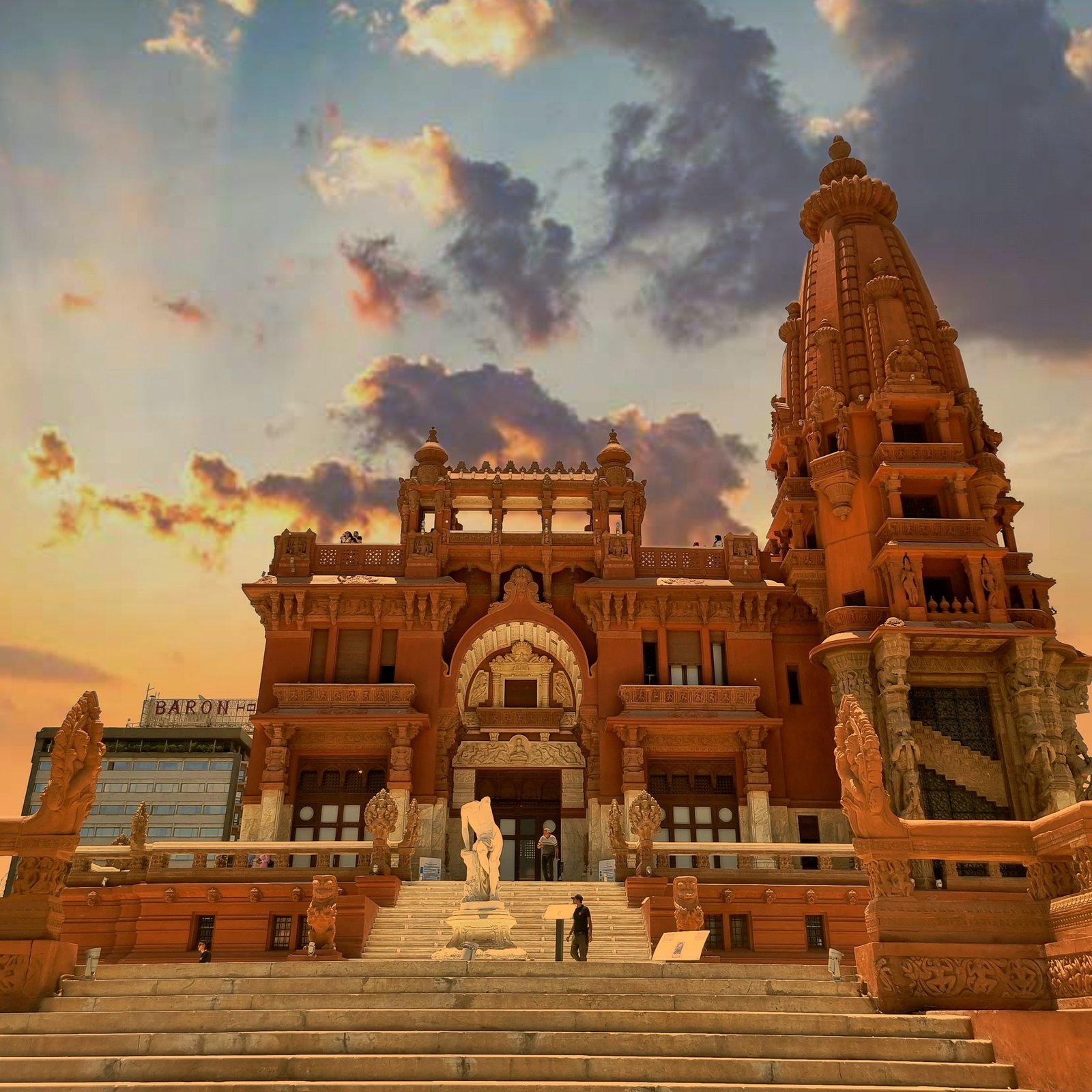
Baron Empain Palace: Egypt’s Enigmatic Architectural Gem in Heliopolis
Standing proudly in the heart of Heliopolis, Cairo, the Baron Empain Palace—also known as Le Palais Hindou—is one of Egypt’s most fascinating architectural masterpieces. Built in the early 20th century by the Belgian industrialist Édouard Louis Joseph Empain, the palace captures both mystery and magnificence. Its unique design, inspired by Hindu temples of India and Khmer architecture of Cambodia, sets it apart from every other building in Egypt. The palace’s intricate carvings, spiral tower, and mythic aura have stirred curiosity for over a century, earning it a reputation that blends history, art, and legend into one grand structure.
For travelers seeking cultural immersion, the Baron Empain Palace offers a surreal journey through time. Every corridor whispers tales of colonial ambition, artistic fusion, and timeless innovation. The palace is not just an architectural wonder—it’s a testament to Egypt’s cosmopolitan golden age when Cairo was a magnet for visionaries and dreamers. Today, after extensive restoration, the palace reopens as a major tourist attraction where visitors can marvel at its Indo-European details, panoramic views, and hauntingly beautiful interiors. If you’re planning to explore Cairo’s treasures, this palace deserves a prime spot on your itinerary, alongside the Grand Egyptian Museum, the Citadel of Salah El-Din, and the Khan El-Khalili Bazaar.
The Visionary Behind the Baron Empain Palace
Édouard Empain wasn’t just a wealthy Belgian engineer and entrepreneur; he was a visionary with a taste for the extraordinary. Arriving in Egypt in the early 1900s, Empain envisioned transforming a stretch of barren desert northeast of Cairo into a modern city—Heliopolis. Inspired by ancient civilizations and modern luxury, he commissioned the palace as his personal residence and symbol of innovation. Unlike the classical European mansions of the era, Empain’s design drew heavily from Eastern architecture, particularly the Hindu temples of Orissa and Angkor Wat’s Khmer influence.
Empain collaborated with French architect Alexandre Marcel, who shared his fascination with exotic styles. Together, they created an architectural fusion rarely seen in the Middle East. The result was a palace that merged Eastern mystique with Western engineering precision. The structure’s reinforced concrete frame—a novelty at the time—made it both robust and elegant. The baron’s passion for art and technology turned his home into a living museum of cultural exchange, a masterpiece that continues to draw architects, historians, and travelers alike from around the globe.
Architectural Design and Symbolism of the Baron Empain Palace
The Baron Empain Palace is a feast for the eyes and mind. Every inch tells a story. The exterior is adorned with elaborate bas-reliefs featuring deities, animals, and mythical creatures. The lotus motifs, columns, and balconies showcase a harmonious blend of Indian and Cambodian symbolism. The palace’s rotating tower, designed to offer a 360-degree view of Heliopolis, demonstrates the forward-thinking ingenuity of its creator. Visitors can trace the artistic dialogue between continents, cultures, and eras simply by observing its walls and ceilings.
Inside, the palace unfolds as a mystical labyrinth of marble floors, stained glass, and ornate staircases. Each room has a unique theme, reflecting Empain’s fascination with spirituality and the exotic. Though time and neglect once took their toll, recent restorations have revived much of its original glamour. Modern visitors can now step into the baron’s world, surrounded by decorative murals and carved wooden panels that narrate stories from both Eastern mythology and European romanticism. This architectural marvel aligns with Egypt’s broader collection of iconic sites such as the Palaces of Egypt and the timeless Pyramids of Giza.
Heliopolis: The City Born from Baron Empain’s Dream
Heliopolis, now one of Cairo’s most elegant districts, owes its birth to Baron Empain’s grand vision. At the time, the area was nothing more than desert sand, yet Empain saw potential to create a self-sufficient city of luxury, culture, and modernity. With Belgian investment and Egyptian artistry, Heliopolis emerged as a model city featuring wide boulevards, lush gardens, and European-style architecture infused with oriental elements. The Baron Empain Palace became its crowning jewel—a statement of modern engineering and aesthetic refinement.
Even today, the neighborhood retains its aristocratic charm, with colonial villas, tree-lined streets, and vintage trams echoing its Belle Époque heritage. The palace stands as a visual reminder of this golden era, where Cairo’s cosmopolitan heart beat strongest. Travelers exploring Heliopolis often pair their visit with nearby historical attractions or opt for guided Egypt Day Tours that include the palace as a highlight of northern Cairo’s architectural wonders.
Haunting Legends and Mysteries Surrounding the Palace
No discussion of the Baron Empain Palace is complete without mentioning its legendary mysteries. Over decades, locals have whispered tales of eerie happenings—ghostly apparitions, unexplained lights, and secret tunnels connecting the palace to distant parts of Cairo. While most of these stories belong to folklore, they’ve given the mansion an intriguing reputation as one of Egypt’s most mysterious landmarks. Many visitors claim to feel an unusual energy within its halls, perhaps drawn by the baron’s enigmatic personality or the building’s symbolic carvings.
Historians suggest that such myths blossomed during the years when the palace stood abandoned, amplifying its mystique. Today, these tales enhance its allure, inspiring filmmakers, writers, and curious tourists. This interplay of history and myth makes the palace not merely a site of architectural beauty but also a cultural phenomenon that continues to fascinate Egyptologists and urban legends enthusiasts alike.
Restoration and Revival: Bringing the Baron Empain Palace Back to Life
After decades of neglect, the Egyptian government launched a meticulous restoration project to revive the Baron Empain Palace. The challenge was immense—preserving authenticity while introducing modern conservation techniques. Expert teams studied old photographs, blueprints, and written records to reconstruct missing elements with precision. Using traditional materials alongside advanced technology, artisans restored the sculptures, ceilings, and stained-glass windows that defined the palace’s original splendor. The rejuvenated building reopened to the public, shining once again as a symbol of Egypt’s enduring commitment to cultural preservation.
Today, the palace doubles as a museum and cultural venue. Exhibitions inside document the history of Heliopolis, the life of Baron Empain, and the architectural evolution of early 20th-century Cairo. Visitors can explore interactive displays and virtual reconstructions that reveal how this dreamlike residence once looked in its prime. Many tourists include it in their itineraries before embarking on Best Nile River Cruises or exploring more heritage landmarks through Best Egypt Travel Packages offered by Travme Tours.
Baron Empain Palace: A Cultural and Touristic Marvel
As a heritage attraction, the Baron Empain Palace now ranks among the must-visit sites in Cairo. Its combination of beauty, history, and mystery offers travelers a unique narrative distinct from ancient monuments. The palace appeals to architecture enthusiasts, photographers, and those captivated by lesser-known treasures that showcase Egypt’s diverse cultural identity. Whether you’re tracing the grandeur of Heliopolis’ past or seeking unconventional landmarks, the palace delivers a spellbinding experience.
Guided tours highlight the baron’s life, the city’s creation, and the engineering brilliance behind the structure. As part of Egypt’s ongoing tourism renaissance, the site perfectly represents how modern restoration can revive a forgotten jewel. For travelers interested in cultural depth and architectural exploration, pairing this visit with experiences like the Luxor Temple or the artistic marvels of the Islamic Art Museum Cairo creates a well-rounded journey through Egypt’s layered history.
How to Visit the Baron Empain Palace
Located on Al-Orouba Street in Heliopolis, the palace is easily accessible from central Cairo. It’s open daily, with visiting hours typically aligned with most Cairo museums. Tickets are available at the entrance, and guided tours are recommended for a more immersive understanding. Photography is permitted in most areas, allowing visitors to capture the intricate artistry of the façade and interiors. The palace’s rooftop terrace offers picturesque views of Heliopolis, especially at sunset when the golden light enhances the building’s reddish hues. Add it to your itinerary alongside nearby attractions featured in the Best Cairo Travel Guide.
Architectural Influence on Modern Egyptian Design
The Baron Empain Palace has influenced generations of architects in Egypt and beyond. Its fusion of Eastern and Western motifs inspired later projects in Heliopolis and even modern architectural designs that celebrate eclecticism. The structure symbolizes Egypt’s openness to global artistic dialogues, bridging continents through design. The palace also resonates with Egypt’s growing emphasis on cultural tourism, blending heritage conservation with modern storytelling. This balance has strengthened its presence as a global reference point for cross-cultural architecture.
FAQs About Baron Empain Palace
Where is the Baron Empain Palace located?
The palace is situated in Heliopolis, one of Cairo’s most historic and elegant districts, about 10 kilometers from downtown. Its exact location on Al-Orouba Street makes it easily reachable by taxi or private car from major landmarks in Cairo.
Who built the Baron Empain Palace?
The palace was built by Belgian industrialist Édouard Louis Joseph Empain in the early 20th century. Designed by French architect Alexandre Marcel, it reflects both Hindu and Khmer architectural influences, symbolizing cross-cultural innovation.
What makes the Baron Empain Palace unique?
Its design stands out for its Indo-Cambodian inspiration, rotating tower, and intricate carvings combining Eastern mysticism with European refinement. Unlike other Cairo palaces, it’s both an artistic experiment and a technological marvel for its era.
Is the Baron Empain Palace open to visitors?
Yes, it’s open to the public following extensive restoration. Visitors can explore the interior halls, exhibitions about Heliopolis, and terraces offering panoramic views of Cairo’s skyline.
How can travelers include the Baron Empain Palace in their Egypt itinerary?
Many organized tours and Egypt Luxury Tour options include the Baron Empain Palace as part of cultural sightseeing in Cairo. It can easily be combined with visits to the Egyptian Museum or other architectural landmarks across the city.

Comment (0)