

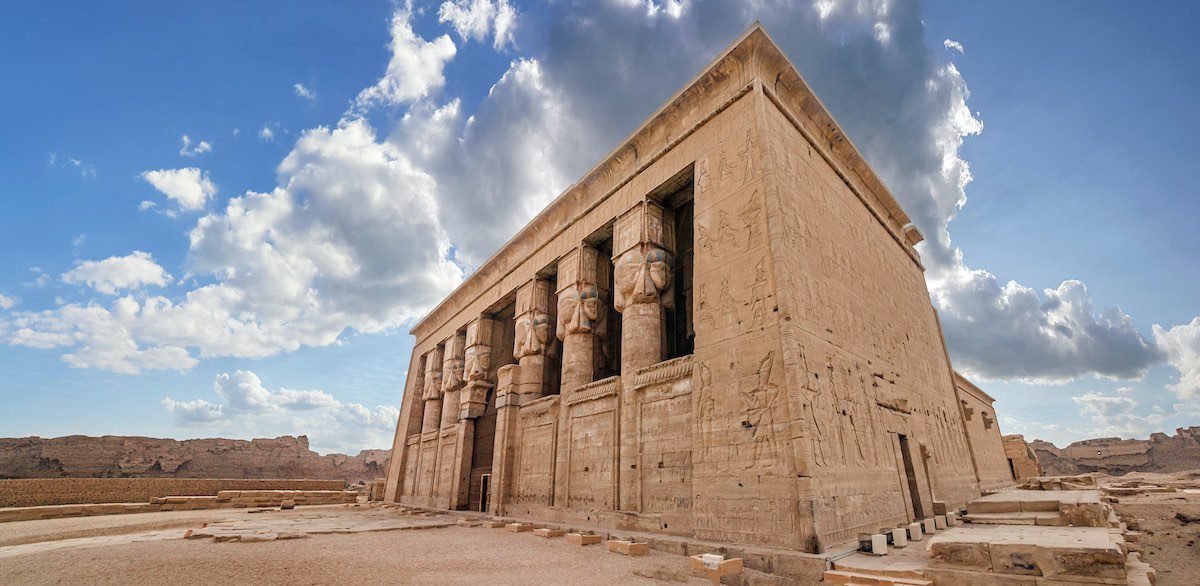
Dendera Temple Complex: Egypt’s Timeless Marvel of Sacred Architecture and Celestial Symbolism
The Dendera Temple Complex is one of Egypt’s most captivating archaeological treasures, a masterpiece of Ptolemaic architecture that elegantly blends ancient spirituality, cosmic symbolism, and exquisite artistry. Located on the west bank of the Nile, near Qena, this monumental complex pays homage to the goddess Hathor—patroness of love, beauty, music, and motherhood. Every stone, column, and carving within the Dendera complex tells a story of devotion and celestial harmony, making it a must-see for travelers exploring Egypt’s ancient wonders. Unlike many other ruins, Dendera remains remarkably well-preserved, allowing visitors to step into the same chambers once graced by priests, pharaohs, and pilgrims thousands of years ago. It’s a sanctuary where mythology and astronomy intertwine, giving a glimpse into the sophisticated worldview of the ancient Egyptians.
Visitors often combine a trip to Dendera with nearby attractions like the Luxor Temple or Abydos Temple, creating a mesmerizing journey through Upper Egypt’s sacred landscapes. For those seeking a deeper connection, joining one of the Best Nile River Cruises allows a seamless blend of comfort and history, drifting along the same waters that nourished these temples for millennia. The Dendera Temple Complex doesn’t just showcase ancient architecture; it offers an immersive spiritual experience that bridges earth and sky, myth and reality.
The Historical Origins of the Dendera Temple Complex
The history of the Dendera Temple Complex stretches back to the Old Kingdom around 2250 BCE, though much of what stands today was built during the Ptolemaic dynasty and later modified by Roman emperors such as Augustus and Tiberius. The site has always been sacred, associated with Hathor, one of Egypt’s most beloved deities. The temple we see now was primarily constructed under the reign of Cleopatra VII and her father, Ptolemy XII. In fact, vivid reliefs on the temple’s walls depict Cleopatra and her son Caesarion making offerings to the goddess, symbolizing divine lineage and royal devotion.
Archaeologists believe earlier structures once stood beneath the current temple, hinting at Egypt’s continuity of religious worship over thousands of years. The foundations align with ancient celestial observations, reinforcing the Egyptians’ deep connection between spirituality and astronomy. For history enthusiasts and travelers pursuing Egypt Day Tours, Dendera offers rare insights into how religion, politics, and art coalesced into one magnificent creation.
Architecture and Artistic Splendor of the Temple of Hathor
The Temple of Hathor, the crown jewel of Dendera, is a marvel of symmetry and proportion. Its layout follows the traditional Egyptian temple design: an open hypostyle hall leading to inner sanctuaries, each more sacred than the last. The towering columns, adorned with Hathor’s characteristic cow-eared capitals, support a ceiling teeming with astronomical scenes that include the famous Dendera Zodiac—an intricate celestial chart representing the Egyptian understanding of the cosmos.
Walking through its halls, visitors encounter vivid reliefs, hieroglyphics, and scenes of pharaohs making offerings to deities. The walls are alive with stories of birth, rebirth, and divine union. The ceiling’s restoration revealed stunning blue hues and gold stars, symbolic of the heavens. Travelers exploring other monumental sites like The Karnak Temple or Temple of Hathor (Dendera complex) often find Dendera’s artistry unmatched in both detail and preservation.
The Sacred Crypts and Mysterious Reliefs
Deep beneath the temple lies a network of crypts carved into the stone, once sealed and used for storing sacred objects and cult statues. These subterranean spaces feature reliefs depicting mysterious rituals and symbolic images, including the enigmatic “Dendera Light,” a carving that some interpret as evidence of ancient electrical knowledge—though scholars generally explain it as a symbolic representation of birth and creation energy. Whatever interpretation one prefers, the crypts add an aura of mystery and mysticism that fascinates modern visitors and Egyptologists alike.
Exploring these underground passages evokes a sense of adventure reminiscent of hidden treasures found in the Valley of the Kings, where sacred secrets were likewise concealed from profane eyes. These crypts underscore how ancient Egyptians viewed temples not just as places of worship but as cosmic models of the universe.
The Roof Sanctuary and Celestial Observations
Ascending to the roof of the Dendera Temple is a journey upward through both architecture and meaning. The rooftop sanctuary was used for observing celestial events and performing rituals related to the goddess Hathor’s connection with the sky. The open-air chapels once hosted the annual “Beautiful Meeting” festival when Hathor’s statue journeyed to meet her divine consort, Horus of Edfu. This celebration mirrored the cosmic union of heaven and earth, symbolizing fertility and renewal.
From the rooftop, one can gaze across the Nile Valley—a view filled with serenity and spiritual resonance. It’s easy to imagine priests tracking the stars, aligning religious ceremonies with cosmic cycles. Similar celestial alignments can be seen at the Abu Simbel Temples in Aswan, proving how astronomical knowledge shaped sacred architecture across Egypt.
Religious Symbolism and the Divine Feminine
Hathor, the celestial cow goddess of music and joy, embodies the nurturing side of Egyptian divinity. Within the Dendera Temple Complex, her presence radiates through inscriptions and statues, reminding visitors of her role as protector of women, mothers, and lovers. The temple’s halls resound with the echoes of sacred chants and sistrum music once performed in her honor. She was also considered a goddess of rebirth, aligning Dendera with themes of life’s eternal cycle.
Many scholars draw parallels between Hathor and other maternal deities such as Isis, whose own myth is celebrated at the Temple Of Philae. Together, these sanctuaries highlight Egypt’s profound reverence for the divine feminine—a theme that remains relevant in modern spiritual exploration.
Astronomical Insights: The Dendera Zodiac
The Dendera Zodiac, originally located on the temple’s ceiling and now preserved in the Louvre, is one of ancient Egypt’s most famous astronomical artifacts. It depicts the constellations and planets arranged in circular form, symbolizing the cyclical nature of time and the heavens. This zodiac demonstrates Egypt’s mastery of star mapping long before Western astrology emerged. Its placement in Hathor’s temple emphasizes her celestial role as the “Lady of the Stars.”
Standing beneath the restored ceiling, visitors can see replicas of the zodiac’s intricate details, realizing how the ancients perceived cosmic balance and divine order. This fusion of science and spirituality makes Dendera stand out among Egypt’s sacred sites, much like the cosmic alignments found at Pyramids of Giza.
Visiting the Dendera Temple Complex Today
Modern travelers can easily visit the Dendera Temple Complex from Luxor, about 60 kilometers north. The journey itself offers glimpses of rural Egyptian life along the Nile, interspersed with palm groves and small villages. Many tourists prefer combining Dendera with Abydos for a full-day excursion, immersing themselves in both myth and history. For an elevated travel experience, consider embarking on a Best Luxury Nile River Cruise that includes guided visits to these timeless sites.
Thanks to ongoing preservation projects, Dendera remains one of Egypt’s best-maintained temple complexes. Its vibrant colors, crisp carvings, and accessible layout make it ideal for photography enthusiasts and history lovers alike. The sense of awe one feels while walking through its sanctuaries is unforgettable—an encounter with beauty, mystery, and eternity itself.
Practical Travel Tips for Visiting Dendera
To fully appreciate the experience, plan your visit in the early morning or late afternoon when sunlight enhances the carvings’ relief. Hiring an expert Egyptologist guide ensures you won’t miss the hidden meanings behind the hieroglyphs. Pairing your visit with a stop at the nearby Dandara Temple gives an even broader understanding of the area’s sacred geography. For itinerary suggestions, check out Egypt Luxury Tour options that include Dendera among other major highlights.
Travelers deeply interested in culture can also explore An Insider’s Guide to Egyptian Culture to better grasp the rituals and traditions that still resonate with Egypt’s spiritual heritage.
Frequently Asked Questions About the Dendera Temple Complex
What makes the Dendera Temple Complex unique compared to other Egyptian temples?
The Dendera Temple Complex stands out for its exceptional preservation and detailed astronomical carvings. Unlike many ancient sites, its ceilings and reliefs remain vividly colored. The temple’s association with Hathor adds a distinctive feminine energy, representing joy, love, and cosmic harmony. It’s also among the few temples where visitors can explore subterranean crypts and a roof sanctuary, offering a complete vertical exploration from underworld to heaven.
Who built the Temple of Hathor at Dendera?
The current structure was built primarily during the Ptolemaic period, under Ptolemy XII and Cleopatra VII, although earlier temples existed on the same site. Later Roman emperors, including Tiberius, contributed to its completion. This blend of Egyptian and Greco-Roman influences gives the Dendera complex its unique architectural charm.
What is the significance of the Dendera Zodiac?
The Dendera Zodiac is a symbolic map of the heavens, representing the Egyptian understanding of the cosmos. It aligns religious events with astronomical phenomena, such as solstices and equinoxes. Unlike Western zodiacs, it integrates Egyptian deities and cosmic cycles, reflecting the harmony between heaven and earth—a central concept in ancient Egyptian spirituality.
How can travelers reach the Dendera Temple Complex?
The temple is about an hour’s drive north of Luxor. Travelers can reach it via private car, organized tours, or as part of multi-day itineraries such as the 8 Day Cairo and Nile Cruise Tour. Combining Dendera with Abydos is a popular day trip option for those seeking to explore Egypt’s sacred heartlands.
Is it safe to visit the Dendera Temple Complex?
Yes, visiting Dendera is safe and well-organized. The area is regularly patrolled, and guided tours ensure comfort and security. For updated advice, visitors can review Egypt Travel Safety recommendations to plan confidently. With professional guides and modern transportation, exploring Dendera is both enlightening and secure.

Comment (0)