

Lake Nasser Ruins: Egypt’s Submerged Legacy Beneath the Desert Waters
When the mighty Nile was tamed by the construction of the High Dam near Aswan, a breathtaking transformation swept across southern Egypt. Behind the wall of the dam, vast waters spread to form Lake Nasser — one of the world’s largest man-made lakes. Yet beneath its tranquil surface lies a tale of sacrifice, heritage, and remarkable preservation: the Lake Nasser Ruins. These archaeological treasures, once rooted in Nubian soil, stand as haunting relics of temples and settlements displaced by progress. Visitors who explore this remote region discover not only Egypt’s engineering prowess but also its undying devotion to safeguarding ancient wonders. From the colossal Abu Simbel Temples to the enchanting Temple of Kalabsha, these ruins whisper the story of an era reclaimed by water yet remembered by stone.
Today, exploring the Lake Nasser Ruins isn’t simply about admiring ancient monuments — it’s a pilgrimage through Egypt’s soul, where modern ingenuity met ancient reverence. This serene yet dramatic setting has become a cornerstone attraction for those who journey south of Aswan, combining the thrill of discovery with a striking sense of isolation. Each site, whether painstakingly relocated or forever submerged, echoes the resilience of the Nile civilization. For travelers venturing through Aswan tourist attractions, Lake Nasser’s ruins add a profound dimension to their Egyptian odyssey, connecting past and present through stone, sand, and shimmering water.
The History Behind Lake Nasser and Its Ancient Treasures
Lake Nasser stretches over 500 kilometers southward, reaching deep into Sudan. It emerged from the High Dam project launched in the 1960s, a massive national endeavor aimed at controlling the Nile’s flooding, generating hydroelectric power, and securing agriculture. But this triumph came with a cost: much of Lower Nubia’s archaeological wealth lay in the flood zone. Temples, tombs, and ancient settlements faced total submersion. As the waters rose, the international community launched one of the most ambitious archaeological rescue missions in history. UNESCO spearheaded an operation to dismantle, move, and reconstruct several key monuments, preserving them on higher ground near the newly formed lake.
Among the rescued wonders were the resplendent Abu Simbel Temples, masterpieces commissioned by Ramses II. Their relocation remains a marvel of modern engineering and historical dedication. Similarly, the Temple of Philae was transferred to Agilkia Island, maintaining its spiritual allure amidst the Nile’s currents. As Lake Nasser filled, countless smaller temples and villages vanished beneath the water, creating a submerged time capsule that continues to intrigue archaeologists. The Lake Nasser Ruins, therefore, symbolize not loss, but rebirth — a reminder that even when history sinks, heritage can rise again.
Major Historical Sites Around Lake Nasser
The shores of Lake Nasser brim with a collection of spectacular ruins that once anchored Nubian civilization. The Temple of Kalabsha, positioned near the High Dam, stands proudly as a relocation success story. Dedicated to the Nubian sun god Mandulis, this sandstone structure dates back to the Roman period. Nearby lies the Temple of Beit el-Wali, a smaller but equally impressive monument commissioned by Ramses II. Its vivid wall carvings document Egyptian military exploits and Nubian life. Other notable temples such as Amada, Derr, and Wadi es-Sebua survive as enduring witnesses to the golden age of pharaonic expansion.
Each ruin reflects an intricate fusion of Egyptian and Nubian artistry, carving cultural bridges between two ancient worlds. Lake Nasser’s ruins embody stories that continue to inspire explorers and historians alike. Travelers who combine a visit to these sites with a journey aboard a Luxury Dahabiya Nile Cruise often describe the experience as transcendent — a blend of solitude and discovery unmatched anywhere along the Nile.
The Temple of Kalabsha: A Jewel of the Nubian Desert
Perched just south of the High Dam, the Temple of Kalabsha captivates visitors with its grand pylons and intricate reliefs. Originally built during Augustus’s reign, it blends Pharaonic and Roman influences. Dedicated to Mandulis, the Nubian solar deity, the temple’s symbolic carvings celebrate fertility, kingship, and the divine sun cycle. The temple’s relocation from its original site was a colossal effort completed in 1970, ensuring its survival above the rising waters. Today, Kalabsha stands as a gateway to understanding the depth of Nubian spirituality, culture, and artistry that flourished millennia ago in harmony with the Nile.
Nearby monuments — such as the Kiosk of Qertassi, Beit el-Wali Temple, and Gerf Hussein — complete Kalabsha’s historical ensemble. Together, these ruins invite travelers to experience Egypt’s southernmost antiquities without the crowds of more famous landmarks like the Pyramids of Giza. Here, serenity reigns supreme, and history feels tangible, almost personal.
Abu Simbel: The Pinnacle of Preservation
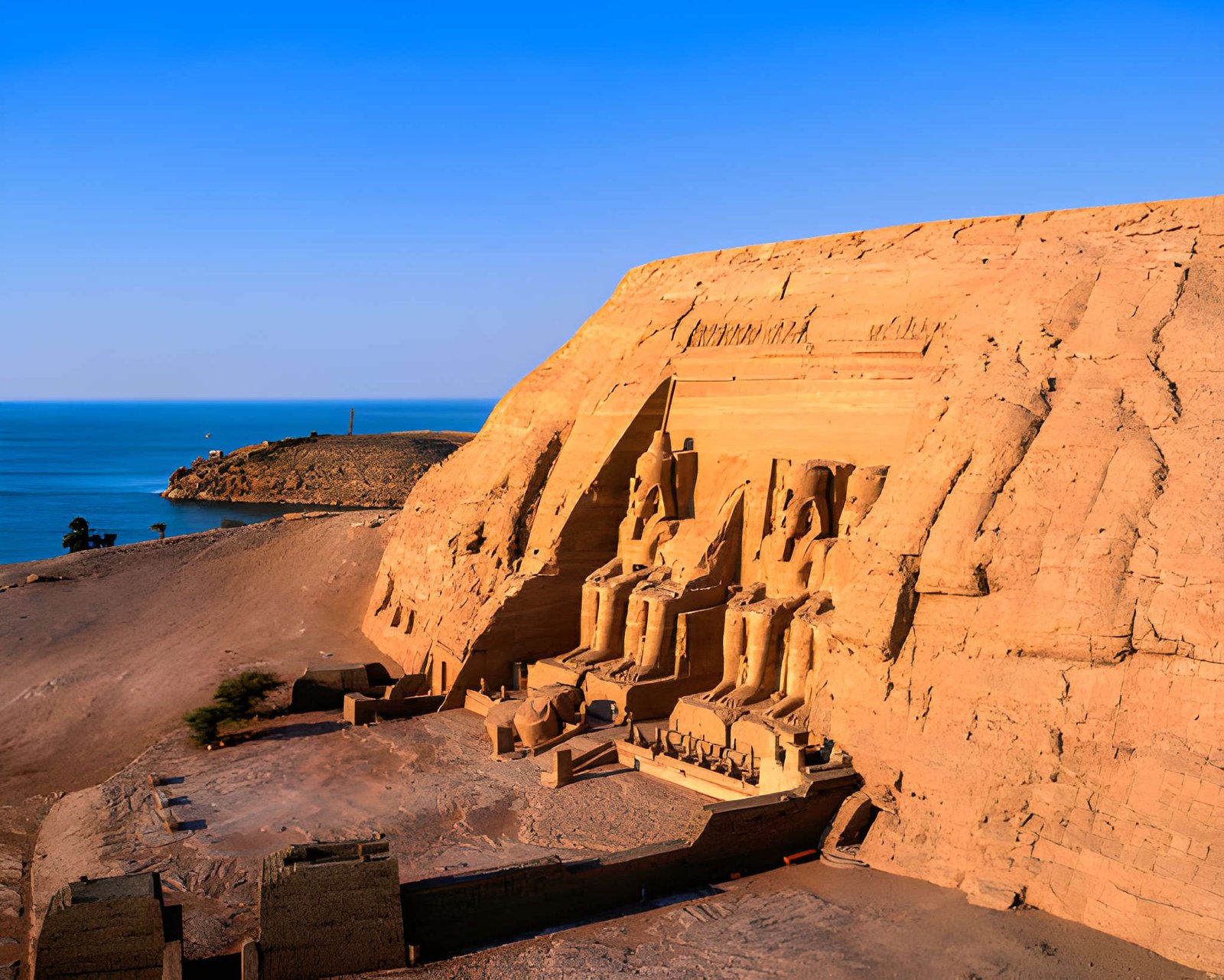
No exploration of Lake Nasser Ruins can exclude the monumental Abu Simbel Temples, carved directly into a mountainside by Ramses II. The guardian colossi — each towering over 20 meters — remain icons of Egypt’s divine kingship. During the Aswan Dam crisis, these temples faced obliteration. Engineers carefully cut them into massive blocks and reconstructed them on higher ground, a feat that preserved one of humanity’s great masterpieces. As sunlight enters the temple’s inner sanctum twice yearly, illuminating the statues of the gods and Ramses himself, onlookers are reminded of the Egyptians’ astronomical mastery and spiritual devotion.
This remarkable site, now overlooking Lake Nasser, lures travelers seeking both majesty and meaning. Travelers can integrate a visit to Abu Simbel into a Best Nile River Cruise itinerary, allowing them to witness the seamless link between Egypt’s ancient legacy and modern-day adventure.
Culture Beneath the Surface: The Submerged Legacy
While many temples were salvaged, hundreds of Nubian villages were lost, forever submerged under Lake Nasser’s expanse. Beneath the still waters rest untold relics — remnants of homes, pottery, and shrines that once formed vibrant communities along the Nile. These underwater ruins illustrate the region’s deep connection to its environment. The lake’s archaeology continues to inspire research teams who use sonar mapping and remote sensing to identify new finds. Some locals even call Lake Nasser a ‘museum below the waves,’ preserving Nubia’s cultural identity in watery silence. It’s a haunting yet hopeful testament to time’s dual nature — as both destroyer and preserver.
Modern Expeditions and Cultural Tourism
In recent decades, Lake Nasser has emerged as a distinctive travel destination. Cruise ships glide across its serene waters, linking historic temples with breathtaking natural scenery. The surrounding landscape, raw and untouched, amplifies the mystique of every site visited. Modern explorers can experience the ruins through organized tours offered by reputable Egyptian agencies. Companies such as Travme Tours craft journeys that capture both the grandeur and intimacy of this region. Visitors seeking exclusivity may pair their exploration of Lake Nasser with tailor-made itineraries like the 10 Day Egypt Luxury Trip with Dahabiya Nile Cruise, enhancing the experience with personalized service and expert guidance.
Beyond historical intrigue, the lake supports birdwatching, fishing, and photography — ideal for travelers craving a mixture of serenity and adventure. With the right guidance, Lake Nasser’s ruins transform from simple landmarks into living chapters of Egyptian civilization.
The Nubian Connection: Preserving Identity Amid Change
The creation of Lake Nasser displaced nearly 100,000 Nubians, whose ancestral lands were engulfed by water. Yet their cultural spirit endures. Nubian villages reconstructed along the shores still pulse with color, music, and storytelling. Their architectural style — vibrant facades, domed roofs, and ornate frescoes — continues to enchant visitors. Modern tourism, when practiced respectfully, helps sustain these communities. The Nubians’ resilience mirrors the very monuments that survived the flood, symbolizing endurance not only of monuments but of people, traditions, and memory.
Nature and Tranquility Around Lake Nasser
Beyond its ruins, Lake Nasser’s vast expanse offers stunning desert vistas. The contrasting hues of golden dunes and turquoise waters create postcards of natural beauty. Wildlife thrives along the lake’s edges — crocodiles, herons, and gazelles find sanctuary in this tranquil habitat. As adventurers traverse this remote stretch by boat, the blend of silence and majesty feels almost spiritual. Few destinations on Earth blend archaeology and ecology so elegantly, reaffirming Lake Nasser’s place among the world’s most enchanting hidden gems. It’s perfect for travelers following an Egypt Bucket List adventure seeking untouched serenity.
Visiting the Lake Nasser Ruins: A Practical Guide
Most visitors begin their journey in Aswan, where cruises and private expeditions depart regularly. The voyage southward unveils a sequence of temple stops, each uniquely positioned along the lake. Whether aboard a traditional vessel or a modern cruise liner, the experience is immersive, offering a front-row seat to Nubia’s preserved grandeur. Tour options vary in duration, ranging from short excursions to multi-day expeditions that include guided stops at key sites such as Amada, Wadi el-Sebua, and Kasr Ibrim. For travelers seeking curated journeys, itineraries like the 8 Day Cairo and Nile Cruise Tour can seamlessly combine the highlights of the Nile Valley with the remoteness of Lake Nasser.
When planning a visit, the best time to explore is between October and April when temperatures are moderate and skies clear. Combining your Lake Nasser itinerary with nearby attractions such as the Nubian Museum in Aswan provides deeper cultural context. Always engage licensed guides who can illuminate each site’s mythology and significance. For those with a passion for both archaeology and tranquility, the Lake Nasser Ruins are unmatched.
Frequently Asked Questions About Lake Nasser Ruins
1. What are the most famous ruins around Lake Nasser?
The most notable ruins include Abu Simbel, Temple of Kalabsha, Amada Temple, Beit el-Wali, and Wadi es-Sebua. Each exhibits unique carvings and hieroglyphics, offering glimpses into ancient Nubian-Egyptian life. Their preservation represents a global collaboration that saved precious history from submersion.
2. How can travelers explore the Lake Nasser Ruins?
Visitors typically explore via dedicated cruise expeditions. Options range from luxury cruisers to intimate charters. Packages like the Best Dahabiya Nile Cruise deliver first-class access with expert commentary. Overland tours from Aswan also connect to select temples for those preferring land-based experiences.
3. Are there ancient sites still underwater?
Yes. Despite the massive rescue operations, numerous Nubian villages and minor temples remain submerged beneath Lake Nasser. Modern technology continues to uncover these relics via sonar imaging. Their presence amplifies Lake Nasser’s mystique, inviting future archaeological exploration.
4. What’s the best time of year to visit Lake Nasser Ruins?
The ideal season is winter, from October to April. During this period, temperatures are pleasant for outdoor excursions. The mild climate enhances both archaeological exploration and scenic cruising, ensuring a memorable journey across Egypt’s southern frontier.
5. How does visiting Lake Nasser differ from classic Nile destinations?
Unlike bustling sites such as Luxor Temple or The Karnak Temple, Lake Nasser offers solitude and unspoiled landscapes. It’s remote, tranquil, and infused with Nubian charm, making it perfect for travelers seeking a deeper, quieter encounter with Egypt’s endless history.
Conclusion: The Eternal Allure of Lake Nasser Ruins
The Lake Nasser Ruins embody the spirit of endurance and reinvention — where colossal temples, resilient communities, and the endless Nile converge into one timeless tableau. More than historical relics, they are living witnesses to humanity’s drive to protect its heritage at any cost. From the colossal guardians of Abu Simbel to the elegant carvings of Kalabsha, every structure tells a chapter of survival and devotion.

Comment (0)