

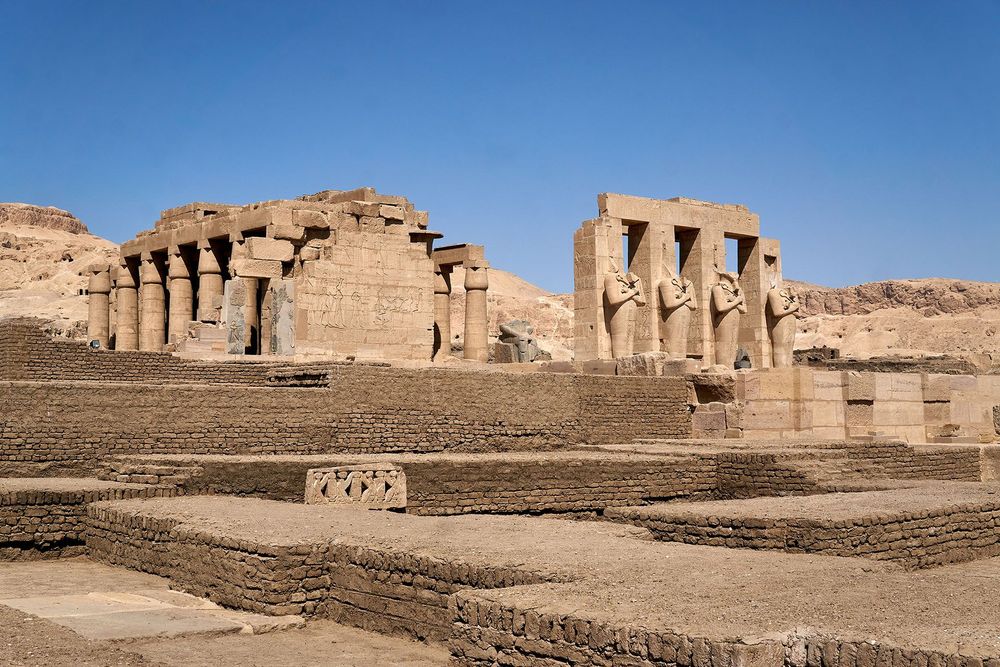
The Majestic Ramesseum Temple: The Mortuary Wonder of Pharaoh Ramses II
The Ramesseum Temple, standing tall on Luxor’s West Bank, is one of ancient Egypt’s most awe-inspiring architectural marvels. Built as the mortuary temple of Pharaoh Ramses II, the Ramesseum remains a symbol of grandeur, divine kingship, and timeless artistry. Though partially ruined, every column, inscription, and colossal statue whispers tales of power, religion, and immortality. This magnificent temple wasn’t just an architectural feat—it was Ramses II’s eternal resting place and a bold statement of his unmatched reign during the 19th Dynasty. Visitors walking through its vast courtyards and hypostyle halls can still feel the echoes of ancient rituals that once filled the air with sacred hymns and incense.
The Ramesseum Temple, dedicated to Amun-Ra, mirrors the might of a pharaoh often called “Ramses the Great.” With its colossal statues of Ramses II, intricate hieroglyphs, and detailed wall carvings, it’s a living chronicle of one of Egypt’s most powerful rulers. Every fragment of its fallen colossi and every fading relief tells a story of victory, devotion, and eternal life. The temple’s design, rich symbolism, and the artistic brilliance embedded within its sandstone structure make it a must-see for travelers exploring Luxor City, the ancient Thebes of Egypt. Today, it stands not just as an archaeological wonder but as a profound representation of Egypt’s glorious past, inviting explorers, historians, and dreamers alike to step back in time.
History and Construction of the Ramesseum Temple
The Ramesseum Temple was commissioned during the reign of Ramses II, who ruled Egypt for over 60 years. Construction began around 1279 BC and continued throughout his reign. The temple was strategically placed on the western bank of the Nile, directly across from Thebes, aligning perfectly with the setting sun—a symbol of death and rebirth in ancient Egyptian belief. The Ramesseum served as both a place of worship and a funerary temple, immortalizing Ramses II’s divine connection to the gods.
This colossal structure was designed by Egypt’s best architects and artisans. The temple complex included massive pylons, spacious courtyards, storerooms, and an intricate sanctuary dedicated to Amun-Ra. The first pylon depicted the famous Battle of Kadesh, one of Ramses II’s greatest military campaigns. These carvings illustrate his prowess as a warrior and his divine right to rule. Behind the pylon, towering statues of the pharaoh once greeted priests and visitors. One of these colossal statues, estimated to weigh over 1,000 tons, now lies broken in pieces, inspiring poets and travelers for centuries.
Architectural Layout and Design Features
The Ramesseum Temple’s architecture captures the essence of Egyptian temple design—monumental, symmetrical, and filled with symbolic meaning. The entrance pylons lead to open courtyards surrounded by massive columns decorated with scenes of offerings to the gods. The hypostyle hall, supported by 48 columns, was adorned with detailed reliefs depicting the divine connection between Ramses II and deities like Amun, Ra, and Ptah. Beyond this hall lies the sanctuary, the spiritual heart of the temple where sacred rituals were once performed.
One of the temple’s most striking features is its colossal seated statue of Ramses II. Although largely destroyed, the fragments of this statue are still awe-inspiring. The craftsmanship and scale reflect the grandeur of a pharaoh who considered himself a living god. Nearby, storerooms and administrative buildings once managed the temple’s vast economic resources, as it functioned not only as a holy site but also as an economic hub for surrounding communities. The attention to detail in the temple’s layout highlights the sophistication of Egyptian engineering and the deep religious beliefs that shaped its design.
Symbolism and Religious Significance of the Ramesseum
The Ramesseum Temple served as a bridge between the mortal and divine realms. Each wall and column was meticulously carved to narrate stories of creation, divine power, and eternal life. The temple honored Amun-Ra, the king of the gods, while also glorifying Ramses II as his chosen son. Inscriptions depict the pharaoh performing sacred rituals and presenting offerings, reinforcing his role as both ruler and high priest. The alignment of the temple with the sun’s path symbolized the eternal cycle of life, death, and renewal.
The Ramesseum was more than a monument to a single king—it embodied the core of Egyptian spirituality. The temple complex aimed to maintain harmony between heaven and earth, ensuring the continued prosperity of Egypt. It also served as a reminder that even in death, Ramses II’s power would endure, guiding his soul to the afterlife beside the gods. The connection between the temple and nearby mortuary complexes such as the Temple of Hatshepsut and Habu Temple highlights the sacred geography of Thebes, where each structure played a role in the spiritual landscape of ancient Egypt.
The Colossal Statues and Reliefs of Ramses II
The Ramesseum’s crowning glory was its colossal statues of Ramses II, considered among the grandest ever carved. The most famous of these statues once stood over 17 meters tall, depicting the pharaoh seated majestically on his throne. Although toppled by time and earthquakes, its fragments inspired countless travelers, including the poet Percy Bysshe Shelley, who immortalized it in the poem “Ozymandias.” The detailed craftsmanship of these statues reveals the exceptional skill of Egyptian sculptors, who worked tirelessly to immortalize the divine essence of their ruler.
In addition to the sculptures, the temple’s reliefs are masterpieces of ancient art. They vividly portray Ramses II’s military campaigns, offerings to gods, and ceremonial processions. The depiction of the Battle of Kadesh stands out as one of the most detailed wartime carvings in Egyptian history, blending artistic brilliance with royal propaganda. These reliefs not only celebrate military triumphs but also emphasize the sacred duty of the pharaoh to maintain order and protect Egypt from chaos.
The Ramesseum in Relation to Other Ancient Egyptian Temples
The Ramesseum Temple forms part of the grand network of monumental temples that define Egypt’s West Bank in Luxor. Its architectural style draws inspiration from earlier structures like the Karnak Temple and the Luxor Temple, yet it maintains a unique identity that reflects Ramses II’s personal vision of divine kingship. The temple’s grandeur rivals the masterpieces of his contemporaries and successors, creating an eternal dialogue among Egypt’s sacred monuments.
Unlike temples dedicated solely to gods, the Ramesseum served as both a religious and funerary complex. Its dual purpose influenced later mortuary temples, including those built for Ramses III and other New Kingdom rulers. Standing near the Colossi of Memnon, the Ramesseum offers a breathtaking panorama of Egyptian mortuary architecture—a treasure trove for historians and travelers alike.
Preservation Efforts and Archaeological Discoveries
Over time, the Ramesseum suffered from erosion, earthquakes, and the Nile’s flooding. Despite these challenges, modern archaeologists and preservation teams have worked tirelessly to stabilize the remaining structures and document its intricate reliefs. Excavations have uncovered remnants of statues, pottery, and religious artifacts, shedding light on the daily rituals and temple economy. The ongoing discoveries continue to reveal the sophistication of Ramses II’s reign and the monumental effort invested in honoring his legacy.
Archaeological research at the Ramesseum has also revealed extensive papyrus archives, possibly linked to the temple’s administration. These findings offer valuable insight into the temple’s role as both a spiritual and economic powerhouse in ancient Thebes. Preservation projects not only safeguard the temple’s physical remains but also rekindle global interest in ancient Egyptian heritage, promoting sustainable tourism and education.
Visiting the Ramesseum Temple Today
For travelers exploring Egypt, the Ramesseum stands as a must-visit destination. Located on Luxor’s West Bank, it offers sweeping views of the desert, the Nile, and surrounding temples. Walking through its colossal ruins is like stepping into the pages of ancient history. The temple’s serene atmosphere invites reflection, while its monumental architecture leaves visitors speechless. Exploring the Ramesseum is best done alongside visits to neighboring sites such as the Valley of the Kings, where Ramses II’s descendants were buried, and the stunning Abydos Temple, another masterpiece of divine devotion.
Tourists visiting Luxor can easily include the Ramesseum in their itineraries, especially when booking through trusted agencies like Travme Tours. Many Best Nile River Cruises incorporate visits to Luxor’s iconic temples, offering an unforgettable way to experience Egypt’s ancient wonders while sailing the Nile. Travelers can also explore exclusive options like the Luxury Dahabiya Nile Cruise, which provides a more intimate journey through Egypt’s timeless landscapes.
Interesting Facts About the Ramesseum Temple
1. The name “Ramesseum” was coined by 19th-century explorers who admired its remains and recognized it as Ramses II’s mortuary temple.
2. The fallen colossus of Ramses II inspired Shelley’s poem “Ozymandias,” symbolizing the impermanence of power.
3. The temple once held a colossal library and archives, making it a hub of knowledge and administration.
4. The Ramesseum’s reliefs are among the best-preserved depictions of Ramses II’s military victories.
5. Its design influenced later mortuary temples across Egypt, cementing its place in Egyptian architectural history.
Frequently Asked Questions About the Ramesseum Temple
Where is the Ramesseum Temple located?
The Ramesseum Temple is located on the West Bank of the Nile River, across from modern Luxor, Egypt. It forms part of the ancient Theban necropolis, surrounded by other monumental sites such as the Valley of the Kings and the Temple of Hatshepsut.
Who built the Ramesseum Temple?
The temple was built by Pharaoh Ramses II, also known as Ramses the Great, during Egypt’s 19th Dynasty. It served as his mortuary temple, dedicated to both his divine legacy and the god Amun-Ra.
What is the significance of the Ramesseum Temple?
The Ramesseum symbolizes Ramses II’s power, piety, and divine authority. It was designed to ensure his eternal presence among the gods and to celebrate his military triumphs, particularly the Battle of Kadesh.
What can visitors see at the Ramesseum Temple today?
Visitors can admire the colossal ruins of the temple’s pylons, intricately carved reliefs, and fragments of Ramses II’s massive statues. The site also offers breathtaking views of Luxor’s desert landscape and nearby temples.
How can travelers visit the Ramesseum Temple?
Travelers can visit the Ramesseum through guided tours departing from Luxor. Many curated itineraries, such as Egypt Day Tours and Egypt Luxury Tour packages, include visits to the Ramesseum alongside other major temples. It’s an unmissable stop for anyone passionate about archaeology, history, and the legacy of Ramses II.

Comment (0)