

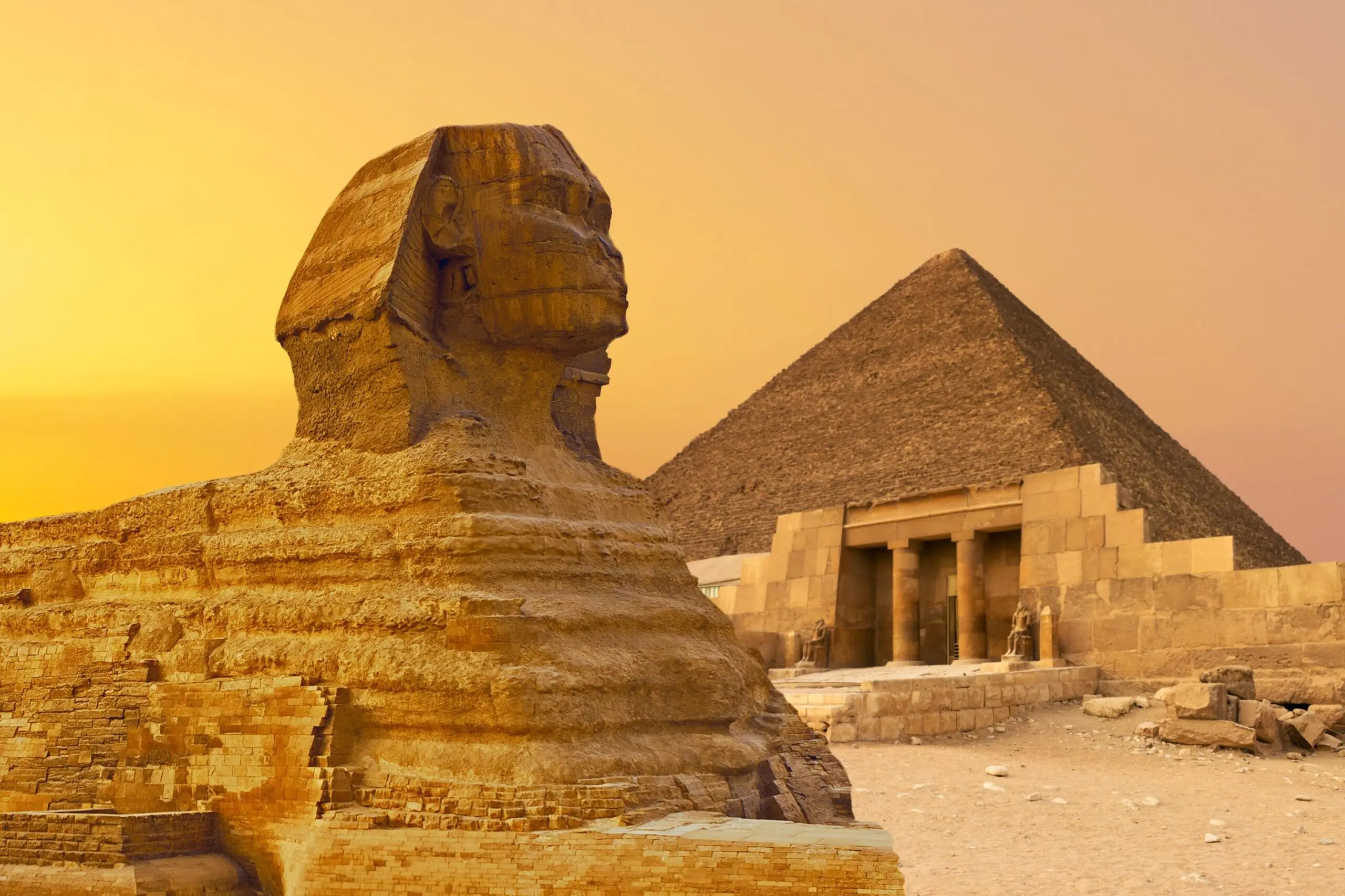
The Timeless Majesty of the Sphinx Statue in Egypt
The Sphinx Statue, a monumental limestone figure resting on the Giza Plateau, remains one of the most mysterious and awe-inspiring monuments in human history. With the body of a lion and the face of a pharaoh, this colossal sculpture has guarded the edge of the desert for thousands of years, embodying strength, wisdom, and the eternal power of ancient Egypt. Visitors from around the globe travel to gaze upon the enigmatic smile of the Sphinx Statue, wondering about the secrets hidden within its weathered stone. Its timeless grandeur continues to charm historians, archaeologists, and travelers alike, standing as a silent witness to Egypt’s profound civilization and artistic genius.
Carved from a single block of limestone, the Great Sphinx of Giza stretches about 73 meters long and towers 20 meters high, making it the largest monolithic statue in the world. Scholars believe it was built during the reign of Pharaoh Khafre around 2500 BC, though debates about its true age and purpose persist. Whether you’re drawn by its mythical appeal or historical significance, the Sphinx Statue symbolizes the enduring mystery of Egypt’s ancient past. For those planning to explore this fascinating monument, pairing your visit with a stop at the nearby Pyramids of Giza and The Grand Egyptian Museum creates an unforgettable journey through the sands of time.
Origins and Symbolism of the Sphinx Statue
The Sphinx Statue’s origins are shrouded in legend, merging mythology with royal propaganda. Ancient Egyptians saw the Sphinx as a divine guardian, a sacred protector of tombs, temples, and royal necropolises. The lion’s body represents physical power and sovereignty, while the human head—believed to be modeled after Pharaoh Khafre—symbolizes intelligence and leadership. This fusion of human and animal forms reflected the Egyptian belief in harmony between strength and wisdom, qualities essential to maintaining Ma’at, the cosmic order.
The Sphinx wasn’t merely an artistic masterpiece; it was a spiritual symbol, a sentinel watching over the sacred west bank of the Nile, where the sun sets and where Egyptians believed souls journeyed to the afterlife. Similar statues appeared later along the Avenue of Sphinxes in Luxor, forming majestic processional pathways that celebrated divine power and eternal life. Each Sphinx carried profound meaning, linking the earthly realm to the divine.
The Enigma Behind Its Construction
Despite centuries of study, the construction techniques behind the Sphinx Statue remain partly a mystery. Archaeologists suggest that ancient Egyptian workers carved it directly from the bedrock using copper chisels and stone hammers. Evidence indicates it was originally painted in vibrant hues—red on the face, blue on the headdress, and yellow on the body—bringing it to life under the blazing Egyptian sun. Time and erosion have stripped away much of this color, but traces remain visible to the trained eye.
Some theories even challenge mainstream scholarship, proposing that the Sphinx predates Khafre’s reign, possibly constructed by an earlier civilization. Weathering patterns along its body hint at water erosion, leading some researchers to believe it might date back thousands of years earlier when the Giza Plateau experienced heavier rainfall. Whether myth or fact, these theories deepen the allure surrounding the Sphinx and its timeless riddle.
The Sphinx and the Pharaoh Khafre
Most Egyptologists agree that the Sphinx Statue was commissioned by Pharaoh Khafre, builder of the second pyramid of Giza. The alignment of the Sphinx with his pyramid complex and the Valley Temple supports this theory. The Sphinx’s face bears striking similarities to surviving statues of Khafre, suggesting it served as a divine manifestation of the king, merging his likeness with the power of the lion. This fusion reinforced royal authority, presenting Khafre as both protector and god-king.
The Lost Nose and the Mark of Time
One of the most frequently discussed aspects of the Sphinx Statue is its missing nose. Popular myths claim it was shot off by Napoleon’s troops, but sketches predating his invasion show the nose already gone. The more likely culprit was deliberate vandalism by a 14th-century cleric who viewed the statue as idolatrous. Over millennia, natural erosion, sandstorms, and restoration attempts also took their toll. Nonetheless, the Sphinx endures, its weathered face embodying the passage of time and the resilience of Egypt’s cultural heritage.
The Sphinx’s Role in Religion and Mythology
In ancient Egyptian religion, the Sphinx embodied royal power, divine wisdom, and protection. Later, during the New Kingdom, Pharaoh Thutmose IV claimed in his famous Dream Stele that the Sphinx promised him kingship if he cleared its body of sand—a story that reinforced divine legitimacy. The Greeks later adopted the Sphinx into their mythology, transforming it into a creature of riddles and doom, famously challenging travelers with enigmatic questions. This blending of cultures expanded the Sphinx’s legacy far beyond Egypt’s borders, making it a universal symbol of mystery and knowledge.
Architectural Genius Behind the Sphinx Statue
Crafted from a single limestone ridge, the Sphinx Statue showcases the extraordinary craftsmanship of ancient Egyptian artisans. Its meticulous alignment with celestial bodies demonstrates a deep understanding of astronomy and geometry. Facing directly east, the Sphinx aligns with the rising sun during the spring and autumn equinoxes, symbolizing rebirth and cosmic balance. This astronomical precision reflects the Egyptians’ obsession with eternity and their belief in the divine connection between the heavens and the earth.
The surrounding Sphinx enclosure displays clear evidence of quarrying, where workers extracted stone blocks used to build nearby temples. This integration of construction and purpose reveals the Egyptians’ unmatched skill in resource management and engineering. Visitors exploring this site often continue their journey to the nearby Memphis Egypt, The Old Egyptian Capital or Sakkara Necropolis, where equally astounding monuments testify to Egypt’s architectural brilliance.
Restoration Efforts and Preservation
Over thousands of years, the Sphinx Statue has undergone numerous restoration projects. From ancient patchwork repairs using limestone blocks to modern conservation efforts, each attempt aimed to preserve its majesty against erosion, pollution, and groundwater damage. In the 20th and 21st centuries, Egyptian authorities and international experts collaborated to stabilize the monument, installing drainage systems and reinforcing stone layers. These efforts highlight the global importance of protecting such irreplaceable cultural treasures for future generations.
The Sphinx in Modern Culture and Tourism
Today, the Sphinx Statue continues to fascinate millions. It stands as a centerpiece of Egypt’s tourism industry, attracting travelers seeking to experience the mystique of the ancient world. The monument’s image graces countless films, artworks, and novels, symbolizing ancient wisdom and timeless wonder. Modern visitors often combine their exploration of the Sphinx with Egypt Day Tours or a scenic Best Nile River Cruises, blending history and luxury in a single unforgettable adventure.
Scientific Discoveries and Hidden Chambers
Recent technological surveys have revealed potential cavities and tunnels beneath the Sphinx Statue. Using ground-penetrating radar, researchers detected anomalies suggesting possible hidden chambers, sparking renewed excitement about what secrets might still lie buried under its paws. Though none have been excavated yet, such findings fuel speculation about lost archives or ritual chambers linked to the pyramids. The idea of a hidden “Hall of Records” continues to captivate both scholars and dreamers, keeping the Sphinx firmly at the heart of Egypt’s enduring allure.
The Sphinx Statue and the Egyptian Identity
For modern Egyptians, the Sphinx Statue represents more than an archaeological marvel—it’s a national symbol of endurance and pride. Its presence in Giza stands as a reminder of Egypt’s unmatched contributions to human civilization. Whether viewed under the golden sunrise or illuminated by moonlight, the Sphinx whispers tales of ancient glory, inviting every visitor to ponder humanity’s place in the vast continuum of history. It bridges past and present, echoing Egypt’s eternal spirit of resilience and grandeur.
FAQs About the Sphinx Statue
1. Who built the Sphinx Statue?
Most historians attribute the construction of the Sphinx Statue to Pharaoh Khafre of the Fourth Dynasty, around 2500 BC. Its face closely resembles known statues of Khafre, and its alignment with his pyramid complex supports this theory. Although alternative theories propose older origins, mainstream archaeology firmly places its creation during Khafre’s reign.
2. What does the Sphinx symbolize?
The Sphinx Statue symbolizes protection, strength, and wisdom. Its lion’s body represents royal power, while the human face signifies intelligence and divine authority. As guardian of the Giza Plateau, the Sphinx was believed to protect the tombs and temples from evil forces, serving as a spiritual sentinel of the ancient world.
3. Why is the Sphinx missing its nose?
The Sphinx’s nose was destroyed centuries ago, likely by a religious zealot in the 14th century who opposed idolatry. Earlier sketches confirm that the damage predates Napoleon’s arrival in Egypt, debunking the myth that his soldiers caused it. Over the years, erosion and weathering further shaped its distinctive appearance.
4. Can visitors go inside the Sphinx?
Currently, the Sphinx Statue isn’t open for public entry, as it’s a solid limestone structure with only minor natural cavities. Archaeological investigations have found no major chambers inside. However, visitors can get remarkably close to its base during guided tours and admire its intricate details up close.
5. What’s the best time to visit the Sphinx Statue?
The best time to visit the Sphinx is during Egypt’s cooler months, from October to April, when temperatures are milder. Early mornings or late afternoons provide the best lighting for photography. Pairing your visit with attractions like the Egyptian Museum or booking through the Best Egypt Travel Packages ensures a seamless and enriching experience.

Comment (0)