

St. Catherine’s Monastery: The Timeless Heart of Sinai’s Holy Heritage
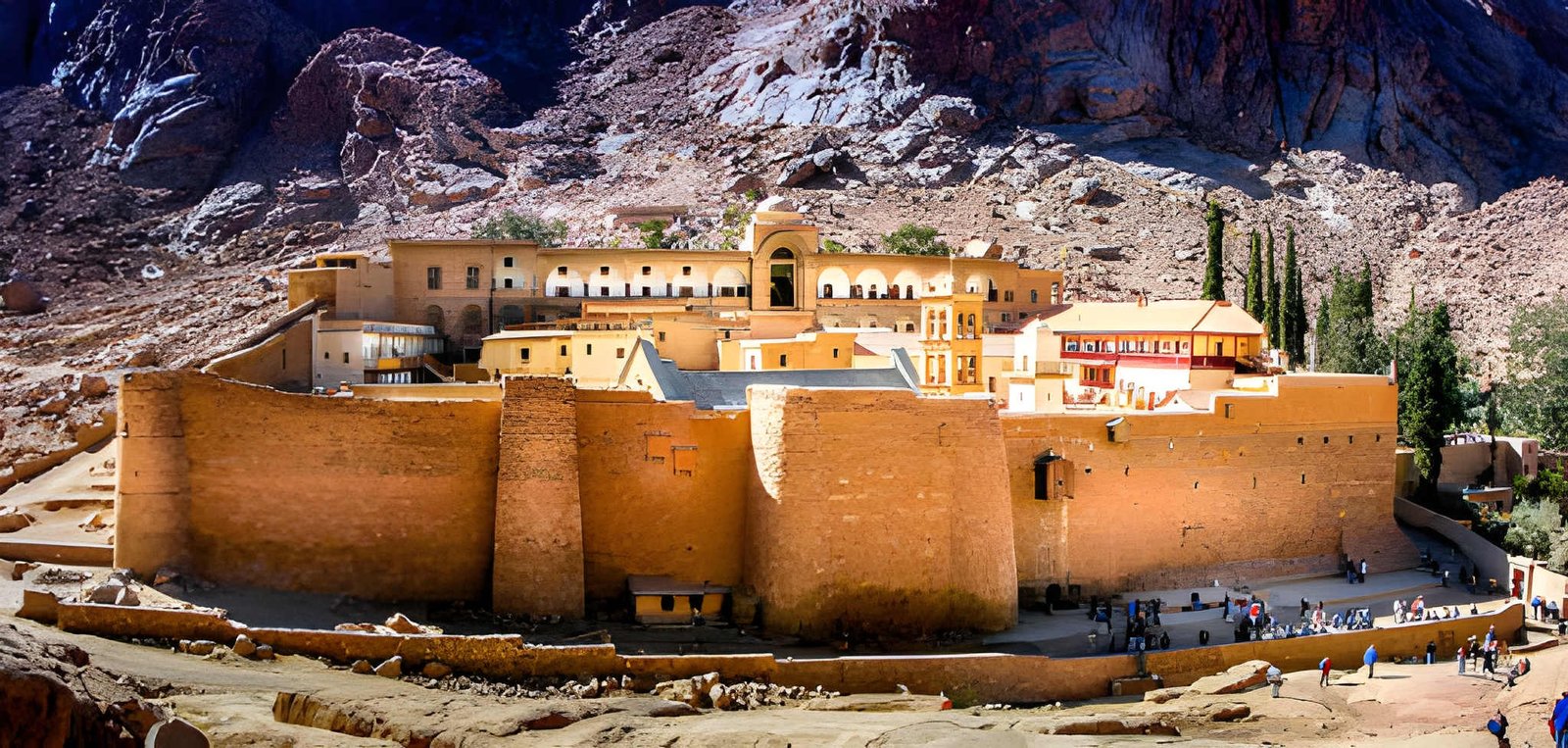
Hidden within the rugged mountains of Egypt’s Sinai Peninsula, St. Catherine’s Monastery—officially the Sacred Monastery of the God-Trodden Mount Sinai—stands as one of the oldest continuously operating Christian monasteries in the world. This UNESCO World Heritage Site has echoed with prayers for more than 1,400 years, protected by the arid desert and the shadow of Mount Sinai (Jebel Musa), where tradition holds that Moses received the Ten Commandments. The monastery’s formidable walls shelter a treasure trove of art, rare manuscripts, and spiritual wonder that continues to captivate pilgrims, historians, and travelers alike.
Founded in the sixth century by Byzantine Emperor Justinian I, St. Catherine’s Monastery remains a living testament to faith, endurance, and interreligious coexistence. It doesn’t merely whisper ancient stories—it sings them through its stone corridors, its whispering wind, and the gentle flicker of oil lamps illuminating sacred icons untouched by time. Nestled at the meeting point of heaven and earth, the monastery’s appeal crosses borders and beliefs, making it an essential stop for those exploring Egypt’s sacred geography alongside monumental marvels like the Pyramids of Giza and the stunning Abu Simbel Temples.
In an era when digital noise drowns out silence, stepping into St. Catherine’s Monastery feels like entering another dimension—timeless, pure, and unwavering in spirit. This sanctuary calls travelers seeking both inner reflection and historical immersion, offering a rare blend of cultural significance, divine serenity, and tangible history. Pictures can’t do justice to this sacred site—it must be experienced in person to grasp its profound gravity. Let’s step closer to its story, its treasures, and its legacy, which still radiates warmth from its desert heart.
The Historical Origins of St. Catherine’s Monastery
The origins of St. Catherine’s Monastery trace back to around 548–565 CE, during the reign of Emperor Justinian I, who ordered the construction of a fortress around what was believed to be the biblical Burning Bush. The site was chosen for its spiritual importance, where, according to tradition, God spoke to Moses. The emperor’s intent was to safeguard the site’s holiness while offering refuge to hermits scattered across Sinai’s mountains. Unlike other ancient sanctuaries lost to time, St. Catherine’s Monastery has defied destruction, plunder, and abandonment, surviving through centuries of political and religious turbulence.
Despite its Christian roots, the monastery holds a unique place in Islamic tradition as well. A firman, or royal decree, granted by Prophet Muhammad himself is preserved within its walls, guaranteeing protection and peaceful coexistence for all who dwell inside—a remarkable document that has safeguarded the monastery’s harmony for over a millennium. This fusion of faith traditions underscores the monastery’s unique character: a bridge between worlds, religions, and epochs. The same air that carries desert dust also bears the prayers of countless generations seeking divine connection in Egypt’s spiritual landscape, much like pilgrims visiting ancient sites in Coptic Cairo.
Architecture: A Fortress of Faith Amid the Sinai Desert
St. Catherine’s Monastery’s architecture is both practical and poetic. Massive granite walls tower up to 11 meters high, forming a shield against the harsh desert climate and potential invaders. Inside, the monastery’s design merges Byzantine and early Islamic influences—testament to centuries of coexistence and adaptation. Its inner courtyard reveals an otherworldly juxtaposition: the serene Church of the Transfiguration of Christ beside the ancient chapel that enshrines the Burning Bush itself, believed to be a living descendant of the original.
The church’s interior reflects the spiritual depth and craftsmanship of Byzantine art, with exquisite mosaics illustrating Christ’s transfiguration—a visual narrative of divine illumination. Every stone, arch, and door here tells a layered story. Even the monks’ quarters, libraries, and refectories embody timeless simplicity, evoking ascetic devotion amid monumental beauty. Many visitors combine their exploration here with the sublime landscapes of the Sinai & Red Sea region, continuing their journey through desert trails and coral-fringed coastlines.
The Monastic Library: A Treasury of Sacred Texts
Among St. Catherine’s Monastery’s greatest treasures lies its renowned library—the second most significant collection of ancient manuscripts in the world, surpassed only by the Vatican Library. Housing more than 4,500 manuscripts and thousands of printed books in Greek, Arabic, Syriac, Georgian, and other languages, this library is a goldmine for linguists, theologians, and historians. Rediscoveries here have reshaped biblical scholarship, including the famed Codex Sinaiticus, one of the oldest surviving copies of the Christian Bible, now partially preserved in London, Leipzig, and St. Petersburg.
The library isn’t just about words—it’s about legacy. Handwritten on vellum and parchment, these texts bear the fingerprints of scribes who labored in devotion. Ancient icons, manuscripts, and scrolls illuminated with gold and lapis lazuli reveal how early monks understood God’s word not just as doctrine but as divine art. The safeguarding of these manuscripts stands as a model of cultural preservation. Visitors embarking on thoughtful itineraries—such as the Egypt Luxury Tour—often highlight the library as a cornerstone of Egypt’s spiritual scholarship.
The Holy Relics of St. Catherine of Alexandria
The monastery draws its name from St. Catherine of Alexandria, a learned and courageous Christian martyr of the early fourth century. According to legend, after suffering torture and martyrdom, angels transported her body to the summit of Mount Catherine, the region’s highest peak. Centuries later, her relics were discovered and enshrined within the monastery, where they continue to attract pilgrims worldwide seeking healing and spiritual awakening.
Inside the chapel dedicated to St. Catherine, her resting place is adorned with scented oils, flickering candles, and intricate icons venerating her sanctity. Pilgrims touch the reliquary reverently, believing it channels divine mercy. The stories of her intellect, vision, and courage echo across cultures, inspiring spiritual seekers much like the chronicles of Famous Egyptian Queens whose influence bridged history and mythology.
Mount Sinai: The Sacred Peak of Revelation
No pilgrimage to St. Catherine’s Monastery is complete without scaling nearby Mount Sinai. Its granite slopes ascend majestically to 2,285 meters, with trails leading to the summit where Moses is said to have received the Ten Commandments. Climbers often begin their ascent at night, guided by torchlight, to witness dawn break across the jagged horizon—a moment that blends natural beauty with spiritual transcendence. Watching the sunrise bathe the desert in golden hues makes one feel both infinitesimal and immortal.
The mountain’s biblical resonance complements the monastery’s aura of sanctity. Many visitors pair this spiritual climb with scenic explorations across Egypt, joining carefully curated tours like the 8 Day Cairo and Nile Cruise Tour or Best Nile River Cruises, merging spiritual reflection with luxury travel through Egypt’s ever-flowing history along the Nile.
Interfaith Legacy and Cultural Harmony
Few places in the world symbolize coexistence as genuinely as St. Catherine’s Monastery. Within its walls stands not only a church but also a small mosque built centuries ago for visiting Bedouin tribes and Muslim pilgrims. This coexistence isn’t merely historical—it’s lived daily by the monks who share mutual respect with the local Bedouins, forming a microcosm of peace that defies divisions. The respect for all Abrahamic faiths shines in both practice and spirit, making the site a beacon of tolerance and understanding in a region that has witnessed centuries of cultural crossroads.
In our modern context, St. Catherine’s message rings louder than ever. Here, prayer transcends religion, and silence speaks volumes. Its message mirrors the ethos of Egypt’s broader cultural harmony celebrated in An Insider’s Guide to Egyptian Culture. The monastery remains a timeless reminder that humanity’s greatest strength lies in compassion and shared reverence for the divine.
Visitor Experience: How to Reach and Explore St. Catherine’s Monastery
Reaching St. Catherine’s Monastery involves a scenic journey through the Sinai Desert, typically from Sharm El Sheikh or Nuweiba. The drive traverses starkly beautiful landscapes where mountains melt into sandy plains, casting ever-shifting shadows. Visitors often base themselves in St. Catherine village, a modest yet hospitable settlement offering basic lodgings and authentic Bedouin meals beneath star-studded skies. Early risers can witness sunrise from the monastery’s surroundings, where morning light spills across palm groves and granite cliffs.
Travelers combining spiritually profound stops with relaxation along the coast often choose integrated packages such as the Best Egypt Travel Packages, allowing them to explore this sacred mountain, the Western Desert in Egypt, and Egypt’s ancient wonders effortlessly. Whether approached through guided tours or private excursions, St. Catherine’s radiates the same ethereal stillness that has drawn explorers and ascetics for centuries.
The Ongoing Spiritual Significance of St. Catherine’s Monastery
Even in the 21st century, St. Catherine’s Monastery remains an active spiritual powerhouse. Its monks follow a rhythm unchanged by time—chanting prayers at dawn, tending their gardens, and welcoming visitors with quiet grace. The monastery’s continued vitality symbolizes faith’s resilience. Beyond its stone walls, it influences countless worshippers and scholars, serving as a living bridge between past revelations and present reflections.
St. Catherine’s isn’t merely a site—it’s a heartbeat embedded in Sinai’s landscape, echoing through time. It inspires pilgrims as profoundly as natural sanctuaries like Ras Mohammed National Park inspire divers and nature enthusiasts. Its endurance epitomizes faith’s unbreakable strength, and its beauty transcends religion itself.
Frequently Asked Questions About St. Catherine’s Monastery
What is the best time to visit St. Catherine’s Monastery?
The monastery is open year-round, but the best times to visit are spring (March–May) and autumn (September–November), when temperatures are milder, and desert winds are gentle. During these months, visitors can comfortably explore both the monastery and trek Mount Sinai without the scorching heat of summer or the cold winter nights.
How can I reach St. Catherine’s Monastery from Cairo or Sharm El Sheikh?
Travelers can reach the site by road from Sharm El Sheikh (about 2–3 hours) or Cairo (roughly 6–7 hours). Organized tours and private car transfers are readily available, often included in curated travel arrangements like the 6 Days Egypt Tour, which blends history, spirituality, and scenic exploration.
Is St. Catherine’s Monastery open to non-Christians?
Yes, absolutely. St. Catherine’s welcomes all visitors regardless of faith background. The monastery’s enduring philosophy emphasizes hospitality and spiritual inclusivity, reflecting centuries of peaceful coexistence between monks and the local Bedouin Muslim community.
Are photography and filming allowed inside St. Catherine’s Monastery?
Photography is permitted in the courtyard and exterior areas but is restricted inside the church and library to protect fragile artworks and manuscripts. Visitors are encouraged to experience these spaces with reverence, absorbing their quiet sanctity rather than through a camera lens.
Can I stay overnight near St. Catherine’s Monastery?
Yes, several guesthouses and eco-lodges operate near the monastery, offering basic but comfortable accommodations. Many visitors also camp nearby to enjoy the desert’s tranquility before dawn ascents of Mount Sinai. Combining such stays with longer itineraries like the 15 Day Egypt Tour allows travelers to connect deeply with Sinai’s landscapes, history, and mysticism.
Whether you come seeking silence, enlightenment, or historical curiosity, St. Catherine’s Monastery offers an experience that transcends centuries. Here, in the silence of the Sinai winds, spirit and time stand still, reminding us that some corners of the Earth remain eternally sacred.

Comment (0)