

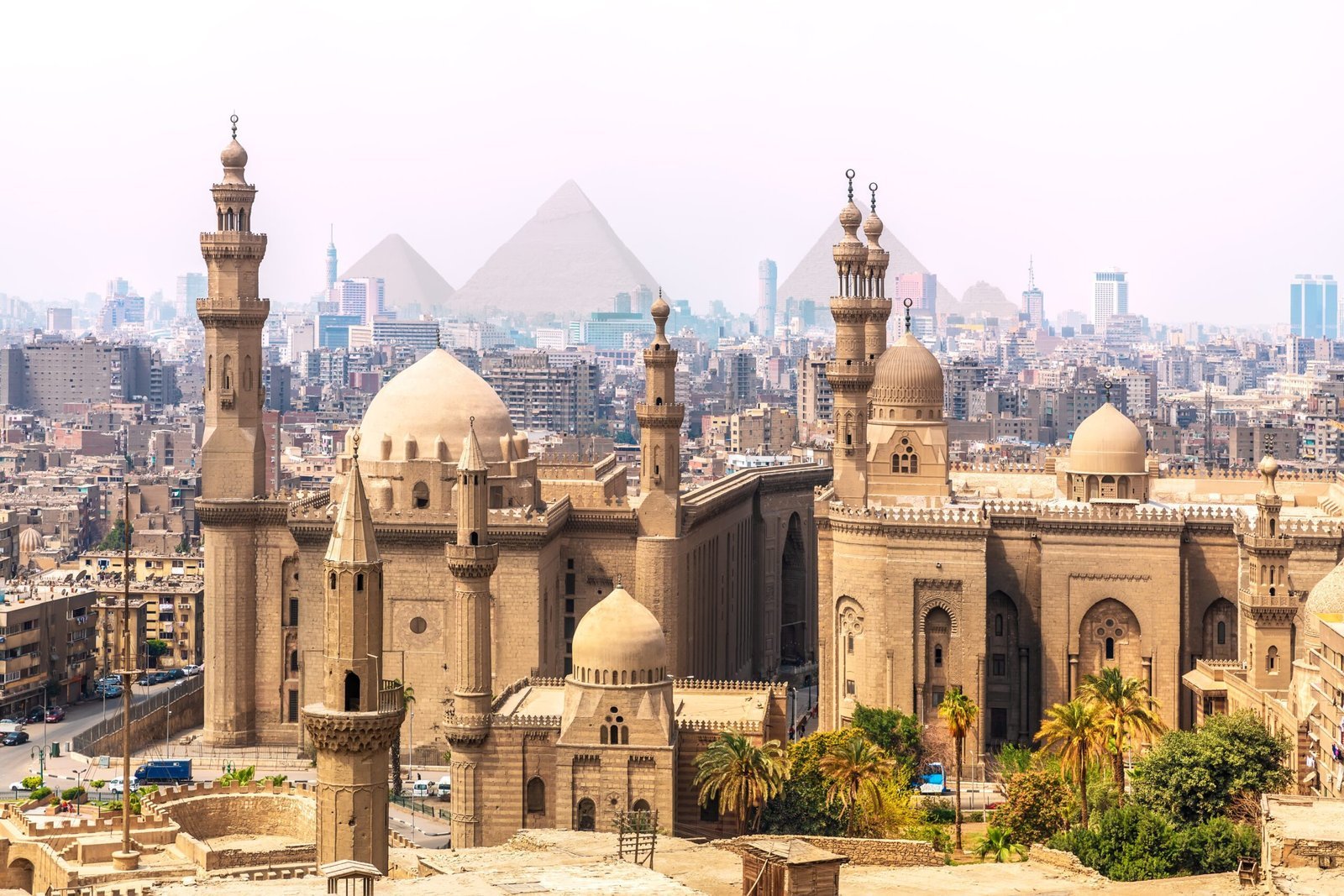
Sultan Hassan Mosque: The Crown Jewel of Islamic Cairo’s Architectural Masterpieces
Standing tall at the base of the Citadel of Salah El-Din in Cairo, the Sultan Hassan Mosque is a breathtaking testament to Egypt’s medieval Islamic glory. Commissioned by Sultan an-Nasir Hassan in the 14th century, this colossal mosque and madrasa complex remains one of the most outstanding examples of Mamluk architecture in the world. Its monumental scale, intricate carvings, and harmonious proportions have fascinated historians, architects, and travelers for centuries. The Sultan Hassan Mosque isn’t just a religious structure—it encapsulates a golden era of artistry, faith, and innovation that continues to inspire admiration. The aura of grandeur surrounding this mosque is palpable from the moment one approaches its towering facade, a marvel of both strength and delicacy carved in stone.
In the heart of Islamic Cairo, where time seems to stand still, the Sultan Hassan Mosque unfolds a tale of devotion and dynastic ambition. Built between 1356 and 1363 AD, it was intended not only as a place of worship but also as a center of learning, housing four madrasas for the major Sunni schools of thought. With its towering 36-meter-high entrance, 81-meter minaret, and soaring domes, the mosque perfectly mirrors the ambition of its founder—a ruler who sought immortality through stone. Visitors stepping into its immense courtyard find themselves engulfed in a serene silence broken only by the distant echo of prayers. The blend of light and shadow across its marble floors, the calligraphic inscriptions, and the geometric serenity of its design make the structure a living reflection of Islamic artistry at its finest.
Today, the Sultan Hassan Mosque stands as a cornerstone of cultural tourism, drawing travelers eager to explore Egypt’s Islamic identity beyond its pharaonic wonders. From those embarking on Egypt Day Tours to seasoned explorers tracing the city’s layered history, this mosque is a must-see highlight. Not far from other Cairo landmarks such as the Al Rifai Mosque and the Al Azhar Mosque, it forms part of a captivating spiritual landscape that defines Cairo’s skyline. Whether you’re a student of architecture, a lover of history, or simply an admirer of beauty, the Sultan Hassan Mosque promises an unforgettable experience steeped in both majesty and meaning.
The Historical Context Behind Sultan Hassan’s Vision
The mid-14th century in Egypt was a turbulent yet artistically rich period. Sultan an-Nasir Hassan, the Mamluk ruler who commissioned the mosque, ascended the throne at a young age, facing political unrest and court conspiracies. Despite the chaos, his reign witnessed a renaissance in art and architecture. Determined to leave behind a legacy that surpassed his predecessors, Sultan Hassan envisioned a monument that would symbolize both his divine authority and his devotion to Islam. Thus, the grand project of the Sultan Hassan Mosque was born—a structure that celebrated learning, prayer, and power all in one.
Historical records indicate that construction began in 1356 AD and continued for seven years, employing over a thousand artisans. Tragically, Sultan Hassan was assassinated before its completion, but his monumental dream lived on. The mosque’s design reflected Cairo’s growing prominence as the intellectual and spiritual heart of the Islamic world. Its four madrasas represented the Shafi‘i, Maliki, Hanafi, and Hanbali schools of law, underscoring the sultan’s commitment to unity within diversity. The mosque’s construction cost was staggering for its time, amounting to over a million dinars—a fortune that signified both prestige and purpose.
Architectural Grandeur and Symbolism in Every Stone
The Sultan Hassan Mosque’s architecture is a masterclass in Mamluk design—a blend of monumental scale and refined artistry. Its vast rectangular plan, measuring approximately 150 meters in length, is punctuated by colossal walls that seem to scrape the sky. The main entrance, framed by muqarnas (stalactite-like carvings), is among the tallest in Egypt, creating an overwhelming sense of awe even before one steps inside. Beyond the entrance lies a tranquil courtyard surrounded by four iwans (vaulted halls), each facing one of the cardinal directions. The largest iwan, oriented toward Mecca, houses the prayer hall with a mihrab adorned in marble, gold, and intricate mosaics.
The mosque’s acoustic and lighting design reveals the genius of medieval Egyptian architects. Narrow openings and high ceilings allow natural light to cascade through the space, creating an ethereal atmosphere that enhances spiritual reflection. The mihrab and minbar showcase the finest craftsmanship—wood inlaid with ivory and mother-of-pearl, complemented by flowing Quranic inscriptions. These artistic details not only demonstrate technical mastery but also convey deep spiritual symbolism. Every pattern and motif speaks of divine unity, a principle central to Islamic art. For travelers fascinated by architecture, this mosque rivals even the grandeur of ancient temples like the Luxor Temple in terms of design ambition.
The Mosque’s Role in Islamic Education and Society
Beyond its architectural splendor, the Sultan Hassan Mosque was conceived as a hub for Islamic learning. Each of its four madrasas was dedicated to teaching a different Islamic jurisprudence, complete with lecture halls, student quarters, and living facilities for scholars. This multi-school structure was unprecedented in Cairo at the time, reflecting Sultan Hassan’s vision of an inclusive intellectual enterprise. Here, scholars debated theology, philosophy, law, and science—making the mosque a precursor to modern universities.
In its heyday, the mosque thrived as both a place of worship and an educational institution. Students flocked from across the Islamic world to study under renowned sheikhs. The endowment system ensured that scholars received sustenance, accommodation, and stipends, securing the mosque’s place as a lasting center of knowledge. Even today, it commands reverence not just as a religious site but as a symbol of Egypt’s long-standing commitment to scholarship. Visitors exploring cultural landmarks often pair a visit to this mosque with a stop at the National Museum of Egyptian Civilization to gain deeper insight into Egypt’s multifaceted heritage.
Restoration Efforts and Preservation of a Timeless Legacy
Over the centuries, the Sultan Hassan Mosque has endured earthquakes, wars, and neglect. Yet its massive stone structure—anchored by walls over six meters thick—has allowed it to withstand time’s ravages. Restoration efforts by Egyptian and international experts have aimed to preserve its intricate details while maintaining its original character. The delicate balance between conservation and authenticity has been crucial, ensuring the mosque remains a living heritage site rather than a static relic.
Modern preservation techniques, including digital mapping and laser scanning, have been applied to document its features. These ongoing efforts ensure that future generations can continue to witness this architectural gem. Its proximity to the Mosque of Ibn Tulun and the Khan El-Khalili Bazaar makes it an essential stop for those exploring Cairo’s cultural fabric. To experience the mosque illuminated at dusk, when golden rays highlight its grand dome and minaret, is to glimpse the soul of Islamic Cairo in full splendor.
Visitor Experience: Exploring the Spiritual Heart of Cairo
For travelers, stepping into the Sultan Hassan Mosque is like walking into a timeless sanctuary. The first thing that strikes you is the scale—vast, echoing, serene. The scent of aged stone mingles with the faint aroma of incense, and the sunlight dances across ancient marble floors. Guides often recount tales of its construction, including the lore that its minaret once ranked among the tallest in the Islamic world. Visitors can wander through the iwans, study the ornate calligraphy, or simply sit in quiet contemplation beneath the dome’s shadow. Its strategic location also offers stunning views of the city and the nearby Alabaster Mosque perched above the Citadel.
Tourists keen on exploring Cairo’s Islamic heritage often include the mosque in itineraries curated by Travme Tours as part of comprehensive cultural experiences. Combining this visit with other Cairo highlights like the Egyptian Museum or the Pyramids of Giza offers a balanced exploration of both the Islamic and Pharaonic grandeur that defines Egypt. The mosque’s peaceful ambiance invites introspection—a stark, soothing contrast to the bustling streets outside. For photography enthusiasts, the interplay of shadow, geometry, and light here creates some of the most captivating images in Cairo.
Travel Tips for Visiting Sultan Hassan Mosque
Visiting the Sultan Hassan Mosque requires modest attire, as it remains an active place of worship. It’s open daily, with the best time to visit being early morning or late afternoon when the lighting accentuates its ornate features. Hiring a knowledgeable local guide enhances the experience, helping visitors appreciate the symbolism behind its design. Many travelers combine this visit with nearby attractions through curated Best Egypt Travel Packages that include Cairo’s cultural landmarks. Don’t miss the chance to linger in the courtyard at sunset—the shifting hues of the sky against the mosque’s silhouette are simply magical.
Frequently Asked Questions About Sultan Hassan Mosque
Where is the Sultan Hassan Mosque located?
The Sultan Hassan Mosque is located in the heart of Cairo, directly opposite the Citadel of Salah El-Din. Its prime position within Islamic Cairo makes it easily accessible to visitors exploring the city’s historic district.
Who built the Sultan Hassan Mosque and when?
The mosque was commissioned by Sultan an-Nasir Hassan of the Mamluk dynasty. Construction began in 1356 AD and was completed around 1363 AD, though the sultan himself did not live to see its completion.
What architectural style does the mosque represent?
The Sultan Hassan Mosque is a quintessential example of Mamluk architecture, characterized by monumental proportions, elaborate stonework, and geometric harmony. Its design influenced Islamic architecture for centuries thereafter.
Can non-Muslims visit the Sultan Hassan Mosque?
Yes, non-Muslims can visit the mosque outside of prayer times. Respectful dress and behavior are required, and visitors are encouraged to remove their shoes before entering the main prayer areas.
Why is the Sultan Hassan Mosque considered important?
The mosque’s significance lies in its architectural innovation, its historical and religious importance, and its role as a center for Islamic education during the Mamluk era. It remains one of Cairo’s most majestic monuments and a symbol of Egypt’s enduring cultural legacy.

Comment (0)