

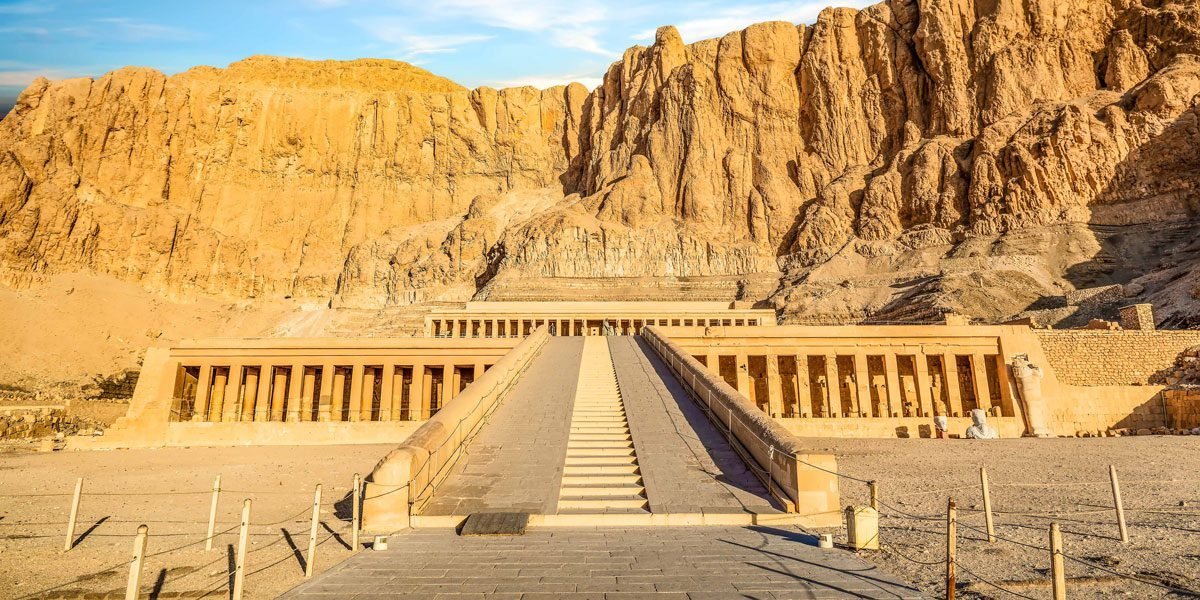
Temple of Hatshepsut: The Timeless Majesty of Egypt’s Female Pharaoh
Rising majestically at the foot of towering limestone cliffs in Deir el-Bahari, the Temple of Hatshepsut stands as one of ancient Egypt’s most breathtaking architectural masterpieces. This mortuary temple, built in honor of Queen Hatshepsut—the first great female pharaoh of Egypt—embodies ambition, artistry, and innovation. Its harmonious design, terraced layout, and intricate reliefs narrate the queen’s divine birth, reign, and spiritual devotion to the god Amun. Visitors often describe it as a fusion of grandeur and grace, symbolizing the golden age of Egyptian architecture during the 18th Dynasty.
The Temple of Hatshepsut, also known as Djeser-Djeseru, meaning “Holy of Holies,” was constructed by the royal architect Senenmut. The temple’s seamless integration into the cliffs of Thebes contrasts sharply with the rigid monuments of earlier kings, like those at the Pyramids of Giza. Hatshepsut’s temple represents more than a burial site—it’s a statement of divine legitimacy and architectural mastery that continues to captivate historians, archaeologists, and travelers alike. Whether you’re a lover of ancient history or planning an adventure with Best Nile River Cruises, this temple remains a must-see destination on every Egyptian itinerary.
The Historical Significance of the Temple of Hatshepsut
Constructed around 1479–1458 BCE, the Temple of Hatshepsut was dedicated to Amun-Ra, the chief deity of Thebes, and served as the queen’s mortuary temple. Its purpose was not only to honor the gods but also to immortalize Hatshepsut’s reign. Unlike other pharaohs, Hatshepsut faced the challenge of legitimizing her rule as a woman in a male-dominated world. Through this architectural wonder, she proclaimed her divine right to rule, portraying herself as the daughter of Amun and emphasizing her lineage to previous pharaohs.
In the temple’s reliefs and inscriptions, visitors encounter a narrative of divine birth, trade expeditions to the land of Punt, and ceremonial scenes celebrating her reign. These depictions are rich with symbolism, offering insights into how Hatshepsut crafted her image as both a pious worshiper and a powerful ruler. Her story continues to influence scholars studying Famous Egyptian Queens and the complex politics of ancient Egypt.
Architectural Brilliance and Design Philosophy
The Temple of Hatshepsut’s design was revolutionary for its time. Built in three grand terraces connected by ramps, it blends harmoniously with its natural surroundings. Each level features colonnades adorned with reliefs that narrate different aspects of Hatshepsut’s divine and royal life. The terraces once hosted lush gardens, exotic plants, and pools of water—symbols of life and rebirth in Egyptian cosmology.
The temple’s architectural approach reflects a deep understanding of geometry, symmetry, and proportion. Senenmut, Hatshepsut’s chief architect and trusted advisor, created a structure that appears both monumental and serene. The influence of this design extended to later temples, such as the nearby Luxor Temple and the Karnak Temple, forming part of the Theban necropolis’ architectural continuum.
The Symbolism of Deir el-Bahari’s Location
The temple’s location at Deir el-Bahari, opposite modern-day Luxor, is symbolic. Nestled beneath the cliffs of the Theban mountains, the site aligns with celestial and solar cycles, embodying the Egyptian belief in resurrection and eternal life. The west bank of the Nile—associated with death and the afterlife—was the perfect setting for a structure celebrating divine rebirth.
From this vantage point, visitors can also gaze upon the Colossi of Memnon and the Valley of the Kings, reinforcing the temple’s connection to the sacred landscape of ancient Thebes. The alignment of the temple with the rising sun speaks to the Egyptians’ devotion to solar deities and cosmic order, concepts that defined their worldview.
Hatshepsut’s Divine Narrative and Political Strategy
Every inch of the temple’s wall art served a political purpose. By commissioning scenes that depicted her divine birth—showing Amun impregnating her mother—Hatshepsut legitimized her claim to the throne. In other areas, the reliefs illustrate her successful trade expedition to Punt, showcasing wealth, prosperity, and international diplomacy. These visual narratives not only glorify her reign but also support her image as a capable and god-sanctioned ruler.
It’s this combination of artistry and propaganda that makes the Temple of Hatshepsut one of the most studied structures in Egypt. Its inscriptions bridge the gap between religion, politics, and art, embodying the essence of pharaonic ideology.
The Restoration and Preservation Efforts
Over the centuries, the temple suffered from natural erosion, vandalism, and political iconoclasm. During the reign of Thutmose III—Hatshepsut’s successor—many of her images were defaced or removed as part of a campaign to erase her from history. However, modern archaeological efforts have resurrected the temple’s legacy. The Polish-Egyptian Archaeological Mission has been instrumental in restoring the terraces, reconstructing damaged reliefs, and preserving the temple’s integrity.
Today, visitors can explore the temple’s chapels, sanctuaries, and open courtyards, witnessing firsthand the precision of ancient Egyptian craftsmanship. Restoration work continues to ensure that this UNESCO World Heritage Site remains a living testament to Egypt’s golden age.
Religious and Cultural Importance of the Temple of Hatshepsut
The temple served as a multi-functional religious center, hosting ceremonies dedicated to Amun-Ra, Hathor, and Anubis. Pilgrims visited during major festivals, especially the annual “Beautiful Feast of the Valley,” a procession connecting the temples of Karnak and Deir el-Bahari. The sacred architecture symbolized the eternal bond between gods and kings, earthly life and the afterlife.
The sanctuaries within the complex contain chapels for key deities, each adorned with exquisite reliefs. The Chapel of Hathor showcases the goddess with cow’s ears, while the Anubis Chapel features scenes of mummification rituals. These details reveal the intricate religious beliefs that governed Egyptian life and death, echoing through time like the hymns that once filled these halls.
Visiting the Temple of Hatshepsut Today
Modern travelers visiting Luxor can easily access the Temple of Hatshepsut, often as part of guided tours that include the Aswan tourist attractions or the Best Egypt Travel Packages. The temple’s grandeur is most striking in the early morning when sunlight casts dramatic shadows across its terraces. Visitors can walk through columned halls, marvel at hieroglyphic inscriptions, and experience the same awe that ancient Egyptians once felt.
For a complete historical experience, pairing a visit with a Best Dahabiya Nile Cruise or a Egypt Day Tours package offers the perfect blend of culture and luxury. The temple remains a highlight for history enthusiasts and photographers seeking to capture Egypt’s majestic landscapes.
Interesting Facts About the Temple of Hatshepsut
1. The temple aligns perfectly with the Temple of Karnak, symbolizing the connection between earthly rule and divine power.
2. It’s one of the earliest examples of large-scale terraced architecture.
3. The temple’s murals depict exotic flora and fauna brought from Punt, providing insight into ancient trade networks.
4. Hatshepsut’s mummy was rediscovered in 2007, reaffirming her place in Egypt’s royal lineage.
5. The temple’s acoustics were designed to amplify chants and hymns during rituals.
FAQs About the Temple of Hatshepsut
1. Who built the Temple of Hatshepsut?
The temple was commissioned by Queen Hatshepsut and designed by her chief architect Senenmut during the 18th Dynasty. Senenmut’s innovative approach fused natural landscapes with monumental architecture, creating one of ancient Egypt’s most iconic structures.
2. What was the temple used for?
The Temple of Hatshepsut served as a mortuary temple dedicated to both Hatshepsut and the god Amun-Ra. It functioned as a place of worship, ritual ceremonies, and offerings to ensure the queen’s eternal life in the afterworld.
3. Where is the Temple of Hatshepsut located?
The temple stands at Deir el-Bahari on the west bank of the Nile, near Luxor. It’s part of the Theban Necropolis, which also includes the Valley of the Queens and other royal tombs.
4. Why is the Temple of Hatshepsut important?
It’s significant for its architectural innovation, historical inscriptions, and the fact that it honors Egypt’s first female pharaoh. The temple demonstrates the artistic and spiritual peak of the New Kingdom period.
5. How can travelers visit the Temple of Hatshepsut?
Visitors can reach the site by car or as part of organized tours. Many travelers choose to include it in their Egypt Luxury Tour or explore it alongside nearby attractions such as the Habu Temple. The temple is open year-round and offers a breathtaking glimpse into the power and vision of one of history’s most extraordinary rulers.
Conclusion
The Temple of Hatshepsut isn’t simply an ancient ruin—it’s a living chronicle carved in stone, a declaration of female power, and a testament to Egypt’s architectural genius. From its grand terraces to its intricate reliefs, every element tells a story of ambition, devotion, and legacy. Whether you’re exploring Egypt’s wonders through a 7 Days Luxury Egypt Trip or embarking on a cultural journey with Travme Tours, standing before Hatshepsut’s temple is to stand in the presence of timeless majesty itself.

Comment (0)