

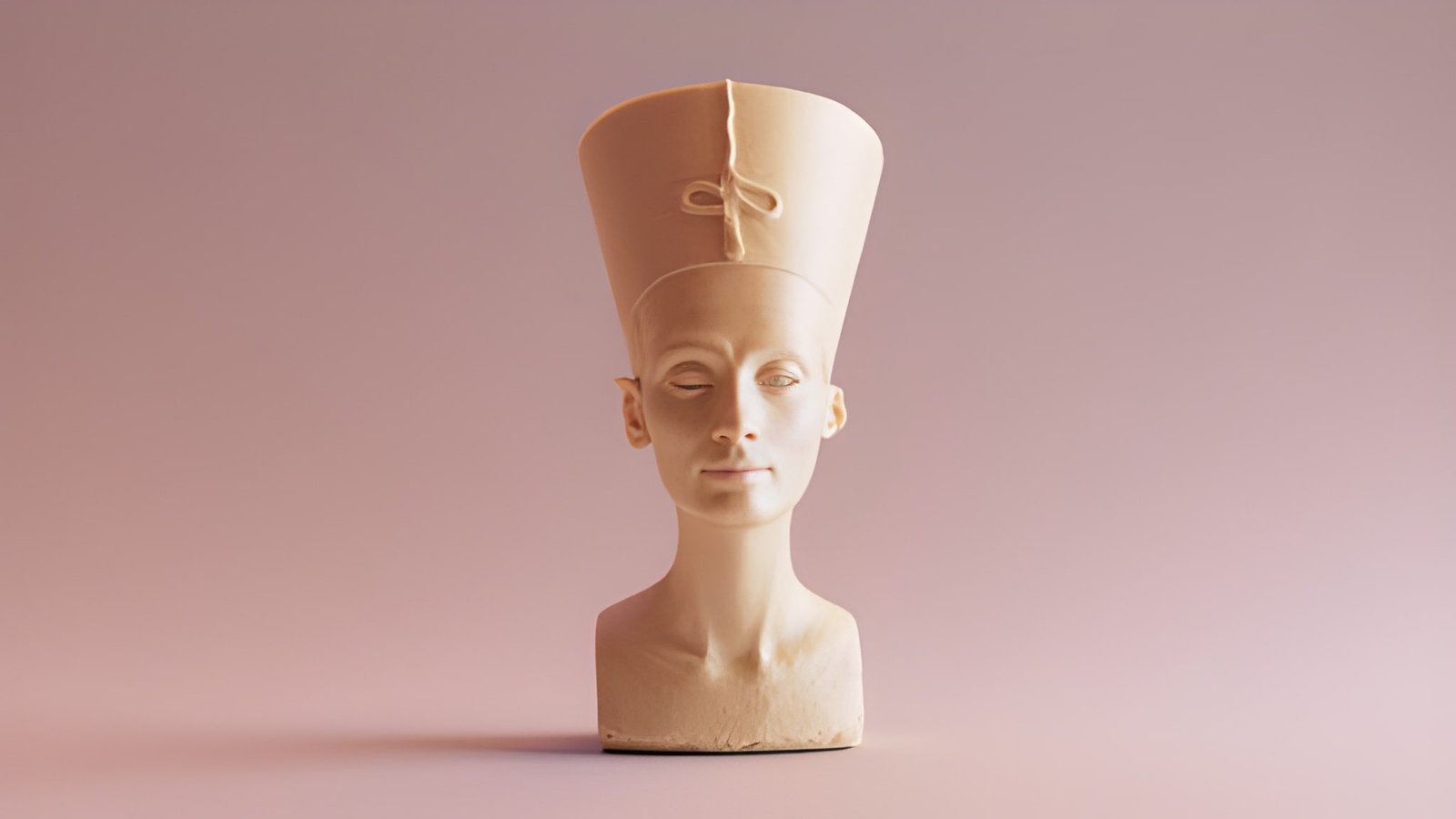
The Enigmatic Beauty and Power of the Egyptian Queen Nefertiti
The Egyptian Queen Nefertiti remains one of the most iconic and influential figures in ancient history, celebrated for her extraordinary beauty, political influence, and spiritual leadership. Her name, meaning ‘the beautiful one has come,’ evokes an aura of mystery and grace that has captivated historians, archaeologists, and admirers for centuries. As the Great Royal Wife of Pharaoh Akhenaten, she redefined the concept of queenship during Egypt’s 18th Dynasty, standing not only as a consort but also as a co-ruler and religious revolutionary. With her husband, she spearheaded one of the most radical cultural and religious transformations in Egyptian history—the worship of a single deity, Aten, the sun disc.
Her life story symbolizes the intersection of power, art, and devotion. The world-famous bust of Nefertiti, discovered in 1912 by German archaeologist Ludwig Borchardt, immortalized her in limestone and painted stucco—an embodiment of perfection that continues to represent the pinnacle of ancient Egyptian artistry. Yet, while her face is known to all, much about her life and mysterious disappearance remains shrouded in enigma. Was she a goddess, a pharaoh in disguise, or a woman who simply vanished into history? Modern Egyptologists continue to debate her fate, piecing together clues left in the sands of Amarna, where she once ruled alongside Akhenaten.
For travelers inspired by ancient elegance, retracing Nefertiti’s footsteps through Egypt’s timeless monuments—from The Egyptian Museum to the ruins of Amarna—offers an unforgettable journey into the heart of a civilization that revered both art and divinity. Her legacy, intertwined with temples, tombs, and tales, makes her a central figure in Egypt’s cultural heritage, enticing explorers from around the world to experience the magic of her era through Best Nile River Cruises and royal heritage tours.
The Rise of Queen Nefertiti and the Amarna Revolution
Queen Nefertiti’s story begins in the golden age of the New Kingdom, around 1350 BCE. She married Amenhotep IV, who later changed his name to Akhenaten, heralding a new era known as the Amarna Period. Together, they launched a profound shift from traditional polytheism to monotheistic worship centered on Aten, the solar deity. This religion emphasized light, creation, and divine energy radiating from the sun—a concept revolutionary in a land devoted to gods like Amun, Osiris, and Isis. Nefertiti wasn’t merely a passive partner; she played an active role as queen and high priestess, depicted in temple reliefs performing rituals once reserved for kings.
Their capital, Akhetaten (modern-day Tell El Amarna Egypt), became the epicenter of this religious transformation. Within its sunlit temples and palaces, Nefertiti’s image appeared alongside Akhenaten’s, equal in scale and significance—a striking departure from earlier depictions of queens. Her role in the Amarna Revolution proves that she wasn’t simply an ornament of beauty but a formidable political partner shaping Egypt’s ideological future. Her leadership redefined royal power, inspiring later queens such as Hatshepsut and Cleopatra.
Nefertiti’s Divine Beauty and Artistic Legacy
Few historical figures have achieved the timeless allure that surrounds Nefertiti. The exquisite bust housed in Berlin’s Neues Museum exemplifies ancient Egyptian artistry at its finest. Sculpted by Thutmose, the royal sculptor, it reveals her symmetrical features, high cheekbones, and regal posture—symbols of divine beauty and authority. This iconic piece became a universal representation of feminine perfection, influencing art, fashion, and even modern aesthetics. Her beauty wasn’t just physical—it was deeply symbolic of divine harmony and cosmic balance, principles central to Egyptian belief.
In ancient Egyptian culture, beauty conveyed moral virtue and divine favor. Nefertiti’s image adorned temple walls, steles, and jewelry, embodying both mortal elegance and godly grace. As the living embodiment of Aten’s light, her presence elevated the royal household into a sacred institution. For travelers exploring Egypt’s cultural treasures, the artwork of Nefertiti offers invaluable insight into the Amarna style’s artistry—a blend of realism, intimacy, and spiritual symbolism that defined one of Egypt’s most creative epochs. Visiting sites such as the Luxor Temple or the Karnak Temple reveals how her influence extended far beyond Amarna, shaping artistic expression for generations.
The Power Behind the Pharaoh: Nefertiti as Co-Ruler
Historical records and artistic depictions suggest Nefertiti’s authority may have rivaled, or even surpassed, that of Akhenaten. She participated in diplomatic ceremonies, received foreign envoys, and officiated religious rites. Her prominence in state affairs hints at a co-regency—a partnership unprecedented for Egyptian queens of her time. Some Egyptologists propose that after Akhenaten’s death, Nefertiti ruled Egypt under the name Neferneferuaten, possibly bridging the gap before the young Tutankhaten’s (later Tutankhamun) reign. This theory underscores her enduring political influence, a legacy that reshaped Egypt’s royal narrative.
Her wisdom and charisma set a precedent for powerful women in Egyptian history. She demonstrated that queens could embody both compassion and command, blending diplomacy with devotion. Many travelers drawn to the stories of powerful queens include Nefertiti among their inspirations when exploring Famous Egyptian Queens and their mesmerizing monuments scattered across the Nile Valley.
The Mysterious Disappearance of Queen Nefertiti
Despite her prominence, Nefertiti’s later life and death remain one of Egyptology’s greatest puzzles. Around the twelfth year of Akhenaten’s reign, she vanishes from historical records. Theories abound—some suggest she died suddenly from illness, others believe she assumed a new identity as Pharaoh Smenkhkare, ruling briefly before Tutankhamun’s ascension. No definitive tomb or mummy has been identified as hers, though many scholars continue to search within the hidden chambers of the Valley of the Kings and the Amarna necropolis.
Intriguingly, recent archaeological findings hint that her burial might lie adjacent to or within Tomb of Nefertari or even concealed behind secret walls in Tutankhamun’s tomb. This tantalizing mystery fuels ongoing excavations, bringing new life to Egypt’s ancient past. For history enthusiasts, the quest to uncover Nefertiti’s resting place represents the perfect blend of intrigue, beauty, and discovery—echoing the eternal fascination that surrounds her name.
Nefertiti’s Enduring Legacy in Modern Egypt
Thousands of years later, Nefertiti’s allure continues to inspire global admiration. Her name graces art galleries, literature, and cultural exhibitions worldwide. In Egypt, her story lives on not only in museums but also in the hearts of guides, scholars, and travelers. Exploring her world through curated Egypt Day Tours or luxurious journeys like the Luxury Dahabiya Nile Cruise allows visitors to traverse the same waters and monuments that once echoed with her legacy.
From the limestone cliffs of Amarna to the temples of Thebes, her spirit still lingers, a timeless reminder of feminine power and artistic splendor. Her reign reflected the strength of Egyptian women and the civilization’s devotion to balance, light, and beauty. For those planning their next historical adventure, companies like Travme Tours provide immersive itineraries that blend culture, comfort, and history—offering a rare glimpse into the realm of Egypt’s most enchanting queen.
Frequently Asked Questions about The Egyptian Queen Nefertiti
Who was Queen Nefertiti?
Nefertiti was the Great Royal Wife of Pharaoh Akhenaten during Egypt’s 18th Dynasty. She played a crucial role in promoting Atenism, Egypt’s short-lived monotheistic religion dedicated to the sun disc, Aten. Revered for her beauty and wisdom, she became a symbol of female power and divine grace in ancient Egyptian civilization.
Where was Queen Nefertiti’s capital city?
Nefertiti and Akhenaten built their capital city at Akhetaten, modern-day Tell El Amarna Egypt. The city was dedicated to Aten and served as the spiritual and political center of their revolutionary monotheistic worship. Its ruins still reveal remarkable art and architecture reflecting the couple’s devotion to light and beauty.
What happened to Queen Nefertiti?
Nefertiti’s fate remains uncertain. Some scholars believe she died before Akhenaten, while others argue she became co-regent or even pharaoh under a new name. Despite extensive searches, her tomb has never been definitively identified, making her disappearance one of Egypt’s most captivating mysteries.
Why is Queen Nefertiti’s bust famous?
The bust of Nefertiti, discovered in 1912 and now displayed in Berlin, is considered a masterpiece of Egyptian art. It represents the pinnacle of ancient craftsmanship, balancing symmetry, elegance, and timeless beauty. The bust has become a global icon of feminine perfection and artistic excellence.
How can travelers explore Nefertiti’s legacy in Egypt?
Travelers can explore Nefertiti’s world through guided historical tours, museum visits, and Nile cruises. Sites like the The Egyptian Museum, Amarna ruins, and Thebes temples provide deep insights into her life. Many visitors combine these destinations with experiences such as the 11 Days Luxury Egypt Tour Package to uncover the grandeur of her era while enjoying comfort and authentic cultural immersion.

Comment (0)