

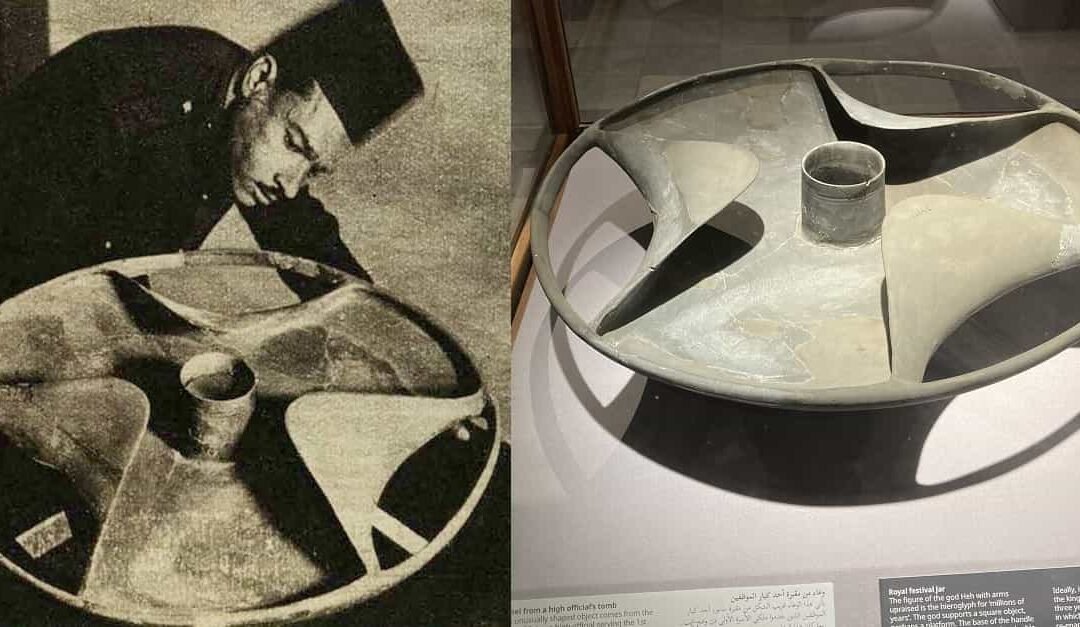
The Enigmatic Mystery of the Sabu Disk: Ancient Egypt’s Most Puzzling Artifact
Hidden within the sands of Egypt’s long history lies a mysterious artifact that continues to baffle archaeologists and historians alike—the Sabu Disk. This enigmatic object, discovered in the early 20th century, challenges our understanding of ancient Egyptian technology and craftsmanship. Often referred to as the “Sabu bowl” or “Sabu stone,” this artifact raises fascinating questions about the sophistication of the early dynastic period. From its unusual design to the mystery of its purpose, the Sabu Disk remains one of Egypt’s most intriguing archaeological finds.
Attention: The Discovery That Sparked Global Curiosity
The Sabu Disk was unearthed in 1936 by British archaeologist Walter Bryan Emery during excavations at Sakkara Necropolis, one of Egypt’s most ancient burial grounds. It was found inside the tomb of Prince Sabu, a high-ranking official who lived during Egypt’s First Dynasty around 3,000 BCE. The tomb itself was filled with various objects typical of elite burials, but the disk stood out immediately due to its unconventional shape and unique material.
Crafted from schist, a delicate and brittle stone, the disk measures approximately 61 centimeters in diameter and features three curved lobes radiating from a central hub. Its thinness and symmetry astonished researchers, as schist is notoriously difficult to carve even with modern tools. The level of precision left many wondering how such an object could have been produced over 5,000 years ago.
Interest: The Design That Defies Explanation
What makes the Sabu Disk so fascinating is not only its age but also its form. Unlike other ceremonial or decorative objects from ancient Egypt, the disk appears to have been engineered with purpose. Some researchers suggested it might have served as part of a vessel, while others speculate it could have been used in a mechanical context—an implausible theory for such an early civilization. The artifact’s aerodynamic design even led to theories associating it with advanced lost technologies.
For comparison, visitors who explore the Egyptian Museum in Cairo can witness numerous ancient artifacts, but few show the same mechanical precision as the Sabu Disk. The object is unlike any other from its time, making it a unique puzzle in the archaeological record.
Theories About the Sabu Disk’s Purpose
Archaeologists and engineers have proposed several theories to explain the disk’s purpose:
– **Funerary Object:** It may have served a ritualistic or symbolic role in the afterlife, representing energy, motion, or rebirth.
– **Censer or Bowl:** Some argue it could have been a vessel for burning incense or holding sacred liquids.
– **Mechanical Component:** A few researchers hypothesize that it was part of an unknown device or mechanism, though no evidence supports this.
– **Decorative or Ceremonial Artifact:** Given its intricate craftsmanship, it might simply have been an ornamental piece buried with royalty to signify power and prestige.
Much like the mysteries surrounding the Sphinx Statue or the Abu Simbel Temples, the Sabu Disk invites endless speculation and wonder.
Desire: Connecting the Sabu Disk to Ancient Egyptian Innovation
The Sabu Disk’s level of precision and symmetry demonstrates that early Egyptians possessed an impressive understanding of design and material manipulation. While it may not prove the existence of advanced technology, it does highlight the incredible skill of ancient artisans. This same creativity can be seen in the engineering marvel of the Nile River irrigation systems and the architectural genius behind the Pyramids of Giza.
Exploring artifacts like the Sabu Disk helps travelers appreciate the depth of Egyptian heritage. Those fascinated by ancient craftsmanship can see similar wonders on tours such as the 8 Day Cairo and Nile Cruise Tour or the 11 Day Egypt Tour, where visits to The Grand Egyptian Museum reveal many ancient marvels up close.
Symbolism and Cultural Meaning
In ancient Egyptian culture, circular shapes often symbolized eternity, cycles, and celestial power. The Sabu Disk’s tri-lobed structure could represent the trinity of Egyptian deities or the perpetual motion of life and death. Some scholars even link its design to ceremonial symbolism associated with solar worship, which dominated early dynastic beliefs. Its inclusion in a royal tomb reinforces its possible spiritual importance.
Visitors interested in exploring similar mysteries of ancient culture can deepen their understanding through the Insider’s Guide to Egyptian Culture or by visiting the National Museum of Egyptian Civilization, both of which showcase artifacts that reveal the philosophical and artistic depth of early Egypt.
Action: Discover the Legacy of the Sabu Disk on Your Egyptian Journey
For travelers captivated by ancient mysteries, visiting Egypt offers countless opportunities to explore relics like the Sabu Disk. Whether you’re exploring the ancient monuments of Luxor City or uncovering the wonders of Aswan City, every artifact adds another piece to Egypt’s historical puzzle.
Combining adventure with culture, tours such as the Egypt Tour with Nile Cruise or the 15 Day Egypt Tour provide immersive experiences that include visits to ancient sites where objects like the Sabu Disk were discovered. You can pair your visit with excursions to the Saqqara Pyramids, where layers of early Egyptian history await discovery.
To make the most of your experience, consider reading Egypt Travel Tips for First-Time Visitors and learning about how to plan a trip to Egypt effectively. With the right itinerary, you can witness ancient artifacts, grand temples, and architectural marvels that continue to inspire awe.
The Timeless Appeal of Ancient Egyptian Artifacts
The Sabu Disk reminds us that Egypt’s history extends far beyond its most famous landmarks. Each artifact, from the elegant mask of King Tutankhamun to the mystical Eye of Horus, tells a story of human creativity, spirituality, and progress. The disk’s enduring mystery invites modern explorers to reflect on what ancient civilizations knew—and what we have yet to rediscover.
Those who embark on immersive journeys like the Egypt Adventure Tour or explore hidden gems in Egypt can connect deeply with this fascinating legacy. Each destination reveals stories etched in stone, waiting to be interpreted by curious minds.
Frequently Asked Questions About the Sabu Disk
1. Where was the Sabu Disk discovered?
The Sabu Disk was discovered in 1936 in the tomb of Prince Sabu at the Saqqara Necropolis, one of Egypt’s oldest and most significant burial sites.
2. What material is the Sabu Disk made of?
The disk is crafted from schist, a fragile and fine-grained metamorphic stone that is challenging to carve, making the artifact’s craftsmanship even more remarkable.
3. What is the purpose of the Sabu Disk?
The true purpose of the Sabu Disk remains unknown. Theories range from a ceremonial vessel or incense burner to a purely symbolic or decorative object.
4. Where can I see the Sabu Disk today?
The Sabu Disk is currently housed in the Egyptian Museum in Cairo, where visitors can view it alongside other ancient relics from Egypt’s First Dynasty.
5. What makes the Sabu Disk unique among Egyptian artifacts?
Its tri-lobed design, precision carving, and mysterious function make it one of the most unusual and scientifically intriguing artifacts from ancient Egypt, symbolizing the remarkable ingenuity of a civilization still admired worldwide.

Comment (0)