

The Valley Temple: The Timeless Gateway to Ancient Egyptian Eternity
The Valley Temple of Khafre, standing near the Great Sphinx and the Pyramids of Giza, is far more than an ancient ruin — it’s a silent witness to Egypt’s golden age of architectural mastery and spiritual devotion. Built during Egypt’s Fourth Dynasty, this limestone and granite structure was a cornerstone of the royal funerary complex dedicated to Pharaoh Khafre, whose pyramid lies nearby. The temple’s purpose extended beyond ritual: it was a key stage in the pharaoh’s journey from mortal ruler to divine being, a crossing point between life and the afterlife. Every stone, every polished surface, and every alignment tells a story of power, faith, and engineering brilliance that continues to astonish historians and travelers alike.
Visitors who stand within its walls today often feel a surreal connection to the ancient past — a sense of awe that transcends time and culture. The Valley Temple is not just another archaeological site; it’s a living chapter of Egyptian civilization. Its extraordinary preservation and proximity to the Pyramids of Giza and the Sphinx Statue make it an unmissable destination for anyone fascinated by the mysteries of ancient Egypt. Exploring it feels like walking through history itself — an open-air museum where the pharaohs still whisper through the stone corridors.
Historical Significance of the Valley Temple of Khafre
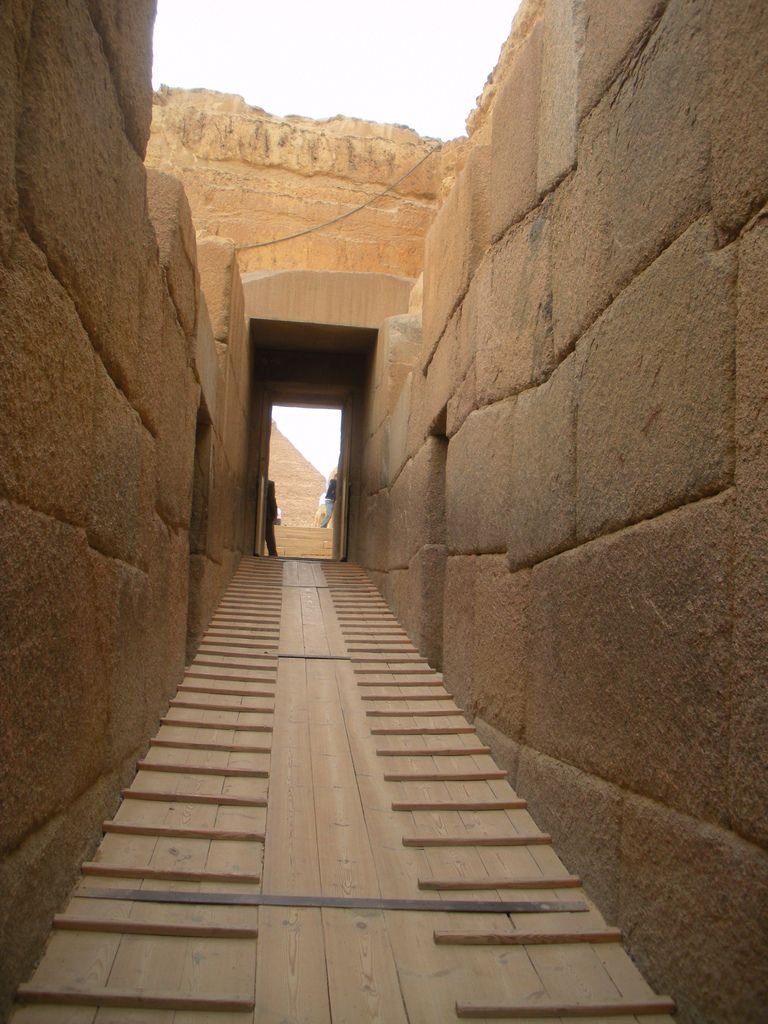
The Valley Temple holds enormous historical significance as part of Khafre’s funerary complex, which included the pyramid, causeway, and mortuary temple. Archaeologists believe this temple functioned as the site for the purification and mummification rituals of the pharaoh before his body was transferred to the main pyramid for burial. Constructed from colossal limestone core blocks and faced with polished red granite, the structure reflects the sophistication and precision of ancient Egyptian engineering.
The temple’s design, featuring massive pillars, symmetrical corridors, and polished floors, symbolizes permanence and divine order — two fundamental concepts of ancient Egyptian cosmology. Its minimalist yet majestic architecture demonstrates how the Egyptians blended functionality with profound spiritual symbolism. The Valley Temple wasn’t a mere ceremonial hall; it was a sacred threshold connecting earthly life with the eternal realm of the gods. Nearby, the Egyptian Museum in Cairo houses several artifacts discovered here, helping scholars piece together the temple’s ritual purpose and the intricate belief system of the time.
Architectural Genius Behind the Valley Temple
The Valley Temple’s architectural integrity has endured for over 4,500 years, a staggering feat that showcases early mastery of construction and design. Each granite block was carefully fitted without mortar, creating a structure that has resisted erosion, earthquakes, and time. The layout of the temple follows a precise plan: two main halls, connected corridors, and sanctuaries adorned with statues of Khafre. The polished floors and fine joints reflect techniques far ahead of their time.
It’s believed that the temple’s orientation aligns with celestial events, connecting it to the concept of cosmic harmony — a recurring theme in ancient Egyptian temples such as the Karnak Temple and Luxor Temple. The use of granite from Aswan, transported hundreds of kilometers along the Nile, also underscores the Egyptians’ logistical genius. Whether viewed through an architectural or spiritual lens, the Valley Temple stands as proof of human determination to touch the divine.
Ritual Purpose and Sacred Symbolism
At the heart of the Valley Temple lay its ritual significance. This was where Khafre’s body underwent purification rites — a sacred cleansing process that marked the transition from humanity to godhood. Priests performed these rites in rooms that once housed statues representing the pharaoh’s ka, or spirit double. These rituals embodied the Egyptians’ deep belief in immortality, ensuring the king’s eternal vigilance over the world he left behind.
The temple walls, though unadorned compared to others, radiated meaning through their geometry and scale. The absence of inscriptions might have been intentional — symbolizing purity and eternity beyond human language. Many scholars also suggest that the temple was deliberately designed to evoke the primeval mound of creation, linking it to Egypt’s cosmogony. Rituals similar to those performed here can also be traced at the Temple of Hatshepsut and other mortuary complexes across the Nile Valley.
Discovery and Excavation of the Valley Temple
The Valley Temple was first unearthed during the 19th century by Auguste Mariette, the renowned French archaeologist who also excavated nearby monuments. His discoveries revealed an astonishingly intact structure buried beneath layers of sand and debris. Unlike many other ancient sites, the Valley Temple remained remarkably preserved, offering scholars a rare, unweathered glimpse into Old Kingdom craftsmanship.
Subsequent excavations uncovered statues of Pharaoh Khafre, including the famous diorite statue now displayed in the National Museum of Egyptian Civilization. These artifacts provided crucial evidence linking the temple to Khafre’s pyramid complex. The layout and materials used also influenced later architectural developments throughout Egypt, solidifying the Valley Temple’s role as a model for royal funerary architecture for centuries to come.
The Valley Temple’s Connection to the Great Sphinx
Few places in Egypt capture the imagination quite like the space between the Valley Temple and the Great Sphinx. Archaeological evidence suggests that both were part of a unified plan designed during Khafre’s reign. The alignment between the Sphinx’s gaze and the temple’s axis isn’t accidental — it symbolizes divine guardianship. The Sphinx, representing the pharaoh as a lion-bodied protector, faced the rising sun, while the temple served as the ceremonial entrance to eternity.
The spatial harmony between these monuments is breathtaking. The temple’s polished granite walls once reflected sunlight onto the Sphinx’s face at specific hours, reinforcing the symbolism of rebirth and eternal vigilance. It’s no wonder that modern visitors, especially those exploring through Egypt Day Tours, often describe this spot as one of the most spiritually charged locations in all of Egypt.
Visiting the Valley Temple Today
Today, travelers can walk the same corridors that priests once traversed thousands of years ago. The Valley Temple is easily accessible from Cairo, located near the Giza Plateau, making it a prime stop for anyone taking one of the Best Egypt Travel Packages. The site’s serene atmosphere invites reflection while offering unparalleled photographic opportunities. Visitors often marvel at how the massive stone blocks still fit together perfectly — an enduring mystery of ancient engineering.
For those seeking to deepen their understanding of Egypt’s ancient rituals, touring the Valley Temple alongside the Luxor Temple or the Temple of Hatshepsut provides powerful context. Many Travme Tours itineraries combine these iconic sites, ensuring visitors experience Egypt’s spiritual and architectural legacy in full.
How to Reach and Explore the Valley Temple
The Valley Temple lies on the eastern edge of the Giza Plateau, adjacent to the Sphinx enclosure. Most guided tours begin at the entrance near the Sphinx’s causeway. From there, travelers can explore the temple’s interior chambers, marvel at its symmetrical design, and imagine the ancient rituals once performed inside. Early morning or late afternoon visits provide the best lighting for photography, casting dramatic shadows across the stone walls.
Combining this visit with a Nile cruise experience, such as the Best Luxury Nile River Cruise or the Luxury Dahabiya Nile Cruise, creates a perfect balance of ancient history and modern comfort. Afterward, you can continue exploring legendary attractions like the Valley of the Kings, tracing the evolution of Egypt’s funerary traditions.
Travel Tips for an Unforgettable Visit
To truly appreciate the Valley Temple, allocate enough time to absorb its architectural subtleties and historical depth. Hiring a knowledgeable guide can enrich your experience, providing insights into the temple’s rituals, construction methods, and symbolic meanings. Comfortable shoes, sunscreen, and water are essential, especially under Egypt’s sun. For travelers seeking seamless arrangements, booking through one of the Best Nile River Cruises or curated tour packages ensures convenience and expert guidance from Egyptologists who bring the site’s history vividly to life.
Frequently Asked Questions About the Valley Temple
What is the Valley Temple of Khafre used for?
The Valley Temple was used for purification and mummification rituals of Pharaoh Khafre before burial in his pyramid. It served as a transitional place between life and the afterlife, symbolizing rebirth and divine ascension.
Where is the Valley Temple located?
The Valley Temple is situated on the Giza Plateau near Cairo, directly adjacent to the Great Sphinx and the Pyramid of Khafre. It’s one of the most accessible ancient sites for visitors to Egypt’s capital.
Who built the Valley Temple?
The Valley Temple was built during the reign of Pharaoh Khafre in Egypt’s Fourth Dynasty, around 2570 BCE. It formed part of his larger funerary complex, which also included a causeway and a mortuary temple near the pyramid.
What materials were used to construct the Valley Temple?
The temple was primarily constructed using massive limestone core blocks and faced with polished red granite, some imported from Aswan. The floors and pillars were crafted from alabaster and granite, showcasing extraordinary craftsmanship.
Can tourists visit the Valley Temple today?
Yes, the Valley Temple is open to visitors and forms part of the Giza Plateau archaeological park. Guided tours often include visits to the Sphinx and Khafre’s Pyramid, making it a highlight of most Egyptian itineraries.

Comment (0)