

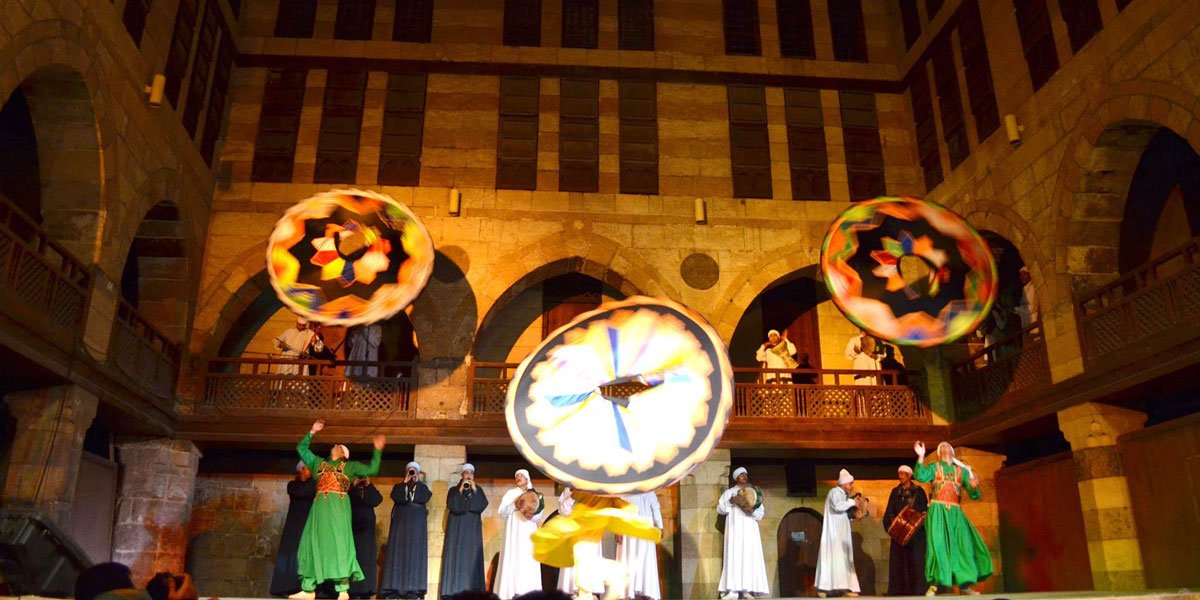
Wekalet El Ghouri: A Living Masterpiece of Islamic Cairo
In the heart of Islamic Cairo stands one of Egypt’s most enchanting architectural marvels — Wekalet El Ghouri. This vibrant cultural center, built during the Mamluk era, is a living testament to Cairo’s thriving artistic and spiritual soul. Every stone of the complex whispers stories of merchants, artisans, and artists who once breathed life into its courtyards. Wekalet El Ghouri, located near Al Azhar Mosque and El Moez Street, embodies centuries of history, meticulous craftsmanship, and the everlasting rhythm of Egyptian folklore that binds past to present. Today, it’s more than a building; it’s a journey through time for those who dare to dive deep into Cairo’s timeless elegance.
Originally designed as a commercial hub for traders and merchants, the structure now serves as a cultural beacon, hosting music, dance, and the mesmerizing Tannoura performances that attract artists, historians, and travelers from all over the world. With high domes, arched halls, and an ambiance steeped in mystique, Wekalet El Ghouri captures Egypt’s multi-layered identity in ways that no modern hall ever could. Whether you visit it after exploring El Moez Street or after a stroll through Khan El-Khalili Bazaar, the experience of stepping into this remarkable complex adds a rich chapter to your Egyptian adventure.
The History of Wekalet El Ghouri: Mamluk Grandeur Preserved
Built in 1504 AD by Sultan Qansuh al-Ghouri, Wekalet El Ghouri embodies the height of Mamluk architectural mastery in Cairo. During the Mamluk period, such ‘wekala’ buildings were not mere marketplaces; they served as essential economic centers where merchants lived, stored goods, and conducted business. The complex was also designed to accommodate caravans arriving from places such as Damascus, Mecca, and North Africa. This structure was strategically built in the Al-Azhar district — an area famous for trade, scholarship, and devotion. The sultan himself envisioned it as a hub for art and commerce, blending stylish design with urban utility.
The façade, adorned with lavish inscriptions and arabesque stone carvings, reflects the Mamluk passion for ornamentation. Inside, the four-story courtyard layout revolves around a central square that once acted as an exhibition ground for merchants’ goods. The wooden balconies, the mashrabiya screens, and the graceful symmetry reveal a deep understanding of architectural harmony and environmental adaptation. Although centuries have passed, Wekalet El Ghouri still radiates the same sense of splendor that once enchanted traders and travelers who ventured through the bustling veins of Cairo’s trading quarters.
Wekalet El Ghouri Architecture: A Tribute to Egyptian Craftsmanship
The architectural elements of Wekalet El Ghouri strike a balance between artistry and practicality. Its stone floors, arched corridors, and domed ceilings are not just functional features — they represent Cairo’s response to both its climate and its cultural evolution. The mashrabiya screens provide ventilation while ensuring privacy, a design that blended aesthetics with social sensitivity. Within its walls, visitors can glimpse different phases of Cairo’s architectural journey, resonating with structures like the Sultan Hassan Mosque and the Al Azhar Mosque.
Each level of Wekalet El Ghouri serves a distinct historical function. The ground floor was used for storage, the middle floors for shops and trade offices, while the upper floors accommodated merchants’ residences. The design encouraged both activity and community, echoing the vibrant rhythm of medieval trade culture. Even now, as one walks through the cool passages, it’s not hard to imagine the noise of traders bargaining passionately, spices mixing with incense, and fabrics fluttering in the Cairo breeze.
Wekalet El Ghouri and the Tannoura Show: A Dance of Spirit and Light
One of the most unforgettable experiences at Wekalet El Ghouri is the Tannoura Dance Show — an artistic expression that transcends entertainment to reach spiritual ecstasy. The Tannoura, derived from Sufi traditions, involves performers spinning rhythmically in colorful skirts, representing the union of man and the divine. The hypnotic movement, often accompanied by live music featuring drums, flutes, and chants, turns the old courtyard into a sacred stage. Every performance unfolds like an ancient ritual reminding the audience of the soul’s eternal connection to the universe.
Travelers who visit Cairo and witness this spectacle often describe it as the highlight of their journey. It’s more than an attraction — it’s cultural alchemy in motion. When you combine this performance with a stroll to nearby marvels like the Museum of Islamic Art in Cairo or Al Azhar Park, you experience Egypt not just as history, but as a living, breathing entity echoing through centuries of artistry and devotion.
The Symbolism Behind the Tannoura Dance
The Tannoura Dance at Wekalet El Ghouri goes beyond performance; it’s deeply symbolic. Each color of the dancer’s skirt represents an element of creation—earth, air, fire, and water—spinning together to form balance and harmony. As the whirling dervishes revolve, they mirror the cosmos and human existence revolving around divine love. This blend of physical movement and mysticism embodies the Egyptian spirit’s resilience, creativity, and connection to spiritual depth that fascinates modern audiences and continues to attract global travelers searching for meaningful experiences.
The Cultural Revival of Wekalet El Ghouri
In modern times, Wekalet El Ghouri has been beautifully restored as part of efforts to preserve Cairo’s Islamic heritage. The Egyptian government recognized the site’s significance not only as an architectural gem but also as a cultural powerhouse that bridges traditional art with contemporary interpretation. Today, the building houses art galleries, craft exhibitions, and cultural events dedicated to promoting traditional Egyptian performance art. Its revival expresses Egypt’s dedication to preserving its identity while inviting the world to partake in its living history.
If you’re planning an itinerary around the best historic experiences, Wekalet El Ghouri makes a perfect complement to iconic sites like the Egyptian Museum, the Citadel of Salah El-Din, or the Pyramids of Giza. Wekalet El Ghouri offers something unique: intimacy, intimacy with the local soul of Egypt that large monuments, magnificent as they are, rarely provide. Its preservation guarantees that any traveler exploring the Cairo cityscape can still witness a slice of Egypt’s vibrant past alive in motion and melody.
Wekalet El Ghouri: A Magnet for Artists and Travelers
Artists, photographers, and historians find Wekalet El Ghouri an endless well of inspiration. Its lighting, geometry, and atmosphere make it ideal for capturing authentic Egyptian aesthetics. Local handicrafts displayed here allow artisans to revive age-old traditions and offer visitors tangible souvenirs imbued with meaning. For tourists exploring options within the Best Egypt Travel Packages, incorporating Wekalet El Ghouri offers a deeper, more soulful perspective on Cairo beyond the bustling markets and ancient tombs. It’s the perfect blend of art, culture, and immersion that lingers long after your trip ends.
Immersive Cultural Experience Around Wekalet El Ghouri
Its proximity to Cairo’s other attractions enhances its appeal. Visitors can enjoy traditional Egyptian dishes in nearby restaurants, explore traditional dishes in Egypt, or wander among antiques and jewelry at Khan El-Khalili. It’s an ecosystem of heritage — where art, faith, and community intertwine under Cairo’s ever-watchful sky. This interconnectedness ensures that Wekalet El Ghouri isn’t simply a standalone attraction but part of a broader experience representing Cairo’s essence as a crossroad of civilizations.
Planning a Visit to Wekalet El Ghouri
The best time to visit Wekalet El Ghouri is during the evening, when the Tannoura Show livens up the courtyard. Arrive early to get a good seat, as crowds can fill the venue quickly. Photography is allowed but avoid flash to preserve the tranquil atmosphere. A typical visit lasts around two hours, long enough to soak in the music, dance, and the resonating rhythm of Cairo itself. Pair your visit with an organized Egypt Day Tour for seamless access and a local guide who can reveal hidden meanings behind the building’s designs and performances.
How Wekalet El Ghouri Reflects Egyptian Spirit
Every aspect of Wekalet El Ghouri embodies Egypt’s enduring spirit — a balance between embracing modernity and honoring tradition. Like the Karnak Temple or the Valley of the Kings, it fuses grandeur with intimacy. But unlike those monumental relics, Wekalet El Ghouri lives through artistry, not silence. Here, history dances, drums beat with purpose, and voices echo the unbroken chain of Egyptian heritage. It’s a must-visit spot for anyone eager to grasp the poetic heart of Cairo’s old soul.
Frequently Asked Questions About Wekalet El Ghouri
Where is Wekalet El Ghouri located?
Wekalet El Ghouri lies in the Al-Azhar district of Islamic Cairo, near Al Azhar Mosque and El Moez Street. It’s easily accessible by taxi or guided Cairo city tours, offering a perfect glimpse into Egypt’s cultural roots.
What makes the Tannoura Dance special?
The Tannoura Dance is a mesmerizing Sufi performance symbolizing the connection between human and divine. The spinning motion represents spiritual ascension, and the dancers’ colorful skirts embody cosmic harmony. It’s a spiritual experience unique to Cairo.
When is the best time to visit Wekalet El Ghouri?
Evenings are the best time to visit, especially for the Tannoura Show. The atmosphere is most captivating after sunset when lights illuminate the stone arches, creating a truly magical scene that enhances the beauty of this historic monument.
How much does it cost to enter Wekalet El Ghouri?
Entry fees are modest and vary based on performances and schedules. Tickets are usually available at the entrance. For convenience, travelers booking through reputable agencies such as Best Travel Agency in Egypt can include it within multi-stop cultural packages.
What other attractions can I explore nearby?
Wekalet El Ghouri’s prime location lets you explore surrounding treasures such as the Al Azhar Park, Khan El-Khalili Bazaar, and El Moez Street. Together, these sites form the soul of Cairo’s historic district, offering unforgettable insight into Egypt’s heart and heritage.

Comment (0)