

The White Monastery in Sohag – A Masterpiece of Early Christian Architecture in Egypt
Hidden along the western bank of the Nile near Sohag stands an extraordinary relic of Egypt’s Coptic Christian heritage — the White Monastery. Officially known as the Monastery of Saint Shenouda the Archimandrite, this colossal ancient complex is a striking symbol of devotion, artistry, and resilience. Constructed primarily from dazzling white limestone — hence its name — the White Monastery exudes an almost ethereal glow under the Egyptian sun. Beyond its captivating façade, this ancient site holds a profound narrative that combines religion, culture, and early Egyptian monasticism. Its powerful spiritual aura and masterfully carved designs attract scholars, historians, and travelers eager to explore Egypt’s lesser-known treasures.
The White Monastery was one of the most influential centers of Coptic monasticism, founded during the 4th century AD by Saint Pjol, and later expanded under Saint Shenouda, whose leadership elevated the monastery’s prominence across the Christian world. The monastery’s striking appearance, fortified walls, and basilica-style church make it one of Egypt’s most important Coptic sites. Its close counterpart, the Red Monastery, stands nearby, forming a fascinating pair of religious sites that showcase Egypt’s Coptic golden age. A journey here opens a window into centuries of faith, artistry, and the enduring strength of Egypt’s spiritual communities.
Travelers visiting the White Monastery can easily combine their experience with excursions such as Egypt Day Tours or serene journeys like the Best Nile River Cruises. Historians consider Sohag and its monasteries as living museums of Christian architecture that rival the magnificence of ancient pharaonic temples. The White Monastery doesn’t merely stand as a monument — it whispers the story of early Egyptian Christians who shaped their faith amidst the sands of time and carried forth spiritual traditions that still resonate powerfully today.
Origins and Early History of the White Monastery
The White Monastery emerged during Egypt’s transition from the classical pagan world to Christianity. Built in the late 4th century, it was initially a small monastic settlement. When Saint Shenouda took leadership in the 5th century, the monastery flourished into a vast religious community, hosting thousands of monks, nuns, and laymen. Shenouda’s strict rule emphasized piety, communal labor, education, and spiritual discipline. He transformed the monastery into a distinguished intellectual center that preserved not only Christian teachings but also Greek and Egyptian knowledge, ensuring that early Egyptian Christianity became a beacon of faith and learning.
During its zenith, the White Monastery rivaled ancient temples in size and grandeur. Its influence stretched across Egypt, reaching Christian communities as far as Nubia and Palestine. Manuscripts copied and illuminated within its walls contributed significantly to Coptic literature. The flourishing of monasticism here led Egypt to become a spiritual cradle of Eastern Christianity, alongside iconic sites like St. Catherine’s Monastery at Sinai. Pilgrims traveled great distances to receive blessings, study, or live within this holy sanctuary.
Architectural Grandeur and Design of the White Monastery
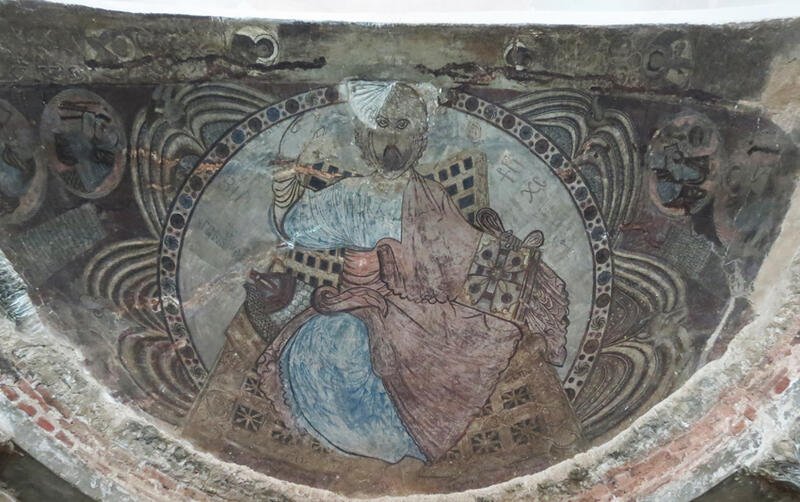
The White Monastery’s architectural brilliance cannot be overstated. Its exterior is reminiscent of ancient Egyptian temple facades, particularly those from the Greco-Roman era. The massive limestone blocks, meticulously stacked, create an image of indestructible spiritual strength. The church structure adopts a basilican plan, with three aisles, a grand transept, and an apse flanked by chapels. Originally, the ceiling was covered with wooden beams adorned with rich carvings, while colorful frescoes decorated the walls — remnants of which still survive today, offering glimpses of angelic imagery, biblical scenes, and geometric patterns reflecting both Egyptian and Byzantine artistry.
The monastery’s walls shelter inner courtyards, monks’ cells, and communal rooms, forming a labyrinth designed for both prayer and daily labor. Its main gate, carved with intricate Coptic symbols, still reflects the unwavering faith of the artisans who shaped it. When viewed under the golden light of dusk, the White Monastery evokes a divine tranquility that no photograph can capture. Visitors often pair a visit here with ancient landmarks like the Temple of Hathor (Dendera complex), discovering how Egypt’s religious artistry seamlessly evolved across different faiths.
Saint Shenouda the Archimandrite – The Soul of the White Monastery
No discussion of the White Monastery is complete without honoring Saint Shenouda, often revered as one of the founding fathers of Coptic Christianity. Known for his intellectual rigor and moral authority, Shenouda established strict monastic rules that balanced spiritual devotion and daily labor. He spearheaded the translation of sacred texts into Coptic, preserving the faith in the native Egyptian tongue. Under his direction, the White Monastery became a haven of education, housing an immense library of manuscripts copied by diligent monks.
Saint Shenouda’s lasting legacy is not confined to religious circles; his ecological, social, and linguistic influence shaped the cultural identity of Egypt’s Christian population for centuries. His leadership extended far beyond his monastery, influencing neighboring communities, including the Red Monastery just a few kilometers away. Together, these two monasteries served as twin guardians of Egypt’s monastic history, forming the spiritual heart of Upper Egypt.
Archaeological Discoveries and Preservation Efforts
Over the centuries, time and natural erosion took their toll on the White Monastery. However, archaeologists and historians have worked tirelessly to preserve its heritage. Excavations revealed hidden chapels, fragments of Coptic manuscripts, and decorative reliefs that shine light on the monastery’s religious life. The structure’s restoration, assisted by local and international experts, focuses on stabilizing its limestone blocks and preserving priceless frescoes. Visitors walking through the ruins today can sense the painstaking efforts dedicated to breathing new life into this sacred space.
These restoration projects align with Egypt’s broader mission to safeguard its historical legacy — from Coptic churches in Coptic Cairo (Old Cairo) to heritage restoration at monumental sites like the Grand Egyptian Museum. This renewed attention underscores global recognition of Egypt’s Christian architectural wonders as integral to world heritage.
Spiritual and Cultural Significance of the White Monastery
Beyond being an archaeological wonder, the White Monastery serves as a living spiritual hub. Pilgrims continue to visit the site during local Coptic festivals, offering prayers in honor of Saint Shenouda. The monastery remains a focal point of Christian devotion, where the echoes of ancient liturgy seem to vibrate through its venerable stones. Culturally, it represents the bridge between Egypt’s pre-Christian and Christian identities, uniting millennia of belief under one sacred roof.
The monastery’s surviving inscriptions and decorative motifs reveal an extraordinary synthesis of Egyptian, Greek, and Christian artistic traditions. They symbolize Egypt’s unique ability to absorb and nurture diverse cultural influences while maintaining a strong spiritual identity. For travelers intrigued by Egypt’s layered history, incorporating sites like the Temple of Seti or the Abydos Temple alongside the White Monastery creates an unforgettable journey through Egypt’s sacred landscapes.
How to Visit and What to Expect at the White Monastery
Travelers reaching Sohag can visit the White Monastery on a guided trip often included in cultural or religious itineraries. The best time to explore is during Egypt’s mild winter months when the air is cooler, and the light perfectly illuminates the limestone edifice. Most excursions pair the visit with nearby attractions such as the Dendera Temple Complex. The site offers stunning photography opportunities, particularly around sunrise and sunset when the monastery’s white stones shimmer in golden hues. Visitors should wear modest clothing, bring water, and be prepared for limited facilities near the site.
Travel agencies like Travme Tours offer tailored packages that combine the White Monastery with destinations along the Nile, such as Luxor City and Aswan City. A trip here reveals not just a monument but a spiritual story set in stone — one that exemplifies the endurance of faith amidst Egypt’s sweeping sands and history.
Tips for Travelers and Cultural Insights
The White Monastery is more than a religious destination; it’s a cultural treasure offering a glimpse into one of the first organized monastic communities on Earth. Respect for local customs is crucial, as the site continues to hold spiritual importance. Photography is permitted, though discretion is advisable within the prayer areas. Engage with local guides to learn about the monastery’s hidden details — such as the meaning behind the Coptic crosses engraved into its lintels or the legends associated with Saint Shenouda’s miracles. The experience is enriched by visiting complementary historical sites like Valley of the Kings or taking scenic river cruises from Sohag southward aboard luxurious excursions such as the Luxury Dahabiya Nile Cruise.
Frequently Asked Questions About the White Monastery in Sohag
1. Where is the White Monastery located?
The White Monastery sits about 4 kilometers northwest of Sohag on Egypt’s west bank of the Nile. It’s nestled amid desert landscapes, accessible by road from downtown Sohag. Travelers often include it as part of a Coptic heritage route, visiting both the White and Red Monasteries in a single day.
2. Who built the White Monastery?
The monastery was founded in the 4th century by Saint Pjol and later expanded under Saint Shenouda the Archimandrite in the 5th century. Under Shenouda’s leadership, it evolved into one of the most significant monastic complexes in Egypt and an intellectual center of the Coptic Church.
3. Why is it called the White Monastery?
It earned the name because of its construction material — white limestone blocks that shimmer under sunlight. This distinctive feature sets it apart from the nearby Red Monastery, built from reddish mud brick, symbolizing the contrasting yet complementary nature of both holy sites.
4. What is the connection between the White and Red Monasteries?
The White and Red Monastery are sister monasteries located just a few kilometers apart. Both date to the early centuries of Christianity and reflect Egypt’s vibrant Coptic monastic tradition. Together, they serve as enduring symbols of faith, artistic achievement, and spiritual resilience in Upper Egypt.
5. Can tourists visit the White Monastery today?
Yes, the White Monastery is open to visitors, though parts of it are ongoing archaeological sites. Travelers should check local schedules and advisories before visiting. Combining the trip with cultural tours, such as the Egypt Luxury Tour, offers a seamless way to experience the intertwining of ancient and Christian Egypt.
The White Monastery stands as a timeless emblem of faith and architecture — a spiritual fortress that bridges the ancient and modern worlds. Its luminous walls bear silent witness to centuries of prayer, learning, and devotion, welcoming each new visitor to rediscover its divine serenity and lasting legacy amid the sands of Sohag.

Comment (0)