

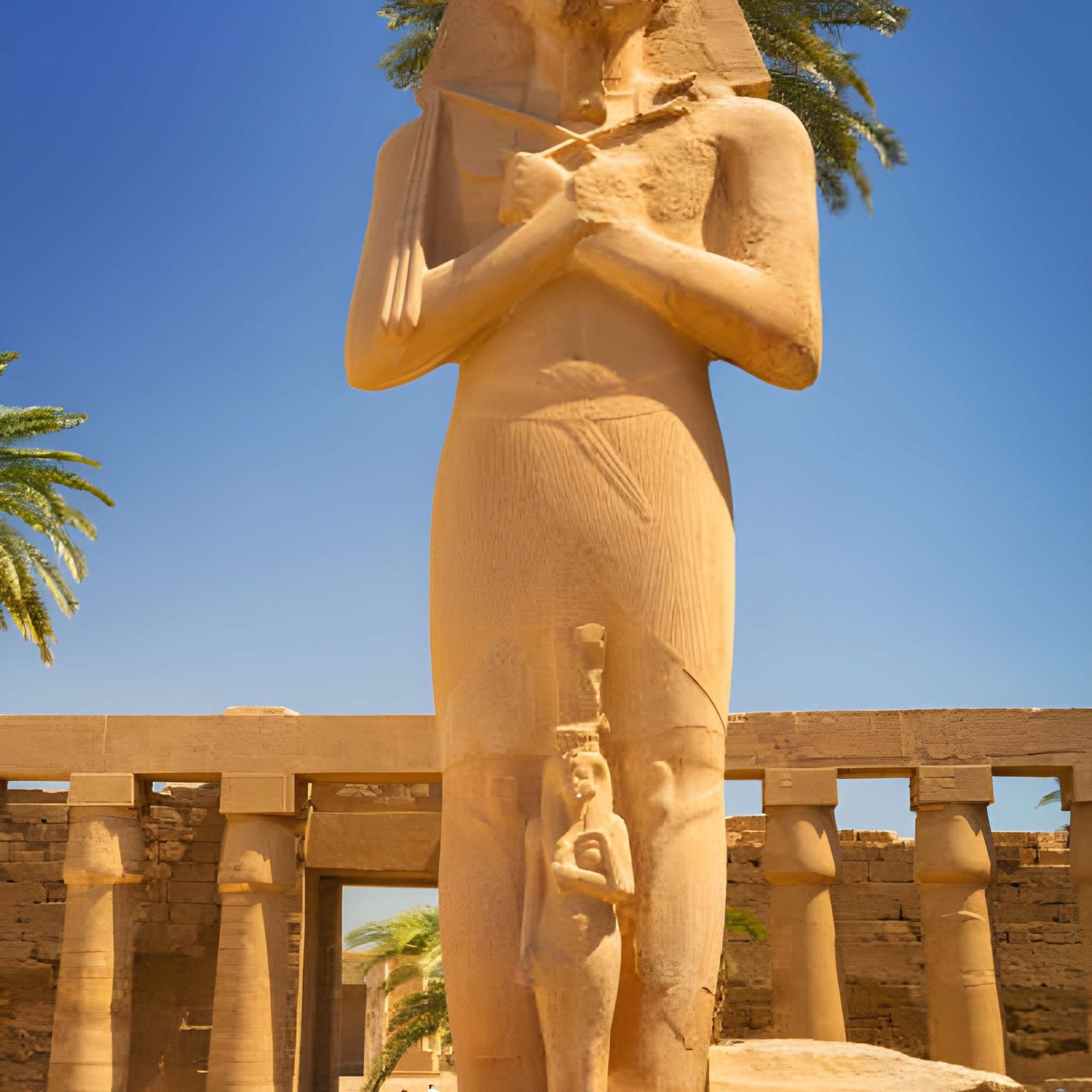
Who Is Meritamen? Discovering the Daughter of Pharaoh Ramses II
Ancient Egypt has fascinated historians and travelers for centuries, with its rich history and powerful rulers. Among the many royal figures, Meritamen stands out as one of the most intriguing princesses and queens of Egypt’s 19th Dynasty. Her name means “Beloved of Amun,” reflecting her divine connection to one of Egypt’s most important gods. But who is Meritamen, and what role did she play in Egyptian history? Let’s uncover the life of this remarkable royal woman whose legacy still echoes in the temples and monuments along the Nile River.
Attention: The Royal Lineage of Meritamen
Meritamen was the daughter of the legendary Pharaoh Ramses II, also known as Ramses the Great, and his Great Royal Wife, Nefertari. Belonging to one of Egypt’s most powerful dynasties, she lived during an age of tremendous prosperity and monumental construction. Her family’s influence extended across Egypt, leaving behind masterpieces such as the Abu Simbel Temples and the Ramesseum Temple, both of which honor the divine and royal figures of the time.
Meritamen is often depicted in statues and reliefs alongside her father, symbolizing her elevated status in royal society. Her importance was not only as a daughter of the pharaoh but also as a priestess and a symbol of royal femininity in the grand religious and political structure of Egypt.
Interest: The Life and Role of Meritamen in Ancient Egypt
As a royal princess, Meritamen held several important titles, including “King’s Daughter,” “King’s Wife,” and “Mistress of the Two Lands.” These titles indicate her high standing and her possible marriage to her father, a common practice among royal families to preserve divine bloodlines. This tradition underlined the belief that the pharaoh and his family were earthly representations of the gods.
Meritamen’s influence can be traced through various temples, statues, and artifacts. One of the most famous statues of her resides in the Luxor Museum, showcasing the elegance and divine reverence attributed to her. Her likeness can also be found at the Ramesseum Temple in Luxor, where she is depicted as a beloved figure of both the king and the gods.
Her connection to the god Amun was significant, as her name itself means “Beloved of Amun.” The cult of Amun was one of the most powerful religious movements in ancient Egypt, centered at the great Karnak Temple complex in Thebes. As a royal woman associated with Amun, Meritamen’s image and worship were tied to the divine legitimacy of her father’s rule.
Desire: Tracing Meritamen’s Legacy Through Temples and Monuments
Today, travelers exploring Egypt can discover the legacy of Meritamen in various ancient sites. Her statues, carvings, and depictions stand as a testament to her enduring influence and the grandeur of ancient Egyptian civilization. Touring these sites is like stepping back in time to witness the royal splendor that surrounded her life.
Visitors can start their journey in ancient Thebes, modern-day Luxor, which hosts several temples connected to Meritamen’s era. The Temple of Hatshepsut and the Valley of the Kings showcase the artistry and devotion of the New Kingdom, where royal women like Meritamen were honored alongside the gods.
Meritamen’s image also appears near the Temple of Philae, one of Egypt’s most picturesque temple complexes dedicated to the goddess Isis. The site reflects the continuation of divine feminine worship that women like Meritamen embodied. For those captivated by royal history, combining visits to Luxor and Aswan through an Egypt Tour with Nile Cruise offers an unforgettable journey through the legacy of queens and princesses who shaped Egypt’s past.
In addition, the National Museum of Egyptian Civilization in Cairo provides a deeper insight into the cultural and religious roles of women like Meritamen. Artifacts, jewelry, and statues tell her story and that of her dynasty, revealing how deeply intertwined gender, royalty, and divinity were in ancient Egypt.
Action: Experience Ancient Egypt Through Meritamen’s Story
If you are fascinated by Meritamen’s life and the ancient Egyptian world she inhabited, exploring the country’s archaeological wonders is the best way to connect with her legacy. From the Abu Simbel Temples where her father immortalized his reign, to the Luxor Temple that glows with the stories of gods and royalty, every step in Egypt brings Meritamen’s world to life.
Those seeking a deeper cultural immersion can embark on a guided experience such as the 8 Day Cairo and Nile Cruise Tour or the 11 Day Egypt Tour. These journeys offer travelers the opportunity to discover Egypt’s temples, tombs, and monuments while understanding the powerful roles women like Meritamen played in shaping Egyptian civilization.
For visitors interested in the broader picture of Egypt’s royal heritage, the Famous Egyptian Queens collection highlights women such as Nefertari, Hatshepsut, and Nefertiti—queens who, like Meritamen, influenced religion, politics, and art. Together, these women define the grace and strength of Egyptian royalty.
Why Meritamen Matters Today
Meritamen’s story is not just a historical curiosity—it reflects the spirit of ancient Egypt’s devotion to family, faith, and beauty. Her statues exude serenity, her name evokes divine grace, and her presence in art and architecture confirms her importance in Egypt’s royal and religious hierarchy. Modern travelers often find inspiration in her story, seeing her as a symbol of feminine strength and cultural heritage.
Whether you are exploring the ancient Egyptian art that portrays her image or wandering through the temples where her name was carved thousands of years ago, Meritamen’s essence remains alive throughout Egypt. Each monument, from Luxor to Aswan, keeps her memory vibrant for generations to come.
Frequently Asked Questions About Meritamen
Who was Meritamen?
Meritamen was the daughter of Pharaoh Ramses II and Queen Nefertari. She was a prominent royal princess and possibly a queen during Egypt’s 19th Dynasty.
Where can I see statues of Meritamen?
Statues and depictions of Meritamen can be found at the Ramesseum Temple in Luxor, the Abu Simbel Temples, and in the Luxor Museum.
What does the name Meritamen mean?
Her name means “Beloved of Amun,” reflecting her devotion to the god Amun, one of the most revered deities in ancient Egyptian religion.
What was Meritamen’s role in ancient Egypt?
Meritamen held high religious and political titles, symbolizing her importance within the royal family and her association with the divine lineage of Amun and Ramses II.
How can I explore sites connected to Meritamen?
You can experience Meritamen’s world by visiting Luxor and Aswan through tours such as the 8 Day Egypt Tour or the 15 Day Egypt Tour, where her legacy is preserved in temples and museums along the Nile.

Comment (0)