

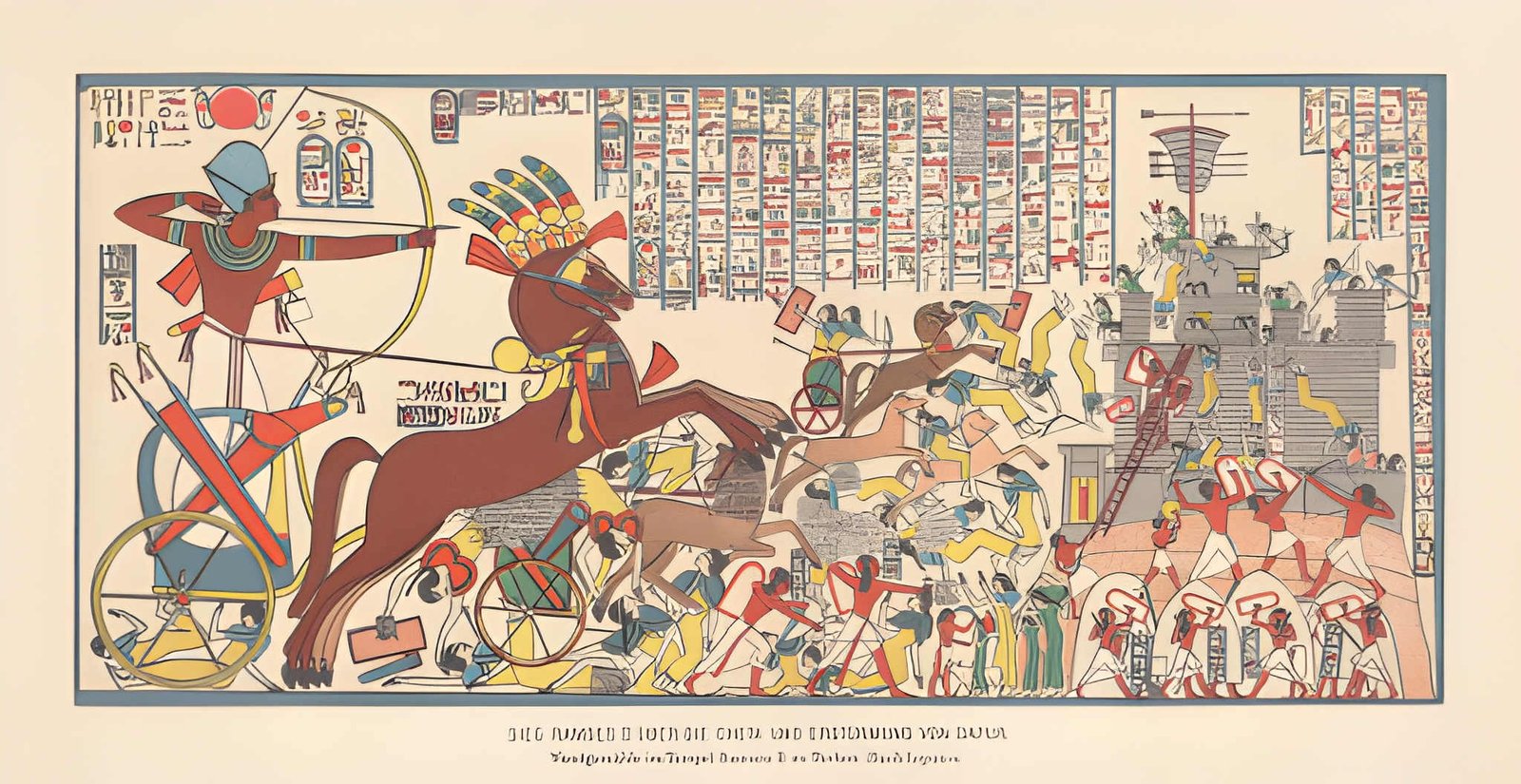
The Battle of Kadesh: A Turning Point in Ancient Warfare
The Battle of Kadesh is one of the most studied and fascinating military encounters in ancient Egyptian history. This monumental clash between the Egyptian Pharaoh Ramses II and the Hittite King Muwatalli II occurred around 1274 BCE. It was not only one of the largest chariot battles ever fought but also a defining moment that shaped diplomatic history. For travelers passionate about ancient civilizations, Egypt offers countless ways to explore the legacy of this battle through its temples, monuments, and inscriptions—many of which still echo Ramses II’s glory.
Attracting History Enthusiasts to the Ancient Battlefield
Imagine standing before the grand reliefs at the Ramesseum Temple, where Ramses II immortalized his triumph in stone. The Battle of Kadesh was more than just a military conflict; it was a tale of power, intelligence, and divine favor. Located near the modern-day Syrian–Lebanese border, the battle represented the peak of tension between Egypt and the Hittite Empire. For those captivated by the grandeur of ancient Egypt, tours like the 8 Day Cairo and Nile Cruise Tour or the 11 Day Egypt Tour allow visitors to explore the ancient sites that tell the story of this epic confrontation.
Interest: The Strategic Background of the Battle
The Battle of Kadesh took place during the reign of Ramses II, one of the most powerful pharaohs of the Egypt 19th Dynasty. Both Egypt and the Hittite Empire were expanding powers competing for control over Syria and the Levant. Kadesh, a fortified city strategically located along trade routes, was the prize both sought to claim. The Egyptians advanced north along the Orontes River, while the Hittites prepared an ambush that would test Ramses II’s leadership.
The Egyptian army was divided into four divisions named after the gods Amun, Ra, Ptah, and Seth. As Ramses II marched ahead with his Amun division, he was misled by Hittite spies who claimed the enemy had retreated. This misinformation led to a near disaster when the Hittite charioteers launched a surprise attack. Ramses’ tactical courage and the timely arrival of reinforcements from the Ne’arin troops turned the tide, preventing total defeat and transforming the conflict into a symbolic Egyptian victory.
Desire: Understanding the Legacy of Kadesh
The significance of the Battle of Kadesh extends beyond its immediate military outcome. Although neither side gained a decisive victory, it led to one of the world’s first known peace treaties—the Egyptian-Hittite Treaty of Kadesh. This historic agreement established borders and ensured mutual cooperation, setting a precedent for future diplomacy. Travelers exploring temples such as Abu Simbel Temples and the Karnak Temple can still see inscriptions celebrating the pharaoh’s bravery and divine intervention.
Ramses II used the battle to enhance his image as a god-king chosen by Amun. The reliefs in temples across Egypt depict scenes of the pharaoh single-handedly defeating the Hittites, reinforcing his political and divine authority. To this day, those carvings stand as remarkable examples of ancient Egyptian propaganda art. Visitors on an Egypt Tour with Nile Cruise can admire these majestic depictions as they journey along the Nile River, connecting history with the present-day landscape.
Action: Experience the World of Ramses II
To truly appreciate the historical depth of the Battle of Kadesh, travelers should explore sites across Egypt that bring this ancient story to life. The Statue of Ramses II in Memphis reveals the enduring pride of Egypt’s greatest ruler. In Luxor, at the Luxor Temple, reliefs show Ramses II offering to the gods before battle. At Abu Simbel, colossal statues guard the entrance as eternal sentinels of his power.
By joining immersive itineraries such as the 12 Day Egypt Tour Itinerary or the 15 Day Egypt Tour, visitors can gain a deep understanding of Ramses II’s reign and the far-reaching consequences of his military ambitions. The temples and monuments linked to the Battle of Kadesh tell not only of war but also of peace, politics, and the evolution of human civilization.
The Battlefield’s Archaeological Importance
Archaeologists and historians continue to study the Battle of Kadesh to better understand ancient Egyptian warfare. Chariot fragments, weapons, and inscriptions reveal the sophistication of Ramses II’s army. The use of more than 5,000 chariots marked a turning point in military logistics, making it one of the earliest examples of large-scale mobile warfare. This innovation influenced future civilizations, from Persia to Rome.
For those passionate about ancient military history, exploring the reliefs at temples like Temple of Hatshepsut or Temple of Seti enhances the narrative of Egypt’s martial legacy. Guided tours such as the 9 Day Egypt Tour help travelers journey through time, from Thebes to Abu Simbel, uncovering the echoes of Ramses II’s campaigns.
From Conflict to Cooperation: The First Peace Treaty
The Treaty of Kadesh remains one of humanity’s earliest recorded international agreements. Written in both Egyptian hieroglyphs and the Hittite cuneiform language, it emphasized peace, alliance, and extradition of fugitives. Copies of this treaty exist today in the United Nations Headquarters as symbols of early diplomacy. The text speaks volumes about how ancient Egypt valued order and harmony—a reflection of the same principles visible in Egyptian art, religion, and governance.
Exploring the Legacy Today
Modern travelers fascinated by the Battle of Kadesh can explore ancient Egypt’s key sites to connect with this powerful narrative. A visit to the Egyptian Museum reveals artifacts and stelae from Ramses II’s reign. Meanwhile, the Nile River continues to flow past monuments built to commemorate his victories. The Valley of the Kings shelters his tomb, a final testament to his enduring legacy.
For travelers seeking an authentic experience that goes beyond traditional sightseeing, itineraries like the Egypt Adventure Tour or 8 Day Egypt Tour offer a unique opportunity to immerse in Egypt’s ancient history and its monumental stories of heroism and leadership.
Why The Battle of Kadesh Matters Today
The Battle of Kadesh is not merely an ancient conflict—it’s a story of leadership, misjudgment, recovery, and diplomacy. It reminds us that even in a time defined by warfare, the pursuit of peace prevailed. Through art, architecture, and historical documentation, Ramses II’s interpretation of Kadesh became a timeless narrative of courage and divine justice. Visitors who explore the sites connected to his reign gain insights into how Egypt’s ancient rulers forged their legacies through both might and wisdom.
FAQs About the Battle of Kadesh
1. Where did the Battle of Kadesh take place?
The Battle of Kadesh occurred near the city of Kadesh, located along the Orontes River in modern-day Syria. It was a key stronghold between Egypt and the Hittite Empire.
2. Who fought in the Battle of Kadesh?
The conflict was between the Egyptian forces led by Pharaoh Ramses II and the Hittite forces commanded by King Muwatalli II. Both empires were vying for control over the territory of Syria.
3. What was the outcome of the Battle of Kadesh?
Although Ramses II proclaimed victory, the battle ended in a stalemate. Both sides suffered heavy losses, which eventually led to the signing of the first recorded peace treaty in history.
4. Where can I see depictions of the Battle of Kadesh today?
Depictions of the battle can be seen on the walls of the Ramesseum Temple, Luxor Temple, and Abu Simbel Temples. These reliefs illustrate Ramses II’s valor and divine favor.
5. Why is the Battle of Kadesh significant in world history?
The battle is significant because it represents early large-scale chariot warfare and resulted in the first known peace treaty. It set a precedent for diplomacy and the establishment of international agreements between great powers.

Comment (0)