
Unearthing the Majesty of the Statue of Ramses II: Egypt’s Eternal Guardian
The Statue of Ramses II stands as one of the most magnificent testaments to ancient Egyptian craftsmanship, power, and divine kingship. Carved from monumental blocks of stone, this colossal image of the great pharaoh has endured for over three millennia, symbolizing the unmatched grandeur of Egypt’s 19th Dynasty. Towering above all who gaze upon it, the statue encapsulates the might of a ruler who reigned for more than sixty years and transformed Egypt’s political and cultural landscape. More than a static relic, the Statue of Ramses II tells a story of ambition, artistry, and the enduring human quest to leave a legacy that defies time. Visitors from around the world flock to see this masterpiece, fascinated by its scale, craftsmanship, and the aura of authority that still radiates from its granite visage.
Unearthed from the sands of antiquity, the statue once graced the temples and cities that Ramses himself commissioned. The most famous version, once erected in Memphis near Cairo, was later moved to preserve its majesty. Today, the majestic colossi of Ramses II continue to captivate at locations such as the Abu Simbel Temples and the Great Temple of Thebes. This enduring sculpture not only represents the physical form of a god-king but also embodies the artistic genius and spiritual devotion of an entire civilization. For travelers captivated by Egypt’s ancient mysteries, the Statue of Ramses II offers an unmissable glimpse into the golden age of pharaonic history—a story that continues to echo through the millennia.
The Historical Significance of Ramses II in Ancient Egypt
Known as Ramses the Great, the pharaoh ruled Egypt from approximately 1279 to 1213 BCE, during the height of the New Kingdom. His reign marked an era of remarkable prosperity and monumental architectural achievement. The Statue of Ramses II was created to immortalize his divine power and military prowess, particularly following his celebrated victory at the Battle of Kadesh. The larger-than-life imagery projected him not merely as a political leader but as a living god among his people. Ramses II’s statues were placed strategically across Egypt to reinforce his omnipresence—from the capital Pi-Ramesses to the temples of Luxor and Abu Simbel.
The artistic conventions of the time imbued these colossal forms with symbolic precision. Every feature—from the serene expression to the commanding posture—was meant to convey eternal youth, divine authority, and unyielding confidence. The Statue of Ramses II thus transcends mere artistry; it becomes a political statement, a visual manifesto carved in stone. For anyone intrigued by the evolution of Egyptian kingship, this statue remains a powerful representation of the pharaoh’s godlike stature and the culture’s belief in eternal life and cosmic order.
Architectural Marvel: The Craftsmanship Behind the Statue of Ramses II
The mastery involved in sculpting the Statue of Ramses II is nothing short of astonishing. Created from a single block of granite or limestone, often quarried hundreds of kilometers away, these statues demanded a level of planning and precision that continues to impress modern archaeologists. Tools made of copper and dolerite were used to carve the intricate details, while teams of artisans, engineers, and laborers coordinated the transportation of these massive figures along the Nile. The statue’s proportions, symmetry, and anatomical accuracy underscore the sophistication of ancient Egyptian engineering and artistic vision.
Many of these colossal figures were installed at temple entrances, serving as divine sentinels watching over Egypt’s sacred spaces. Their immense size was no accident—it was designed to awe, to communicate the pharaoh’s eternal guardianship over his people. One of the most iconic of these is the seated statue discovered in Memphis, now preserved near the Memphis Egypt, The Old Egyptian Capital. This monumental sculpture measures nearly eleven meters in height and weighs more than eighty tons, embodying the technological and artistic zenith of its era.
Symbolism and Divine Representation
The Statue of Ramses II wasn’t merely decorative—it carried deep symbolic meaning. Ancient Egyptians believed statues could house the ka, or life essence, of the person depicted. Thus, the statue served as both a spiritual vessel and a political emblem. The pharaoh’s serene yet commanding visage symbolized balance, divine justice (ma’at), and immortality. His traditional nemes headdress, false beard, and royal kilt all reinforced his divine connection with the gods. The carved hieroglyphs adorning the statue often proclaimed Ramses II as “the Strong Bull, Beloved of Ma’at,” linking him directly to cosmic order and divine legitimacy.
In many ways, the massive statue acted as a communication tool between the mortal and divine realms—a silent but powerful declaration that Ramses II ruled by divine decree. To Egyptians, seeing the colossal effigy of their king was akin to standing in the presence of a god. These artistic feats continue to inspire awe, echoing the spiritual depth and emotional intensity that defined ancient Egyptian art.
The Statue’s Journey: Discovery and Preservation
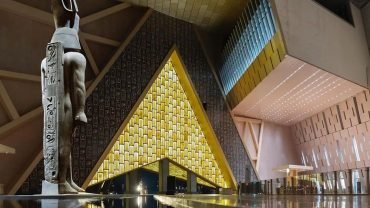
The Statue of Ramses II has endured an incredible journey through time. Originally discovered lying face down in the sands of Memphis, the monument was rediscovered in the early 19th century by European archaeologists. Due to its immense weight, moving it intact proved impossible, so it was carefully restored and displayed on-site. In 2006, it was relocated to the Grand Egyptian Museum near Giza, ensuring better preservation and accessibility for visitors worldwide. This relocation was a monumental effort in itself, symbolizing Egypt’s dedication to safeguarding its cultural treasures for future generations.
Today, visitors can admire the statue in all its glory, standing upright under controlled lighting that enhances the exquisite details of its craftsmanship. The modern display context allows travelers to appreciate not only its aesthetic beauty but also its historical importance within Egypt’s broader artistic and political legacy. Pairing a visit to this statue with other ancient marvels such as the The Egyptian Museum or the The Grand Egyptian Museum creates a comprehensive understanding of Ramses II’s monumental impact on history.
The Cultural Impact of the Statue of Ramses II on Modern Egypt
In contemporary Egypt, the Statue of Ramses II remains a cherished symbol of national pride and continuity. It connects modern Egyptians to their ancient heritage, reminding them of a golden age of leadership, innovation, and artistic excellence. The statue’s imposing presence serves as both a tourist attraction and a cultural icon, attracting scholars, photographers, and history enthusiasts from across the globe. Its inclusion in documentaries, exhibitions, and educational programs underscores its timeless relevance.
Moreover, the statue’s image has become a cornerstone of Egypt’s tourism identity. Visitors exploring Egypt Day Tours often begin their cultural journey with this masterpiece before venturing to other iconic sites like the Pyramids of Giza and the The Karnak Temple. Its powerful aesthetic makes it a must-see highlight for those seeking an authentic connection to Egypt’s ancient spirit. Whether viewed under the blazing sun or soft museum lighting, the Statue of Ramses II continues to radiate majesty, reminding every visitor that true greatness never fades.
Exploring the Legacy of the Statue of Ramses II in Egyptian Art and Tourism
Modern Egypt thrives on a rich tapestry of heritage tourism, and the Statue of Ramses II stands at its heart. As part of curated experiences like Best Egypt Travel Packages and Best Nile River Cruises, travelers can witness this ancient wonder while following the same river that once carried the colossal stones of pharaohs. The statue’s role extends beyond history—it fuels cultural continuity, academic research, and artistic inspiration. Egyptian sculptors and architects still study its proportions, while filmmakers and historians draw creative energy from its imposing silhouette.
Each generation reinterprets Ramses II’s legacy through its own lens. For some, the statue is a symbol of divine kingship; for others, it represents timeless human ambition. Either way, it remains a bridge between past and present. Tourists strolling through the museum halls or desert landscapes often find themselves awestruck, feeling a profound connection to an era that shaped civilization itself. The Statue of Ramses II stands not merely as a monument but as a mirror reflecting humanity’s eternal quest for greatness.
Traveling to Experience the Statue of Ramses II
Visiting the Statue of Ramses II is a journey through time. Modern explorers can include this awe-inspiring site on their itineraries alongside other timeless destinations such as the Luxor Temple, Valley of the Kings, and the Ramesseum Temple. A well-planned trip often combines cultural immersion with relaxation on cruises like the 5-Star Luxury Nile Cruise. Standing before the towering figure of Ramses II, travelers witness a living dialogue between the ancient and the eternal, a reminder that Egypt’s grandeur will always endure.
Frequently Asked Questions about the Statue of Ramses II
Where is the Statue of Ramses II located today?
The most famous standing Statue of Ramses II is housed in the Grand Egyptian Museum near Giza. Additional colossal statues of the pharaoh can be found at the Abu Simbel Temples and various archaeological sites throughout Egypt.
How tall is the Statue of Ramses II?
The original Memphis statue measures approximately 11 meters (about 36 feet) in height, though other versions, like those at Abu Simbel, are even larger, demonstrating the pharaoh’s immense power and divine stature.
Why was the Statue of Ramses II built?
The statue was created to honor and deify Ramses II, reinforcing his godlike authority and celebrating his military victories, particularly his role in Egyptian expansion and diplomacy during the 19th Dynasty.
What materials were used to make the Statue of Ramses II?
Most statues of Ramses II were carved from limestone, sandstone, or granite—materials chosen for their durability and symbolic association with eternity. The artistry and precision of these sculptures reflect the exceptional skill of ancient Egyptian craftsmen.
Can tourists visit the Statue of Ramses II?
Yes, visitors can easily see the Statue of Ramses II at the Grand Egyptian Museum or explore other colossal renditions in temples across Egypt. Many tours, including Egypt Tour with Nile Cruise, include stops to view these incredible monuments up close.

Comment (0)