

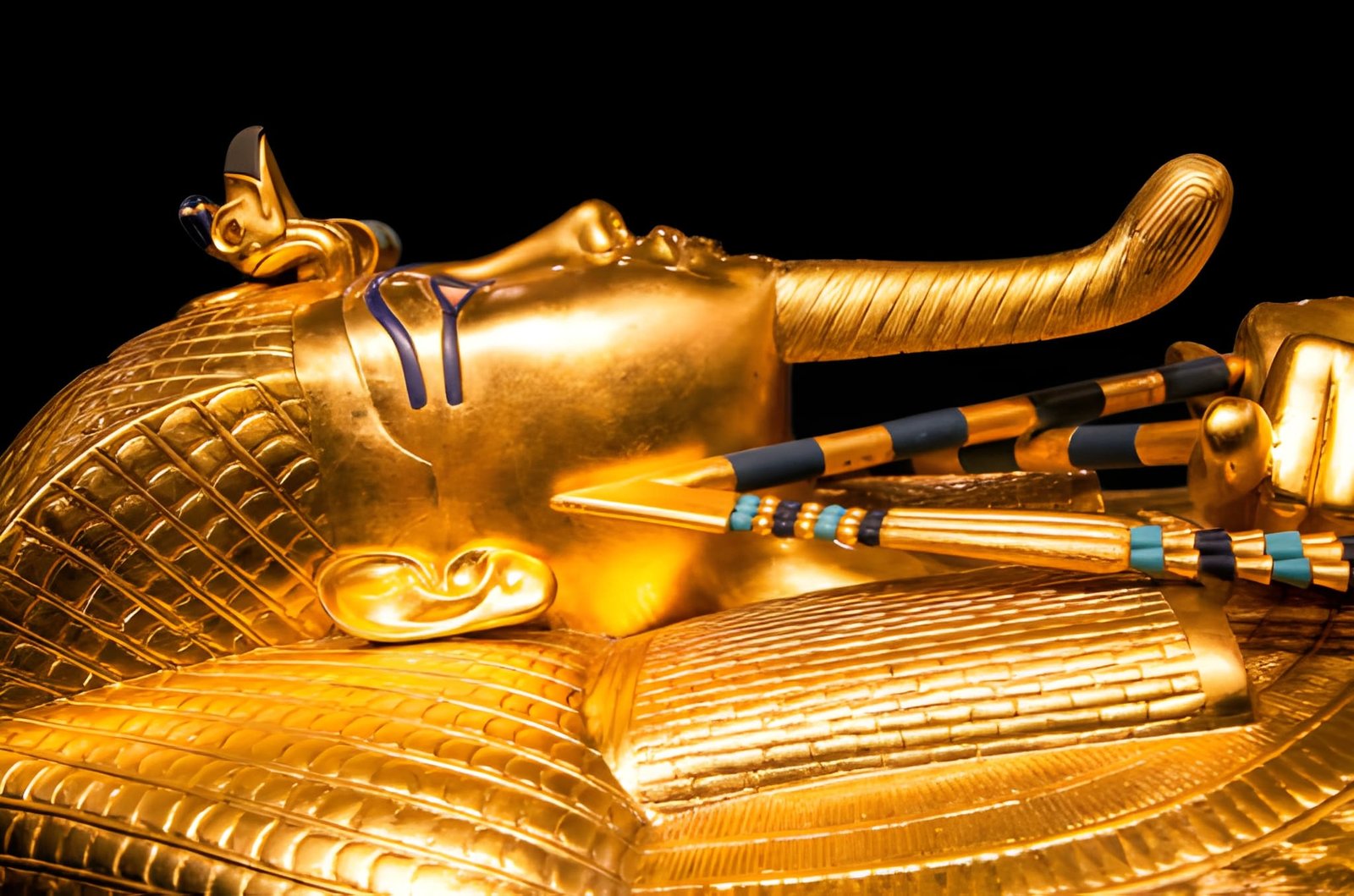
The Eternal Splendor of King Tutankhamun’s Mask: Egypt’s Most Iconic Artifact
Few artifacts capture the imagination quite like King Tutankhamun’s Mask—the dazzling funerary masterpiece that embodies the glory, mystery, and sophistication of ancient Egypt. Discovered in 1922 by British archaeologist Howard Carter inside the untouched tomb of the young pharaoh Tutankhamun, this golden mask remains one of the most recognizable symbols of Egypt’s ancient civilization. Every curve, gemstone, and inlay tells a story of divine kingship, artistic mastery, and spiritual beliefs that shaped the New Kingdom era. The mask, meticulously crafted from over 10 kilograms of solid gold and adorned with semi-precious stones like lapis lazuli, quartz, and obsidian, wasn’t merely a burial ornament—it was a portal between the mortal and the divine.
Serving both spiritual and political purposes, King Tutankhamun’s Mask immortalized the boy king’s identity, linking him to Osiris, the god of the afterlife. Through thousands of years, this artifact has stood the test of time—surviving tomb robbers, environmental decay, and historical upheavals. Today, it’s a global icon, symbolizing not just Egypt but humanity’s enduring fascination with its ancient past. Visitors from every corner of the world flock to see this legendary relic housed within The Egyptian Museum in Cairo, where it continues to inspire awe and reverence.
Those seeking to experience the wonder of Egypt firsthand can combine a visit to the museum with other remarkable landmarks such as the Valley of the Kings, where Tutankhamun’s tomb was unearthed. For travelers yearning for luxury and historical exploration, curated tours through Best Nile River Cruises and Best Egypt Travel Packages offer an unforgettable glimpse into the pharaohs’ world, weaving together history, culture, and breathtaking scenery.
The Discovery of Tutankhamun’s Tomb: A Defining Moment in Archaeology
When Howard Carter unearthed Tutankhamun’s tomb in November 1922 in the Valley of the Kings, he stumbled upon one of the most extraordinary archaeological discoveries in history. The tomb, hidden for over 3,000 years, was remarkably intact and brimming with treasures intended to accompany the young ruler into the afterlife. Among the thousands of artifacts, the funerary mask emerged as the most mesmerizing. Crafted with divine precision, its discovery transformed Carter’s name into legend and reignited global interest in ancient Egypt’s mysteries. The find also marked a turning point in archaeological methodology, inspiring new preservation and excavation techniques that continue to influence modern Egyptology.
To this day, the tomb’s discovery site remains one of the most visited heritage landmarks, especially for those joining immersive tours like the 4 Day 3 Night Nile Cruise from Aswan to Luxor or the 10 Day Egypt Luxury Trip with Dahabiya Nile Cruise, both of which integrate stops at Luxor’s ancient wonders.
Symbolism Behind the Mask: The Pharaoh and the Divine
King Tutankhamun’s Mask wasn’t designed merely for decoration. Every detail carried deep symbolic significance rooted in ancient Egyptian spirituality. The mask’s serene expression represented the divine calm expected of a god-king, while the inlaid lapis lazuli eyebrows and vibrant quartz eyes symbolized eternal vigilance. The nemes headdress, striped in royal blue and gold, denoted authority and cosmic balance. The false beard attached to the mask signified the pharaoh’s connection to Osiris, affirming Tutankhamun’s divine status in the afterlife. Even the back of the mask, inscribed with a protective spell from the Book of the Dead, was believed to safeguard the king’s soul for eternity.
Visitors exploring Egypt’s sacred symbols often encounter similar motifs at monuments such as the Abu Simbel Temples in Aswan and the The Karnak Temple, where divine imagery underscores the connection between humans and gods.
Artistry and Materials: The Craftsmanship of Immortality
The artisans who created Tutankhamun’s Mask were masters of goldsmithing, inlay, and gemstone setting. Using advanced techniques far ahead of their time, they fused sheets of gold to produce a seamless visage that mirrored divine perfection. The materials themselves were symbolic—gold represented the flesh of the gods, lapis lazuli evoked the heavens, and turquoise symbolized rebirth. Each gemstone placement was intentional, aligning with Egypt’s religious cosmology and astrological beliefs. The mask’s intricate craftsmanship testifies to the wealth, sophistication, and artistic ambition of Egypt’s 18th Dynasty.
Historical Context: King Tutankhamun’s Short Yet Impactful Reign
Tutankhamun ascended the throne at around nine years old, following the controversial reign of Pharaoh Akhenaten, who upended Egypt’s traditional polytheism. Although his reign lasted barely a decade, Tutankhamun restored stability by reinstating the worship of Amun and the pantheon of gods. His death at approximately 18 or 19 years old remains a source of intrigue—whether accidental, natural, or conspiratorial. Yet, despite his brief rule, the magnificence of his burial treasures immortalized his legacy more than any other pharaoh of his time.
Modern visitors curious about Egypt’s fascinating dynasties can further explore the legacy of rulers like Hatshepsut and Ramses II through tours that include the Temple of Hatshepsut and the Statue of Ramses II.
Preservation and Display: A Jewel of the Grand Egyptian Museum
Today, King Tutankhamun’s Mask stands as the crown jewel of Egyptian heritage, carefully preserved within climate-controlled conditions. The mask will ultimately be displayed at the The Grand Egyptian Museum, hailed as the largest archaeological museum in the world. This move ensures more sophisticated preservation, allowing future generations to admire its timeless allure. The museum’s advanced exhibition methods use lighting and technology to highlight the mask’s golden brilliance while maintaining its authenticity and spiritual aura.
The Cultural and Global Impact of King Tutankhamun’s Mask
Since its discovery, Tutankhamun’s Mask has transcended archaeology to become a cultural icon. Its image appears in films, literature, fashion, and art, symbolizing mystery and eternal youth. Traveling exhibitions like “The Treasures of Tutankhamun” introduced millions to the wonders of ancient Egypt, rekindling global fascination and influencing tourism. The mask’s magnetic appeal continues to drive travelers to Egypt, eager to retrace the footsteps of explorers who uncovered the secrets of the pharaohs. Beyond its aesthetic beauty, the mask serves as a timeless reminder of humanity’s quest for immortality and the enduring power of legacy.
Visiting the Legacy: From Cairo to Luxor
For history enthusiasts and travelers alike, seeing King Tutankhamun’s Mask in person is a once-in-a-lifetime experience. A well-planned journey might include cultural stops across Cairo, Luxor, and Aswan. Exploring with experts through curated experiences by Travme Tours ensures a seamless blend of history, comfort, and authenticity. Pairing the museum visit with cruises such as the Iris Dahabiya Nile Cruise or the 5-Star Luxury Nile Cruise allows travelers to experience Egypt’s timeless beauty from the waters that once sustained its civilization.
King Tutankhamun’s Mask and Its Enduring Mystique
What makes King Tutankhamun’s Mask so captivating even today? Perhaps it’s the haunting perfection of its youthful face, frozen in gold. Maybe it’s the aura of mystery surrounding its creation and discovery. Or it could be the realization that through this mask, we glimpse a civilization that mastered the intersection of art, religion, and eternity. Every angle of the mask whispers stories of gods, mortality, and resurrection—echoes of a culture deeply connected to cosmic cycles and the promise of life beyond death.
Frequently Asked Questions About King Tutankhamun’s Mask
1. Where is King Tutankhamun’s Mask currently displayed?
King Tutankhamun’s Mask is currently housed in Cairo at the Egyptian Museum. However, it’s expected to relocate permanently to the Grand Egyptian Museum, which will showcase it alongside other treasures from the boy king’s tomb.
2. What is King Tutankhamun’s Mask made of?
The mask is crafted from solid gold weighing approximately 10.23 kilograms. It features inlays of lapis lazuli, turquoise, obsidian, carnelian, quartz, and colored glass, all chosen for symbolic and aesthetic reasons that reflect royal divinity and eternal life.
3. Why was King Tutankhamun’s Mask created?
This funerary mask was designed to ensure the pharaoh’s spiritual resurrection and to link him with Osiris, the god of the afterlife. Its purpose was both protective and ceremonial, symbolizing immortality and divine authority.
4. How was King Tutankhamun’s tomb discovered?
Howard Carter discovered the tomb in November 1922 after six years of searching in the Valley of the Kings. The tomb was found almost intact, filled with over 5,000 artifacts, including the golden mask resting upon the mummy of the young pharaoh.
5. Can tourists visit King Tutankhamun’s tomb today?
Yes, visitors can explore Tutankhamun’s tomb in the Valley of the Kings near Luxor. His mummy remains displayed within the tomb, while the mask and treasures are preserved in Cairo. Many travelers include this site in their itineraries during 8 Day Cairo and Nile Cruise Tours for a comprehensive journey through ancient Egypt’s wonders.

Comment (0)